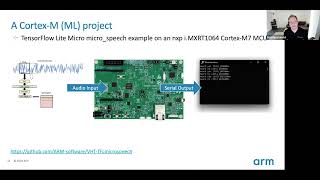
Accelerate ML Development With Cloud-Based Arm Cortex-M Models
Explore cloud-based Arm Cortex-M models for accelerated ML development, featuring Virtual Hardware integration, Python-scriptable peripherals, and TensorFlow optimizations.
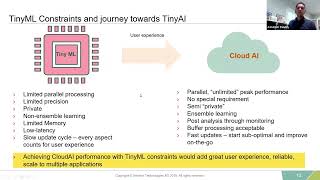
Exploring Techniques to Build Efficient and Robust TinyML Deployments
Explore techniques for efficient TinyML deployments, covering data challenges, quantization, and handling out-of-distribution data for robust edge AI applications.

Application of Ultra-Low-Power and Resource-Constrained Devices to Improve Health Care Delivery in Resource-Constrained Communities
Explore tinyML applications in healthcare, focusing on resource-constrained communities. Learn how ultra-low-power devices can improve diagnosis, monitoring, and logistics in challenging environments.
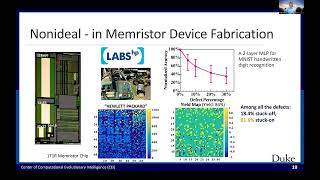
TinyML Talks - Software-Hardware Co-design for Tiny AI Systems
Explore efficient AI models, hardware-friendly compression, and topology-aware design for resource-constrained systems. Learn cross-optimization techniques and distributed learning for scalable AI solutions.
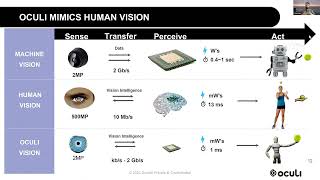
TinyML Talks - Oculi Is Putting the Human Eye in A.I.
Innovative imaging technology mimicking human vision for efficient machine perception, combining sensing and pre-processing on a single chip for superior energy-delay performance in AI applications.
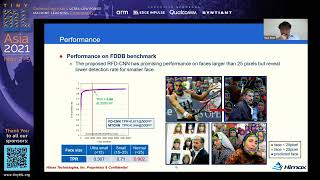
Lightweight Face Detection for Ultra-Low Power AI Processors - tinyML Asia 2021
Lightweight face detection method for ultra-low power AI processors, featuring real-time application and accuracy in various scenarios. Explores implementation on Himax WE-I Plus platform for always-on sensing products.
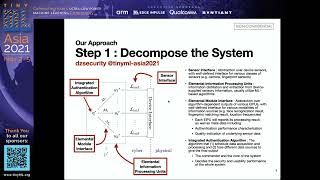
An Approach to Dynamically Integrate Heterogeneous AI Components in Multimodal User Authentication - tinyML Asia 2021
Approach to dynamically integrate heterogeneous AI components for multimodal user authentication, focusing on flexibility, performance, and energy efficiency in battery-powered devices.

Building and Enabling Voice Control with ARM Cortex-M
Explore Sensory's Edge-AI technology for creating custom wake words and voice control on ARM Cortex-M, with a focus on VoiceHub platform for developers.
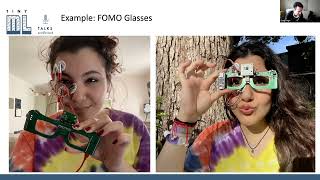
TinyML4STEM - Using TinyML for Neuroscience in K12
Explore how tinyML and neuroscience combine to create engaging STEM education experiences for K-12 students, featuring insights from a successful pilot collaboration with Backyard Brains.
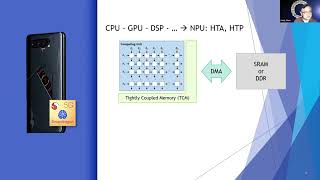
Evolutionary Needs of TinyML
Explore power-efficient AI solutions for battery-powered devices, focusing on ultra-low-power AI for always-on applications and discussing ongoing challenges in intelligent algorithm evolution.
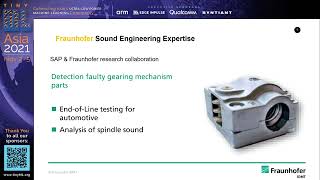
Airborne Sound Maintenance in Remote Sites Using Low Power Federated Learning
Explore low-power federated learning for remote site maintenance using airborne sound, minimizing downtime and costs while adhering to GDPR regulations.
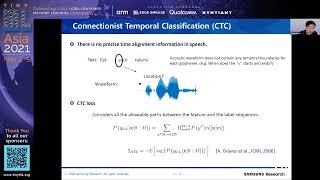
On-Device Neural End-to-End Speech Recognition and Synthesis Algorithms - A Review
Comprehensive review of on-device neural speech recognition and synthesis algorithms, exploring end-to-end models, optimization techniques, and their potential for on-device implementation.
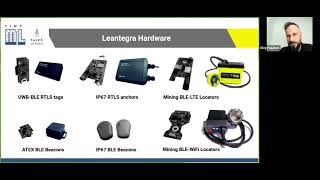
TinyML Talks Ukraine - Practical TinyML for Industrial Safety and Personnel Performance Monitoring
Practical implementation of TinyML for industrial safety and worker performance monitoring using custom hardware and TensorFlow Lite for motion recognition from IMU data.
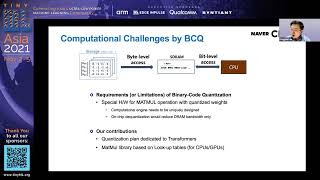
Extremely Low-Bit Quantization for Transformers - tinyML Asia 2021
Explore extremely low-bit quantization techniques for Transformers, focusing on mixed precision strategies to optimize deployment on resource-limited devices without compromising accuracy.
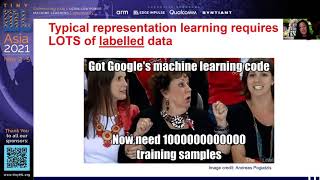
Learning Compact Representation with Less Labeled Data from Sensors
Exploring data-efficient learning techniques for compact representations in sensor-based human behavior modeling, focusing on domain adaptation and pretraining approaches for minimal labeled data scenarios.
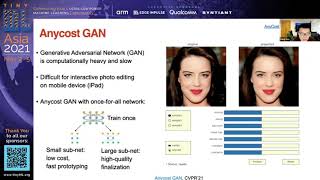
Putting AI on a Diet: TinyML and Efficient Deep Learning
Efficient deep learning techniques for deploying AI on resource-constrained devices, including model compression, neural architecture search, and new design primitives for various applications.

AIfES - An Open-Source Standalone AI Framework for Almost Any Hardware
Explore AIfES, an open-source AI framework for embedded systems, enabling neural network deployment and training on various hardware, including 8-bit microcontrollers and Arduino boards.
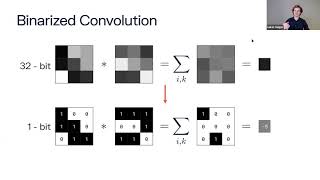
Binarized Neural Networks on Microcontrollers
Explore Binarized Neural Networks for efficient deep learning on microcontrollers, enabling complex tasks with minimal memory and high performance using 1-bit encoding for weights and activations.
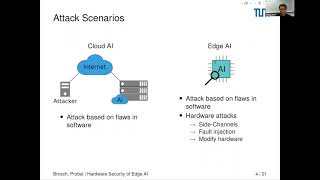
Security of Edge AI Against Hardware Attacks
Explore security challenges and countermeasures for Edge AI against hardware attacks, focusing on neural network protection and side-channel analysis in embedded systems.

Building Personal Computing Devices with Sensing - Intel's Approach
Explore Intel's journey in integrating sensing technologies into personal computing devices, from Sandy Bridge to 11th Gen chipsets, enhancing user experiences and device capabilities.
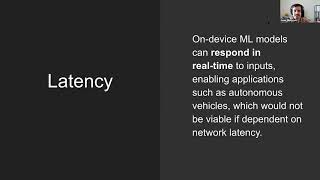
Embedded Machine Learning in the Real World
Explore embedded ML applications, challenges, and opportunities in real-world scenarios, focusing on tiny models, accelerated hardware, and practical tooling.