Wio Terminal TinyML Weather Prediction with TensorFlow Lite and LVGL GUI - Course 4
Create an intelligent meteostation using Wio Terminal and TensorFlow Lite for Microcontrollers to predict weather and precipitation based on local environmental sensor data, with LVGL GUI integration.
Wio Terminal TinyML Course - People Counting and Azure IoT Central Integration - Part 3
Learn to implement people counting using TinyML on Wio Terminal, integrating ultrasonic sensors and Azure IoT Central for real-time monitoring and data visualization.
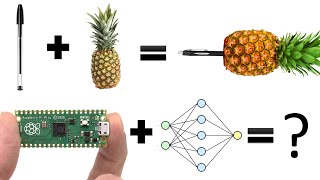
Machine Learning Inference on Raspberry Pi Pico 2040 via Edge Impulse
Learn to implement machine learning inference on Raspberry Pico 2040 using Edge Impulse, covering environment setup, sample data inference, sensor data processing, and porting details.
Wio Terminal TinyML Course - Audio Scene Recognition on Microcontrollers with Arduino IDE
Learn to implement audio scene recognition on microcontrollers using TinyML, Arduino IDE, and Wio Terminal. Covers data collection, processing, model training, deployment, and mobile notifications with Blynk.
Introduction to TinyML on Wio Terminal - Machine Learning on Microcontrollers
Introduction to TinyML on Wio Terminal: Learn to implement machine learning on microcontrollers using Arduino IDE, covering data gathering, processing, model training, and deployment.
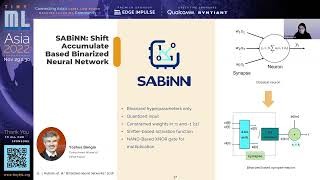
Power Efficient Neural Network Based Hardware Architecture for Biomedical Applications
Power-efficient neural network hardware architecture for biomedical applications, focusing on sleep apnea detection using ECG and SpO2 data. Introduces SABiNN technique for reduced power consumption and compact design while maintaining accuracy.
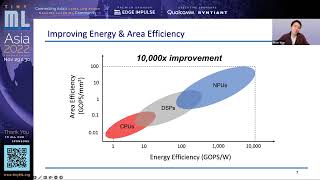
Software-Driven TinyML Hardware Co-Design for AI Power Smart Devices
Explore software-hardware co-design for efficient TinyML systems, focusing on processing-in-memory accelerators to reduce power consumption and enhance AI inference in smart devices.
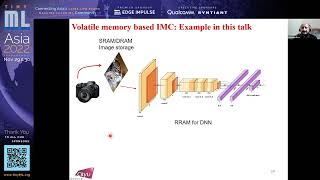
In-memory Computing and Dynamic Vision Sensors for Internet of Video Things
Exploring neuromorphic technologies, dynamic vision sensors, and in-memory computing for energy-efficient IoT video applications, with focus on innovative solutions for intelligent transportation and unattended ground sensors.
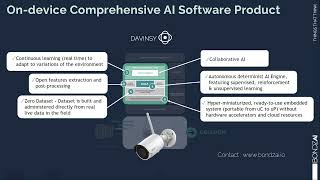
On-Device Continuous Event-Driven Deep Learning to Avoid Model Drift
Explore on-device continuous event-driven deep learning to prevent model drift in AIoT applications, focusing on real-time data adaptation without user intervention for industrial use cases.
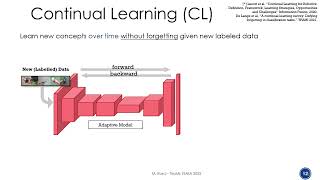
Continual On-Device Learning on Multi-Core RISC-V Microcontrollers
Explore continual on-device learning for multi-core RISC-V microcontrollers, focusing on system architecture, memory-energy-accuracy trade-offs, and efficient implementation of backpropagation techniques using latent replays.

tinyML Trailblazers: Success Stories with Massimo Banzi - Arduino's Journey and Vision
Explore Arduino's journey, from its origins to its impact on machine learning and global tech education, with insights from co-founder Massimo Banzi on innovation and future directions.
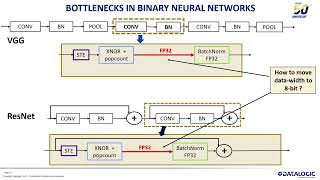
Optimizing Data-Flow in Binary Neural Networks
Explore optimizing data flow in Binary Neural Networks, focusing on hardware efficiency, quantization techniques, and accuracy improvements for embedded systems.
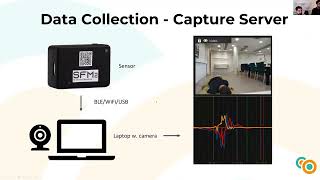
TinyML AutoML Tutorial: Building Production-ready Models with Imagimob AI
Explore Imagimob AI platform for creating production-ready ANN models for time-series data on resource-constrained devices. Learn data visualization, preprocessing, model training, and evaluation techniques.
Neuromorphic Engineering Algorithms for Edge ML and Spiking Neural Networks
Explore cutting-edge neuromorphic engineering algorithms for edge ML, including hardware-friendly learning, spike-based intelligence, surrogate gradients, and meta-learning techniques.
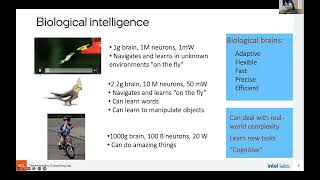
Neuromorphic Intelligence and Learning in Robotics
Explore neuromorphic engineering for efficient AI in robotics, focusing on on-chip learning and processing algorithms using Intel's Loihi 2 chip and the Lava software framework.
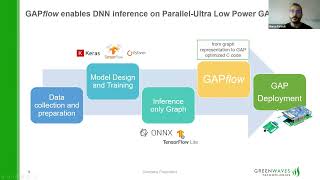
TinyML Auto ML Deep Dive: GAPflow - From TFLite and ONNX to Optimized C Code
Explore GAPflow: transform neural networks into optimized C code for ultra-low-power GAP processors. Learn quantization, validation, and memory allocation for efficient AI deployment on energy-constrained devices.
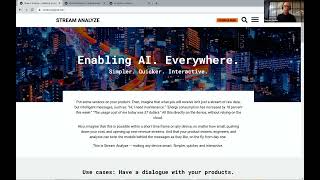
TinyML Auto ML Deep Dive: Streaming Analytics for Edge Devices
Explore streaming analytics for edge devices with Stream Analyze's platform. Learn to develop, deploy, and monitor edge AI solutions using real-time data processing and on-device intelligence.
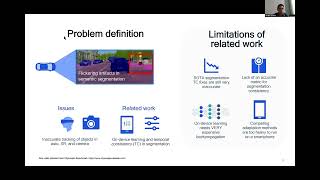
Enabling On-Device Learning at Scale
Explore on-device learning techniques for AI personalization, including few-shot learning, continuous learning, and federated learning, addressing privacy and efficiency challenges in edge computing.
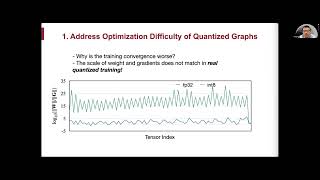
On-Device Learning Under 256KB Memory - Challenges and Solutions for IoT Devices
Explore on-device learning for IoT devices with limited memory. Learn techniques for efficient model adaptation, quantization-aware scaling, and sparse updates to enable continuous learning on tiny hardware.
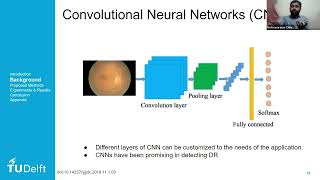
TinyML Talks Germany - Neural Network Framework Using Emerging Technologies for Screening Diabetic
Innovative framework using neural networks and emerging technologies for efficient screening of Diabetic Retinopathy, achieving high accuracy and significant improvements in energy consumption and latency.
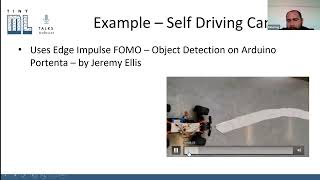
TinyML Talks South Africa - What Is TinyML?
Explore tinyML applications, tools, and resources in South Africa. Learn about this emerging technology's potential and engage in community discussions for future workshops and events.