
Spacelift Tutorial - Effortlessly Build Your CI-CD Pipeline
Learn to automate Infrastructure as Code deployment with Spacelift. Explore key features like stacks, environment variables, policies, and tasks to streamline your DevOps workflow.

Forgejo - A Simple Solution for Agile Development - Self-Hosted Alternative to GitHub
Learn to install and configure Forgejo, a self-hosted software forge, on Ubuntu using Docker. Step-by-step guide covers setup, Docker Compose, NGINX, and initial configuration for managing software projects.

Master Deep Voice Cloning in Minutes - Unleash Your Vocal Superpowers Locally on Your PC
Learn to clone voices and generate realistic speech using TorToiSe TTS. Master data preparation, model training, and speech synthesis techniques for creating lifelike voice replicas on your PC.
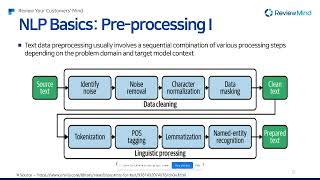
Introduction to NLP and Topic Modeling
Explore NLP basics, advanced techniques like word vectors, and topic modeling. Learn pre-processing, tools, and methodologies to start NLP modeling and understand topic analysis.
ODSC East 2022 Keynote by Luis Vargas, Ph.D. - The Big Wave of AI at Scale
Explore the trend of larger AI models, their growing capabilities, and impact on language, vision, and multi-modality. Learn about research, engineering efforts, and implications for companies.
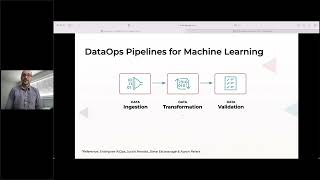
Scaling Data Preparation for Your Data-Centric AI Development
Explore scaling data preparation for AI development, covering DataOps, versioning, labeling, and automating workflows into robust pipelines for efficient ML operationalization.
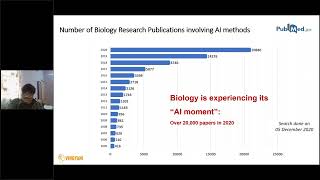
Coronavirus - Through The Lens Of AI
Explore AI applications in COVID-19 research: CT scan analysis, NLP for literature insights, and deep learning for drug candidate design. Learn how technology aids pandemic response.
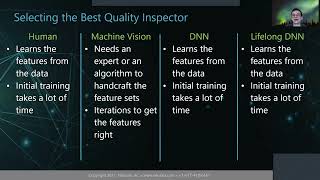
What Kind of AI Can Help Manufacturing Adapt to a Pandemic
Explore how AI, particularly DDNs and L-DNNs, can revolutionize quality inspections in manufacturing, adapting to challenges like COVID-19 and Industry 4.0 for improved efficiency and product quality.
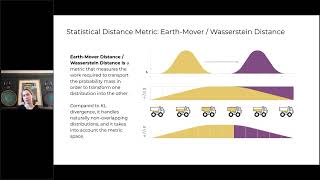
ML Observability - A Critical Piece for Making Models Work in the Real World
Learn essential ML observability practices to detect and resolve model issues in production, covering drift analysis, performance monitoring, data quality checks, and explainability techniques.
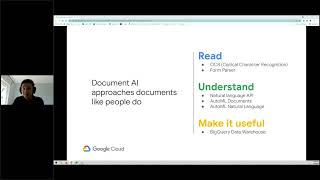
Accelerating the Journey to Document Understanding AI
Unlock document value with AI: transform unstructured data into actionable insights using Vision and NLP. Learn possibilities, capabilities, and implementation strategies for Document AI technology.
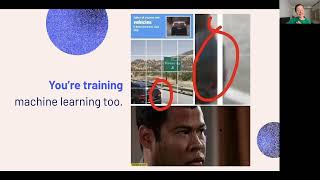
The Missing Link- How AI Can Help Create a Safer Society and Better Businesses
Explore how AI and NLP can enhance crime-solving, improve business efficiency, and create safer societies by automating information linking and reducing investigative time.
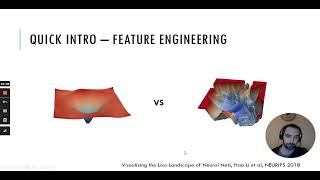
Dataset Management for Computer Vision - Important Component to Delivering Computer Vision Solutions
Explore dataset management's crucial role in computer vision solutions. Learn to align business goals, express assumptions, and maintain datasets for successful real-world implementations.
How to Set Up an ML Data Labeling Pipeline - Best Practices and Examples
Learn best practices for building ML data labeling pipelines through crowdsourcing. Explore real-life examples, requirements, and techniques for high-quality labeled data in supervised machine learning projects.
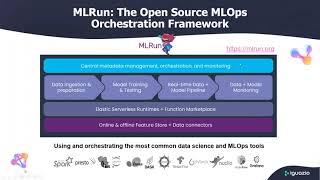
Building Real-Time ML Pipelines the Easy Way
Learn to build real-time ML pipelines for fraud prediction, predictive maintenance, and customer churn prevention. Explore challenges, solutions, and best practices for handling high-velocity data and triggering actions in seconds.
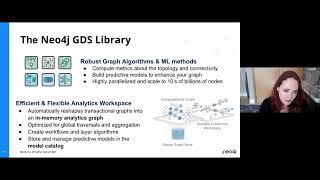
Relationships Matter - Using Connected Data for Better Machine Learning
Explore graph-native ML for enhanced predictions using relationship data. Learn graph feature engineering, ML techniques, and hands-on applications to leverage network structures in your data science models.
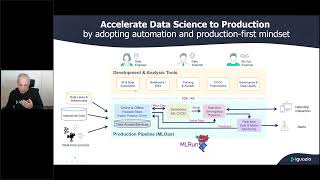
Git-Based CI-CD for ML
Learn to implement Git-based MLOps for continuous delivery, automating workflows, and enabling collaboration. Explore open-source tools and hosted ML platforms with a live demo on streamlining ML pipelines.
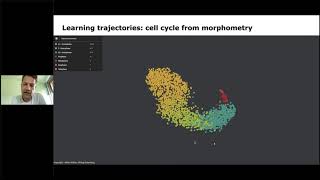
Interpretable Machine Learning to Model Drug Perturbations in Single Cell Genomics
Explore interpretable machine learning for modeling drug effects on single-cell genomics. Learn about deep autoencoders, manifold identification, and predicting novel perturbations in cellular states.
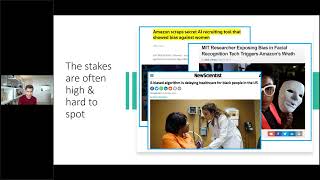
Building an Ethical Data Science Practice
Explore building an ethical data science practice, focusing on transparency, fairness, and explainability. Learn strategies to operationalize ethical AI and foster proactive risk management in your organization.
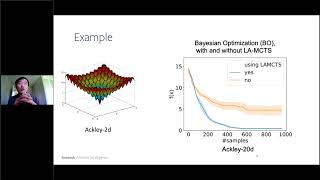
Learning to Optimize High Dimensional Optimization Problems
Explore deep neural networks and reinforcement learning for solving high-dimensional optimization problems, improving performance in job scheduling, neural architecture search, and black-box optimization.
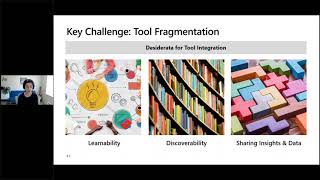
Responsible AI Dashboard - A Tool for Operationalizing Responsible AI
Explore Microsoft's Responsible AI Dashboard, an open-source framework integrating tools for error analysis, interpretability, fairness, and causal decision-making to build reliable and responsible AI products.
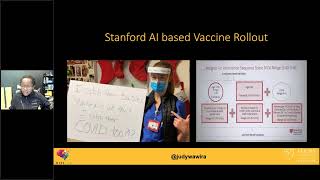
Fairness in Medical Algorithms - Threats and Opportunities
Explore fairness in medical AI algorithms, addressing biases, challenges, and opportunities for equitable healthcare. Learn practical approaches and open questions in developing fair medical AI systems.