
Testing Physics with Small Quantum Computers
Explore cutting-edge applications of small quantum computers in physics testing, focusing on challenges and potential breakthroughs in quantum computation.
Simulating Chemistry on Realistic Quantum Computers
Explore quantum computing's potential in simulating molecular interactions and solving complex chemical problems, with insights on algorithms, error correction, and practical applications.

AI Aspirations and Advances
Explore the latest AI developments and future aspirations with Microsoft's Eric Horvitz, delving into theoretical and practical implications for technology and society.
Towards Verification of General Neural Networks: A Dual Approach
Explore a dual approach for verifying general neural networks, focusing on mathematical and computational challenges in real-time decision making.
Frontiers of Machine Learning from the Lens of Retail
Explore cutting-edge machine learning applications in retail, focusing on innovative approaches and their impact on societal networks and consumer behavior.

The Deep Learning Revolution: What Does It Tell Us About Our Understanding of Intelligence?
Explore the implications of deep learning on our understanding of intelligence, examining its revolutionary impact and potential insights into cognitive processes.

Optimal Iterative Algorithms for Problems With Random Data
Explore advanced iterative algorithms for solving problems with random data, focusing on computational complexity in statistical inference.
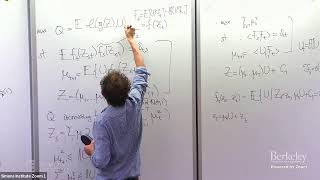
Optimal Iterative Algorithms for Problems With Random Data
Explore optimal iterative algorithms for statistical problems with random data, focusing on computational complexity and efficient solutions in statistical inference.
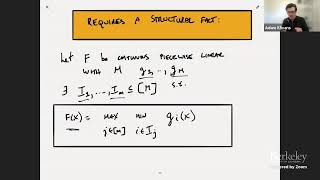
In Search of New Algorithms Part I - Neural Networks
Explore neural networks and their role in developing new algorithms, focusing on computational complexity and statistical inference challenges.

Answer Set Programming in a Nutshell
Explore Answer Set Programming's foundations, applications, and problem-solving capabilities in this comprehensive overview by expert Torsten Schaub from the University of Potsdam.
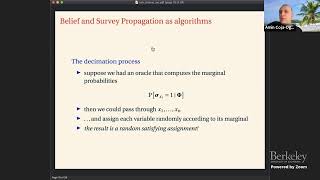
Belief and Survey Propagation
Explore belief and survey propagation algorithms for solving complex satisfiability problems, examining their applications and theoretical foundations in computational theory.
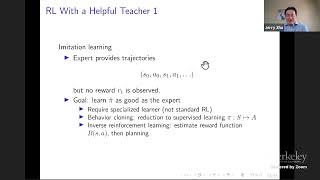
A Brief Introduction to Theoretical Foundations of Machine Learning and Machine Teaching
Explore theoretical foundations of machine learning and machine teaching, focusing on synthesis of models and systems in this comprehensive lecture by Jerry Zhu from University of Wisconsin-Madison.
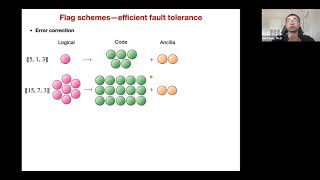
Quantum Fault Tolerance with Flag Qubits - Quantum Colloquium
Explore fault-tolerant quantum computing using flag qubits, a qubit-efficient method for error detection and correction in quantum circuits, with applications and theoretical implications.
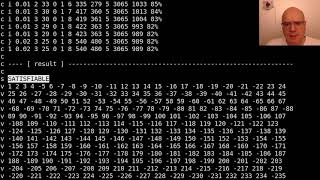
SAT-Solving
Explore the theory and practice of SAT-solving, delving into satisfiability concepts and advanced techniques in this comprehensive lecture by Armin Biere.
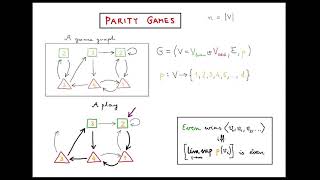
Games: From Logic and Automata to Algorithms
Explore the intersection of logic, automata, and algorithms through game theory, focusing on theoretical foundations and computational applications.

Pseudorandomness
Explorations in pseudorandomness: SoS lower bounds, block rigidity, unbounded-width permutation branching programs, computational entropies, and random projections in circuit complexity.

Berkeley in the 80s - Richard Karp and the Theory of Computing
In-depth interview with Turing Laureate Richard Karp, exploring his groundbreaking research on computational theory at Berkeley in the 1980s and its lasting impact on computer science.
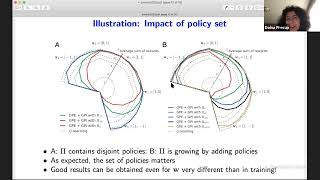
Fast Reinforcement Learning With Generalized Policy Updates
Explore advanced techniques in deep reinforcement learning, focusing on generalized policy updates for rapid learning and improved performance in complex environments.
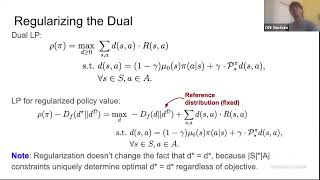
Attacking the Off-Policy Problem With Duality
Explore deep reinforcement learning techniques to address off-policy challenges using duality principles, enhancing AI decision-making in complex environments.

The Alignment Problem: Machine Learning and Human Values
Explore the ethical challenges and safety concerns in machine learning's rapid growth, examining recent progress and open questions in aligning AI with human values.
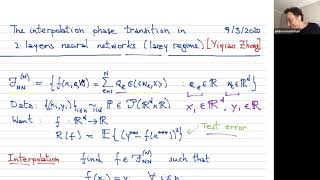
The Interpolation Phase Transition in Neural Networks - Memorization and Generalization Lazy Training
Explores overparametrization in neural networks, focusing on two-layer models in the neural tangent regime. Analyzes interpolation, optimization landscape, and generalization error under specific data assumptions.