Deep Learning Applications by Rina Panigrahy
Explore deep learning applications, from basic concepts to advanced techniques. Learn about neural networks, optimization methods, and real-world uses in image and speech recognition.
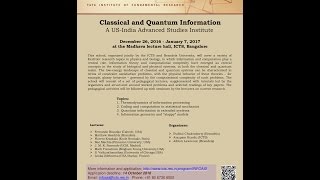
From Information Theory to Learning via Statistical Physics - Introduction
Explore connections between information theory, statistical physics, and learning. Delve into classical statistics, high-dimensional problems, and Bayesian approaches, with applications in signal processing and regression.
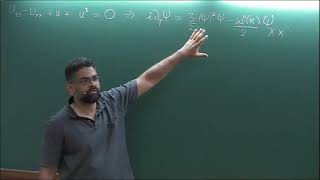
Perturbation Methods for Nonlinear PDEs - Lecture 3
Explore advanced perturbation techniques for nonlinear PDEs, focusing on multiple scales, asymptotic analysis, and the interplay between linear waves and nonlinearity in various scientific contexts.
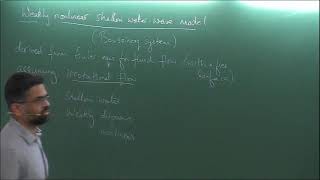
Perturbation Methods for Nonlinear PDEs - Lecture 4
Explore perturbation methods for nonlinear PDEs, focusing on shallow water waves and damped KDV models. Learn unified approaches to adapt linear equation techniques to nonlinear contexts.
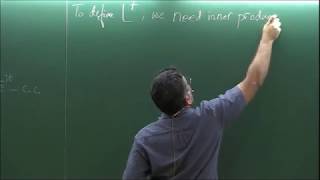
Perturbation Methods for Nonlinear PDEs - Lecture 2
Explore perturbation methods for nonlinear PDEs, focusing on nonlinear oscillators and periodic solutions. Learn techniques like inner products, perturbation series, and 2Pi periodicity to tackle complex equations.
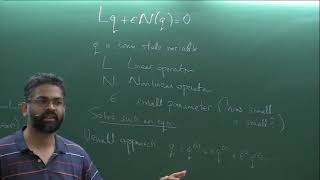
Perturbation Methods for Nonlinear PDEs - Lecture 1
Explore perturbation methods for nonlinear PDEs, focusing on adapting linear equation techniques. Learn unified approaches through examples from cold atoms, water waves, and atmospheric science.
Deep Decoder: Concise Image Representations from Untrained Networks - Lecture 2
Explores untrained neural networks as image models, focusing on the Deep Decoder for efficient compression and denoising. Discusses theoretical foundations and compares performance to other approaches.
Deep Reinforcement Learning of Marked Temporal Point Processes
Explore deep reinforcement learning for marked temporal point processes, covering event representation, policy optimization, and applications in information propagation and knowledge creation.
Machine Learning at Amazon by Rajeev Rastogi
Explore machine learning applications at Amazon, from product recommendations to size prediction, with insights on challenges and innovative approaches in e-commerce AI.
ProtoDash - Fast Interpretable Prototype Selection by Karthik Gurumoorthy
Explore ProtoDash, a fast interpretable prototype selection method for extracting compact representations of large datasets, with applications in causal reasoning, data relationships, and prediction accuracy improvement.
A Deep Generative Model for Molecular Graphs by Niloy Ganguly
Explores a deep generative model for molecular graphs using variational autoencoders, discussing its design, properties, and applications in drug discovery and molecule optimization.
Inverse Problems under a Learned Generative Prior - Lecture 1
Explores inverse problems using generative priors, comparing to sparsity models. Covers theory, algorithms, and applications in compressive sensing and phase retrieval, with focus on deep learning approaches.
Toward Theoretical Understanding of Deep Learning - Lecture 2
Explores theoretical aspects of deep learning, including overparameterization, optimization, generalization, and generative models, offering insights for researchers and practitioners in machine learning.
Mathematics of Machine Learning: An Introduction - Lecture 1
Comprehensive introduction to machine learning fundamentals, covering mathematical formalization, deep learning concepts, optimization techniques, and real-world applications in various domains.
Quantum Computation: Introduction and Fundamentals - Lecture 1
Comprehensive introduction to quantum computation, covering key concepts like quantum parallelism, annealing, gates, and qubits. Explores various quantum computer types and fundamental operations in quantum mechanics.
Efficient Invariant Embeddings for Universal Equivariant Learning
Explore efficient invariant embeddings for universal equivariant learning, focusing on group symmetries in machine learning tasks and their applications in various architectures like CNNs and graph neural networks.
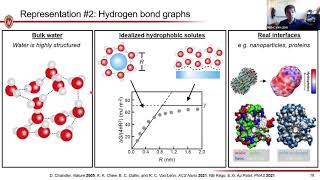
MD Simulations and Machine Learning to Quantify Interfacial Hydrophobicity
Explore molecular dynamics simulations and machine learning techniques to analyze interfacial hydrophobicity, focusing on efficient data analysis methods and topological approaches for complex chemical systems.
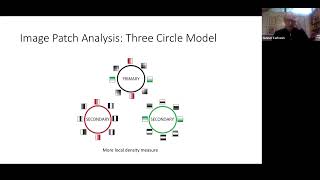
Gunnar Carlsson - Deep Learning and TDA
Explore deep learning's interaction with Topological Data Analysis, focusing on explainability and performance enhancement in neural networks and various data analysis applications.
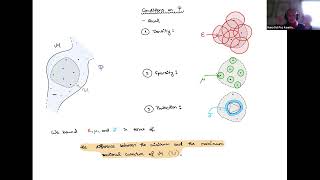
Curvature Variation Based Sampling for Delaunay Triangulations of Manifolds
Explore adaptive sampling for Delaunay triangulations of Riemannian manifolds, focusing on curvature variation and quality bounds for successful triangulation. Learn about geometric realizations and manifold triangulation techniques.
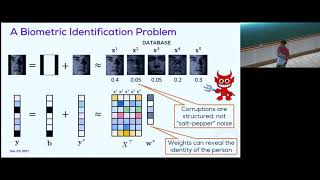
Robust Regression by Purushottam Kar
Explore robust regression techniques for learning and estimation in algorithms and optimization, focusing on practical applications and theoretical foundations.
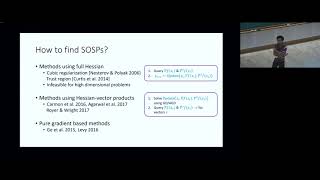
How to Escape Saddle Points Efficiently? by Praneeth Netrapalli
Explore efficient methods for escaping saddle points in non-convex optimization, focusing on perturbed gradient descent and its applications in various algorithmic settings.