Overly Optimistic Prediction Results on Imbalanced Data - Flaws and Benefits of Over-sampling
Explore flaws and benefits of over-sampling in imbalanced datasets, examining prediction results and comparing studies to improve machine learning model performance.
MAST - A Memory-Augmented Self-Supervised Tracker
Learn about MAST, a novel memory-augmented self-supervised tracker that enhances video tracking and segmentation using attention mechanisms and innovative algorithms.
Deep Ensembles: A Loss Landscape Perspective
Explore deep ensemble learning through loss landscapes, examining function similarity, subspace sampling, and prediction space analysis for improved model performance.
Exploring the Origins and Prevalence of Texture Bias in Convolutional Neural Networks
Explore texture bias in CNNs: origins, prevalence, and implications. Examine dataset influence, training objectives, and model architectures to understand and mitigate this phenomenon in computer vision.
ALBERT - A Lite BERT for Self-Supervised Learning of Language Representations
Explore ALBERT, a streamlined BERT variant for efficient language representation learning, covering key innovations and performance benchmarks.
Counterfactual Evaluation of Machine Learning Models
Explore counterfactual evaluation techniques for machine learning models, focusing on charge outcomes and iterative improvements in financial technology applications.
Fraud Detection in Bitcoin Payment Networks
Explore fraud detection in Bitcoin networks using machine learning, covering techniques like deep learning and entity recognition for effective cryptocurrency security.
Applied Machine Learning for Startups - Arshak Navruzyan
Applied ML strategies for startups: practitioner training, team structures, guidelines, and cutting-edge techniques in NLP and deep learning.

Deep Dive into the Transformer Encoder Architecture
Detailed exploration of transformer encoder architecture, covering embeddings, positional encodings, self-attention mechanisms, and key components for effective natural language processing.
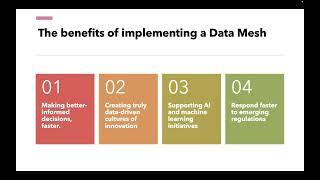
Building a Data Mesh - Strategies and Best Practices
Explore data mesh architecture: benefits, challenges, and best practices for implementation. Learn strategies for designing data products, governance models, and ensuring data quality in this decentralized approach.
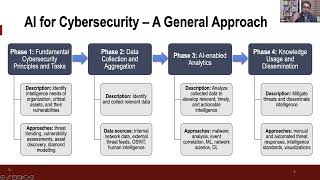
AI for Cybersecurity
Explore AI's role in cybersecurity, including research examples, workforce development, and the AI4Cyber Virtual Machine. Gain insights on integrating AI into security practices and optimizing operations.

An Intuition-Based Approach to Reinforcement Learning
Explore an intuition-based approach to reinforcement learning, covering key concepts like exploit vs. explore, Q-tables, and stochastic actions, with practical examples and applications.
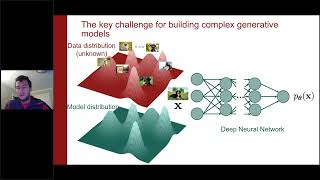
Denoising Diffusion-Based Generative Modeling
Explore diffusion-based generative modeling, its advantages over other approaches, and applications in image generation and inverse problems. Learn about score functions, training methods, and recent advancements.
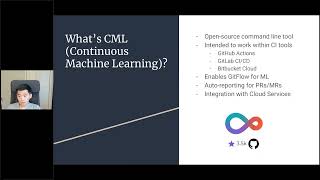
CI-CD for Machine Learning
Automate ML model training and evaluation using GitLab CI/CD. Learn to allocate cloud instances, generate performance reports, transfer data, and customize workflows for efficient machine learning development.
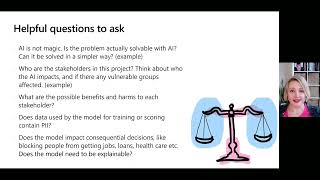
Responsible AI- From Principles to Practice
Explore ethical AI implementation, from principles to practice, focusing on healthcare considerations and practical tools for responsible AI throughout the development lifecycle.
Making MLOps Uncool Again
Learn to build an automated MLOps workflow using Git, GitHub, and open-source tools, covering the entire ML model lifecycle from data labeling to prediction monitoring.
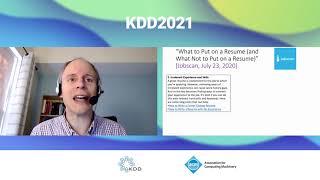
Automated Mechanism Design for Strategic Classification - Vincent Conitzer
Explore automated mechanism design for strategic classification, covering key concepts, optimization techniques, and future research directions in this field.
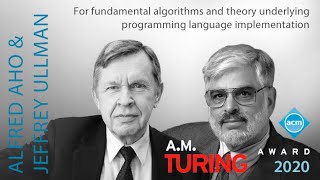
Turing Lecture 2021 - Abstractions, Their Algorithms, and Their Compilers
Explore computational thinking through abstractions, algorithms, and compilers. Delve into compiler design, large dataset handling, and quantum computation, with insights from renowned computer scientists.

Luis von Ahn: Pioneering Crowdsourcing and Language Learning with Duolingo
Pioneering crowdsourcing: From reCAPTCHA to Duolingo. Insights on harnessing collective intelligence for free language learning, tech entrepreneurship, and the impact of accessible education.

Deep Learning and Software Engineering - A Retrospective and Paths Forward
Explore deep learning's impact on software engineering, including code suggestion and program repair. Discover current research, challenges, and future directions in this emerging field.

Advanced Tutorials - Runtime Analysis of Population-Based Evolutionary Algorithms
Explore advanced techniques for runtime analysis of population-based evolutionary algorithms, covering selection mechanisms, random family trees, and level-based analyses to optimize algorithm performance.