Solving Overfitting in Neural Networks
Learn techniques to identify and prevent overfitting in neural networks, including early stopping, audio data augmentation, dropout, and L1/L2 regularization, with practical implementation in a music genre classifier.
Implementing a Neural Network for Music Genre Classification
Implement a music genre classifier using TensorFlow and MFCC features. Learn key deep learning concepts like binary/multiclass classification, ReLUs, batching, and overfitting while building the neural network.

Understanding Audio Data for Deep Learning
Explore fundamental audio processing concepts for deep learning, including waveforms, pitch, Fourier transform, and MFCCs, essential for AI applications in sound analysis.
How to Implement a Simple Neural Network With TensorFlow 2
Learn to implement a simple neural network using TensorFlow 2 and Keras for arithmetic sum, covering model building, training, testing, evaluation, and prediction.
Training a Neural Network - Implementing Backpropagation and Gradient Descent from Scratch
Implement backpropagation and gradient descent from scratch in Python, training a neural network to perform arithmetic sum. Includes step-by-step coding and explanations.
Training a Neural Network - Backward Propagation and Gradient Descent
Explore the theory and mathematics behind neural network training, focusing on backpropagation and gradient descent algorithms for deep learning enthusiasts.
Implementing a Neural Network From Scratch in Python
Step-by-step implementation of a neural network using Python and numpy, focusing on data representation and forward propagation for a Multilayer Perceptron.
Computation in Neural Networks
Explore Multilayer Perceptrons: components, structure, and signal processing. Learn about neurons, weights, layers, and activations in neural networks for a comprehensive understanding of distributed computation.
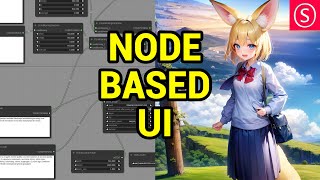
ComfyUI - Node Based Stable Diffusion UI
Explore ComfyUI, a node-based interface for Stable Diffusion, offering modular AI image generation with advanced techniques like ControlNET, T2I, and Lora for unparalleled creative control.
ChatGPT API in Python - How to Build a Custom AI Chat App
Learn to build a custom AI chat app using ChatGPT API in Python. Create a terminal client, store chat history, modify AI personality, and explore practical applications like a real estate AI assistant.
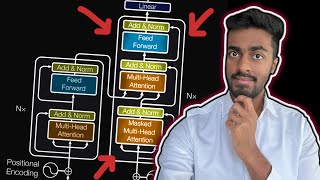
Blowing Up Transformer Decoder Architecture
Detailed exploration of Transformer Decoder architecture, covering key components like masked self-attention, cross-attention, and position encoding. Includes implementation insights and training considerations.
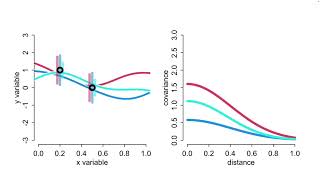
Statistical Rethinking 2023 - Gaussian Processes
Explore Gaussian processes and their applications in statistical analysis, including oceanic spatial confounds and phylogenetic regression, for advanced data modeling techniques.
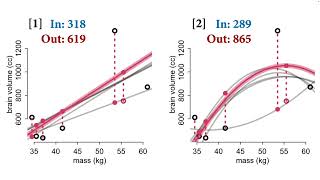
Statistical Rethinking 2023 - Fitting Over & Under
Explore advanced statistical concepts including cross-validation, regularization, and robust regression to enhance model fitting and selection techniques in data analysis.
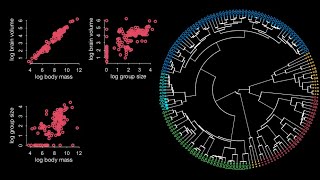
Statistical Rethinking 2022 - Gaussian Processes
Explore Gaussian processes, spatial confounding, and phylogenetic inference in statistical modeling. Learn to apply these concepts to real-world examples like oceanic covariance and primate phylogeny.
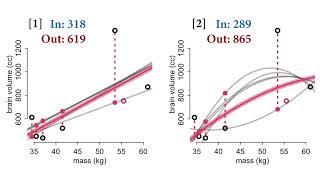
Statistical Rethinking 2022 - Overfitting
Explore overfitting in statistical modeling, covering cross-validation, regularization, information criteria, and robust regression techniques for improved predictive accuracy.
Difference Between 32-Bit & 64-Bit Operating System
Explore the differences between 32-bit and 64-bit operating systems, covering CPU registers, addressable space, data calculation, and advantages of 64-bit systems.

Introduction to Stacks - Theory and Implementation - C++ Placement Course
Comprehensive tutorial on stack data structure, covering theory, STL implementation, custom class creation, and problem-solving with practical coding examples in C++.

Clone a Linked List with Random Pointers - C++ Placement Course
Learn to clone a linked list with random pointers using three different approaches. Gain insights into efficient problem-solving techniques for complex data structures in C++.

Check Palindrome in Linked List - C++ Placement Course
Learn to check if a linked list is a palindrome using two efficient approaches, with step-by-step explanations and code implementations in C++.

Merge 2 Sorted Linked Lists - Sort 0s, 1s and 2s in Linked List
Learn to merge sorted linked lists and sort linked lists with 0s, 1s, and 2s. Master efficient algorithms and coding techniques for these common interview problems.
Remove Duplicates from a Sorted-Unsorted Linked List
Learn to efficiently remove duplicates from sorted and unsorted linked lists, with step-by-step explanations of approaches, code implementation, and logic breakdown. Includes homework for further practice.