Introduction to Transformers
Dive into the fundamentals of Transformers, exploring their architecture and applications in large language models with expert insights from Columbia University.
The Enigma of LLMs: Creativity, Compositionality, Pluralism, and Paradoxes
Explore the complexities of large language models, delving into creativity, compositionality, pluralism, and paradoxes. Gain insights into the ongoing research challenges and the importance of developing a comprehensive "Science of LLMs".
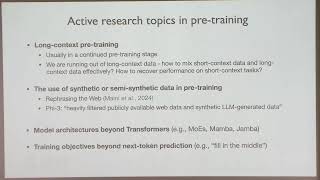
Training Large Language Models: Practices and Research Questions
Explore best practices and open research questions in training large language models, covering pre-training, post-training, data curation, algorithms, and safety mitigations.
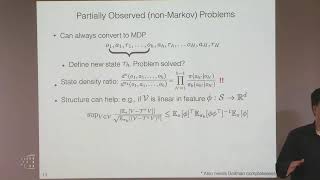
On the Curses of Future and History in Off-policy Evaluation in Non-Markov Environments
Delve into off-policy evaluation in non-Markov environments, exploring coverage concepts, future-dependent value functions, and novel estimators for partially observable MDPs with polynomial sample complexity guarantees.

Beyond Copilot - Leveraging the Latest AI Tools to Build Better Software
Explore cutting-edge AI tools beyond GitHub Copilot to enhance your software development workflow, from code optimization to automated documentation and bug detection.

Create, Share, and Explore Community-Made AI Apps with Glif
Dive into Glif, an innovative AI art platform. Create, share, and remix user-generated models for unique AI art. Explore features like Murano Glass, 80s TV, and AI-powered roasts. Join a community of creators and unleash your artistic potential.
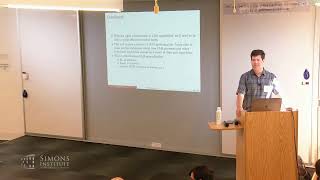
LLM Safety, Alignment, and Generalization
Explore the challenges and importance of LLM safety, alignment, and generalization as capabilities rapidly improve across various domains.

Animating a Spider Walk with Blender - Working Smarter, Not Harder
Discover efficient techniques for animating a spider's walk cycle in Blender. Learn to work smarter by animating multiple legs simultaneously, saving time and effort in your 3D animation projects.
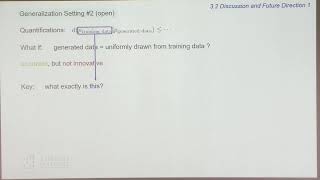
How Well Does Diffusion Model Generate? Exploring Generalization in Emerging Settings
Explore the capabilities and limitations of diffusion models in generative tasks, focusing on emerging generalization settings and their implications.
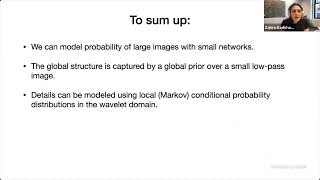
Generalization in Diffusion Models Arises from Geometry-Adaptive Harmonic Representations
Uncover the geometric foundations of diffusion models' generalization capabilities through adaptive harmonic representations in this insightful exploration.
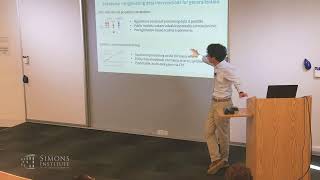
Controlling Distribution Shifts in Language Models: A Data-Centric Approach
Explore data-centric approaches to control distribution shifts in language models, focusing on algorithmic filtering and domain-specific data synthesis for improved generalization.
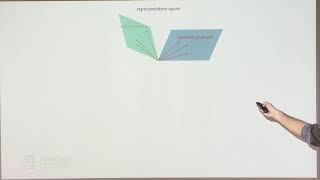
Robust Generalization in the Era of LLMs - Jailbreaking Attacks and Defenses
Explore jailbreaking attacks on LLMs, their vulnerabilities, and defense strategies. Gain insights into robust generalization and evaluation methods for production language models.
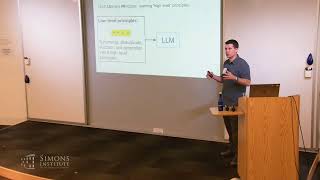
In-Context Principle Learning from Mistakes
Explore Uri Alon's insights on in-context principle learning from mistakes, focusing on emerging generalization settings in AI and machine learning.
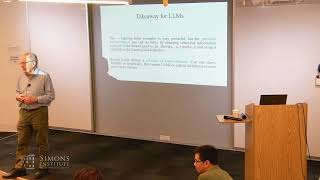
Out-of-Distribution Generalization as Reasoning - Are Large Language Models Competitive?
Explore the concept of out-of-distribution generalization in LLMs through the lens of robust logic and PAC learning. Gain insights into how humans and AI systems can make principled predictions beyond their training data.
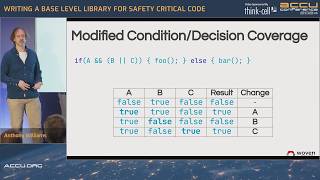
Writing a Base Level Library for Safety Critical Code in C++ - Lecture
Dive into safety-critical C++ development for modern cars. Explore tools, testing methodologies, coding standards, error handling, and design impacts for creating reliable software where lives are at stake.
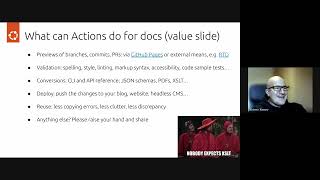
GitHub Actions for Documentation - Open Documentation Hour
Explore GitHub Actions for documentation automation, from basic concepts to practical implementation, benefits, and potential drawbacks in this comprehensive technical presentation.
The Pitfalls of Next-token Prediction in Language Models
Explore the limitations of next-token prediction in AI, examining its challenges in modeling human intelligence and potential solutions beyond this paradigm.
When Do Dependencies in Your Data Help? - Emerging Generalization Settings
Explore how dependencies in data can overcome computational barriers in learning graphical models, using the Glauber dynamics process as a natural data generation method.

When Calibration Goes Awry: Hallucination in Language Models
Explore the phenomenon of hallucinations in language models, their connection to calibration, and potential mitigation strategies in this insightful talk by Adam Kalai from OpenAI.
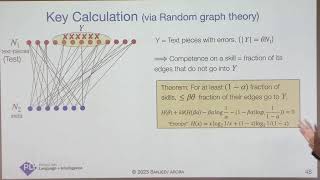
LLM Metacognition: Understanding and Leveraging "Thinking about Thinking"
Explore LLM metacognition and its impact on AI capabilities. Gain insights into how large language models demonstrate deeper understanding and reasoning about their own skills and learning processes.
Unexpected Test Losses from Generalization Theory
Dive into generalization theory's impact on unexpected test losses, exploring emerging settings and their implications for machine learning models.