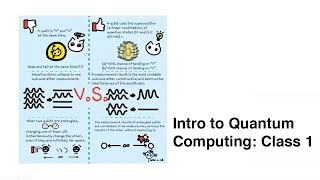
HackadayU- Quantum Computing - Qubits, Superposition Class
Explore quantum computing fundamentals: qubits, superposition, and applications. Dr. Kitty Yeung introduces key concepts and compares classical bits to quantum bits in this introductory class.

CompTIA Linux+ - Linux Basics Follow-Along Lab
Hands-on lab for CompTIA Linux+ certification covering basic Linux commands, environment variables, IP addressing, and file management. Ideal for exam preparation.

Powershell for Windows Azure
Learn PowerShell for Windows Azure: create resource groups, virtual networks, security groups, and virtual machines. Hands-on practice with essential Azure management tasks using PowerShell commands.
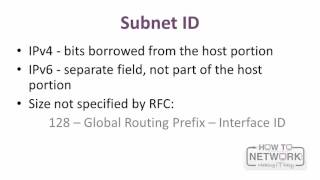
Learn IPv6 Addressing
Comprehensive guide to IPv6 addressing, covering number systems, address formats, types, and subnetting techniques for beginners to experts in network administration.

MIT Introduction to Deep Learning
Comprehensive introduction to deep learning fundamentals, covering perceptrons, neural networks, loss functions, gradient descent, backpropagation, and regularization techniques.

How an 18th Century Sailing Battleship Works
Detailed exploration of 18th century sailing battleship anatomy and function, from frame to rigging, offering insights into naval warfare and maritime technology of the era.

ChatGPT API in Python
Learn to integrate and utilize the ChatGPT API in Python, from basic queries to building a Gradio chat application, with practical examples and code demonstrations.

Understanding Code You Didn't Write - Code Review
Learn effective techniques for understanding and reviewing unfamiliar code, including identifying entry points, self-documenting practices, and best practices for structuring classes and variables.

Memory Management and Performance Optimization in Game Development
Explore memory optimization techniques for a 2D physics engine, including heap allocation, CPU caching, logging efficiency, and smart memory allocation strategies.

Recent Progress in Predictive Inference - Emmanuel Candes, Stanford University
Emmanuel Candes discusses novel calibration techniques for machine learning predictions, addressing issues like false discovery rate control and adaptive conformal inference to handle distribution shifts.

Human-Compatible Artificial Intelligence - Stuart Russell, University of California
Stuart Russell explores the potential and risks of AI surpassing human capabilities, proposing a fundamental shift in AI development to ensure beneficial outcomes and addressing key ethical and philosophical questions.

Deep Learning for Scientific Computing - Two Stories on the Gap Between Theory & Practice - Ben Adcock
Explores deep learning in scientific computing, highlighting limitations and recent theoretical advancements in high-dimensional function approximation and inverse problems for imaging, aiming to bridge the gap between theory and practice.

Kuzushiji Recognition Smartphone Application with AI
Explore AI-powered kuzushiji recognition with the miwo app, revolutionizing the study of premodern Japanese documents through innovative technology and user-friendly mobile application.

Visual and Spatial Digital Humanities Research for Japanese Culture
Explore visual and spatial digital humanities research for Japanese culture, focusing on innovative projects using computer vision, machine learning, and geographic information science to analyze historical data.
Stanford University's New Approach to Mitigate Negative Ethical and Societal Aspects of AI Research
Stanford's Ethics and Society Review board: A novel approach to mitigate ethical and societal impacts of AI research, requiring researchers to address potential harms before receiving funding.

On the Dangers of Stochastic Parrots - Can Language Models Be Too Big?
Explore the risks and ethical implications of large language models with experts, discussing potential mitigation strategies and the future of NLP research.

Navigating the AI Council's AI Roadmap
Experts discuss AI's role in UK society, addressing climate change, resilience, mental health, diversity, and skills development while exploring strategies to build public trust and make actionable impact.

Safe and Ethical Priorities for AI
Exploring UK's role in responsible AI innovation, covering safety, ethics, governance, and practical applications like tactile robotics. Insights from experts on fostering trust and creating impactful AI solutions.
AI UK - Doing Better in Data Science – From Algorithmic Fairness to Diversity
Experts discuss responsible AI, diversity in data science, and creating fair, inclusive AI systems. Explore challenges and opportunities in algorithmic fairness, team diversity, and equitable AI access across society.
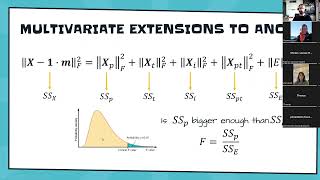
Statistical Inference of Omics Data with Variable-Selection
Learn statistical inference techniques for omics data analysis, focusing on variable selection methods to enhance spectral matching and predict molecular structures from LC-MS/MS spectra using chemometrics and deep learning approaches.
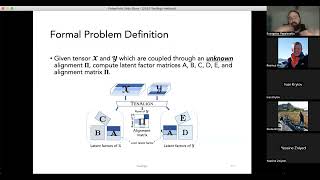
Joint Tensor Alignment and Coupled Factorization
Explore joint tensor alignment and coupled factorization for analyzing coupled datasets with unknown entity correspondence, outperforming multi-stage approaches in data mining applications.