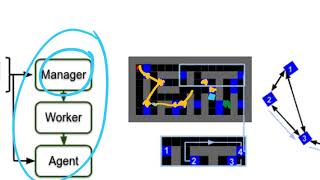
Learning World Graphs to Accelerate Hierarchical Reinforcement Learning
Explore hierarchical reinforcement learning using world graphs to accelerate learning in complex environments. Learn about pivotal states, goal-conditioned policies, and efficient task solving.
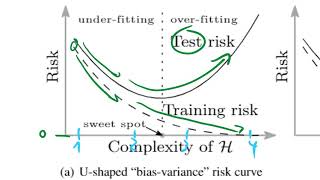
Reconciling Modern Machine Learning and the Bias-Variance Trade-Off
Explores the paradox of modern machine learning where complex models can generalize well despite overfitting, introducing the "double descent" risk curve that extends beyond the traditional bias-variance trade-off.

Population-Based Search and Open-Ended Algorithms
Explore population-based search and open-ended algorithms in AI, discussing key concepts and potential applications for advancing machine learning and artificial intelligence.
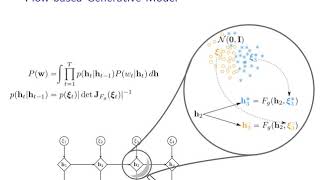
Stochastic RNNs Without Teacher-Forcing
Explore stochastic non-autoregressive RNNs for unconditional word generation, based on deep state space models. Learn about innovative training techniques without teacher-forcing.
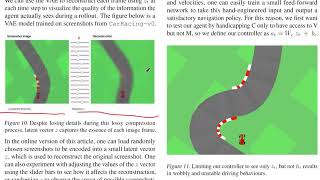
World Models
Explore generative neural network models for reinforcement learning environments, learning compressed representations and training agents in hallucinated dreams for efficient task-solving.
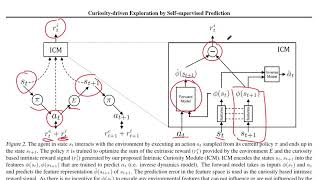
Curiosity-Driven Exploration by Self-Supervised Prediction
Explore how curiosity can be an intrinsic reward for agents in sparse-reward environments, using self-supervised prediction to enable efficient exploration and skill acquisition.
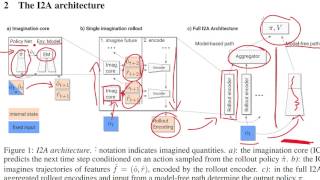
Imagination-Augmented Agents for Deep Reinforcement Learning
Explore innovative deep reinforcement learning architecture combining model-free and model-based approaches for improved performance and efficiency in complex environments.

Composite Indexes and the Faiss Index Factory
Explore composite indexes and Faiss Index Factory for optimizing vector search performance, balancing recall, latency, and memory usage in similarity search applications.

Training BERT - Masked-Language Modeling
Explore BERT's masked-language modeling technique for NLP tasks. Learn how this innovative approach trains the model to predict masked tokens, enhancing its understanding of language context.

Extractive Q&A With Haystack and FastAPI in Python
Build an extractive Q&A system using Haystack, FastAPI, and BERT transformer. Implement Elasticsearch with BM25 retriever for efficient information retrieval and answer generation from text documents.

AI Alignment Livestream - OpenAssistant "Just Chatting"
Explore AI alignment and OpenAssistant in this livestream. Yannic Kilcher discusses key concepts, challenges, and developments in the field of artificial intelligence alignment.
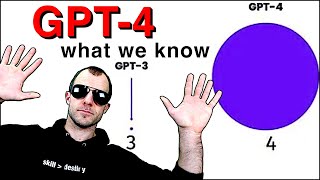
GPT-4 Is Here! What We Know So Far - Full Analysis
Comprehensive analysis of GPT-4's capabilities, improvements, and potential impact on AI technology, based on OpenAI's latest release and research findings.
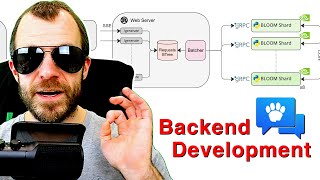
Open Assistant Inference Backend Development
Hands-on coding session building streaming inference into Hugging Face's text generation server, covering CUDA, Python, Rust, gRPC, WebSockets, and server-sent events for AI development.

ChatGPT - This AI Has a Jailbreak! - Unbelievable AI Progress
Explore ChatGPT's capabilities, origins, and potential risks. Learn about its underlying technology, amazing features, and ways to bypass safety mechanisms, while considering OpenAI's vision for the future.
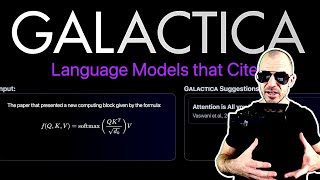
Galactica - A Large Language Model for Science - Drama & Paper Review
Explore Galactica, a language model for science. Learn about its capabilities, controversy, dataset construction, reasoning methods, and performance in various scientific tasks.

Did Google's LaMDA Chatbot Just Become Sentient?
Explore the controversy surrounding Google's LaMDA chatbot and its alleged sentience. Analyze claims, examine language models, and delve into the philosophical questions of AI consciousness and recognition of machine sentience.
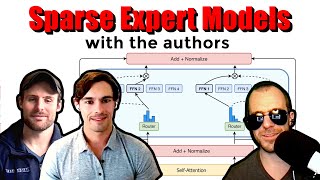
Sparse Expert Models - Switch Transformers, GLAM, and More With the Authors
Explore sparse expert models in AI, discussing their architecture, routing, history, applications, and future potential. Learn about Switch Transformers, GLAM, and advancements in efficient large-scale language models.
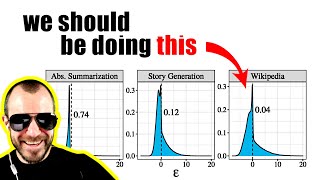
Typical Decoding for Natural Language Generation - Get More Human-Like Outputs From Language Models
Explore typical sampling, a new decoding method for language models that balances high-probability and high-information outputs, resulting in more diverse and interesting generated text.
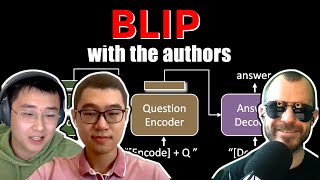
One Model for All the Tasks - BLIP - Author Interview
Interview exploring BLIP, a versatile vision-language model that excels in both understanding and generation tasks. Discusses data bootstrapping, architecture evolution, and future directions in multi-modal AI research.
OpenAI Tackles Math - Formal Mathematics Statement Curriculum Learning
Explores OpenAI's innovative approach to formal mathematics using expert iteration, demonstrating improved performance in automated proof search and solving challenging olympiad-level problems.

GPT-NeoX-20B - Open-Source Huge Language Model by EleutherAI - Interview With Co-Founder Connor Leahy
Interview exploring EleutherAI's GPT-NeoX-20B, a 20B parameter open-source language model. Discusses training process, hardware acquisition, model capabilities, and how to try it out.