ChatGPT Unleashed - Mastering AI Conversations: Complete Training Walkthrough for Chat GPT
Comprehensive guide to mastering AI conversations with ChatGPT. Learn about AI, LLMs, effective prompts, extensions, and managing hallucinations through practical walkthroughs and clear explanations.
Integrations 101
Comprehensive guide to Snyk integrations, covering IDE setup, CLI usage, Git onboarding, Jira integration, and reporting. Ideal for new users and administrators seeking to enhance security in their development pipeline.
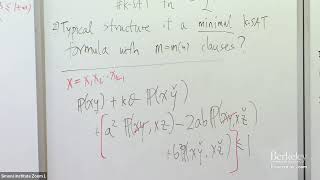
Nearly All K-SAT Functions Are Unate
Explore the prevalence of unate functions in k-SAT, resolving a 2003 conjecture and unveiling structural insights into Boolean satisfiability problems.
Solving Boggle Using AI - Dynamic Programming + Trie in Python
Learn to build an AI algorithm using dynamic programming and trie data structure to efficiently solve Boggle puzzles in Python, covering key concepts in graph theory and algorithm design.

ChatGPT - GPT-4 Prompt Engineering: Master the Ultimate Prompt Today
Discover a step-by-step method for crafting effective prompts to solve problems with ChatGPT-4, explore AI career opportunities, and visualize solutions provided by the language model.
ChatGPT - GPT-4 System Prompt Engineering - Ultimate Guide
Optimize AI interactions by mastering GPT-4/ChatGPT system roles. Learn to craft personas, provide context, and define tasks for enhanced control and improved outcomes.
What Are Autonomous AI Agents - And Why You Should Care
Explore autonomous AI agents' potential in marketing, customer support, and content creation. Learn key characteristics and discover how they're revolutionizing AI interaction.
How to Fine-Tune a GPT-3 Model - Step by Step
Learn to fine-tune GPT-3 models with synthetic data generation, data augmentation, and JSON file preparation. Includes step-by-step instructions and practical testing of the fine-tuned model.

Stable Diffusion and Midjourney - Celebs and Superheroes
Explore AI-generated celebrity and superhero mashups using Stable Diffusion and Midjourney. Learn techniques for image creation, manipulation, and optimization while discovering the quirks and capabilities of these AI tools.
How Simulating Balls and Springs Captures the Power of Quantum Computing
Explore how simulating classical ball-spring systems relates to quantum computing power, offering insights into BQP-complete problems and new quantum algorithm design approaches.
Quantum Algorithms for Approximating Partition Functions
Explore advanced quantum algorithms for approximating partition functions, focusing on computational techniques and applications in statistical physics and machine learning.
Quantum Gibbs Sampling
Explore quantum algorithms for sampling quantum Gibbs states, a fundamental concept in quantum computing and statistical mechanics, with applications in computer science.
Quantum Advantage with Shallow Clifford Circuits
Explore Clifford circuits' quantum advantage over classical counterparts, including constant-depth capabilities and open problems in this cutting-edge quantum computing research area.
Dissipative State Preparation and the Dissipative Quantum Eigensolver
Explores a novel quantum algorithm for finding ground states of quantum systems, offering advantages like simplicity, monotonic convergence, and fault resilience in quantum computing applications.
Tight Space Complexity of the Coin Problem
Explore the space complexity of the coin problem, focusing on distinguishing biased coins. Learn about tight thresholds and new combinatorial techniques for analyzing branching programs.
Some Remarks About Quantum and Classical Local Hamiltonian Optimization and SDP Rounding
Explore quantum and classical local Hamiltonian optimization and SDP rounding techniques, with insights from Ryan O'Donnell on advanced optimization strategies in quantum computing.
Randomized versus Deterministic Decision Tree Size
Explore the relationship between randomized and deterministic decision tree size complexity for Boolean functions, with implications for query complexity and rank equivalence.
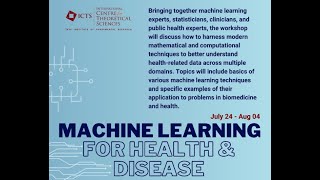
Training Deep Learning Computer Vision Models in Pytorch Part II by Pranay Goel
Learn advanced techniques for training deep learning computer vision models using PyTorch, including optimization strategies and model architectures for improved performance and accuracy.
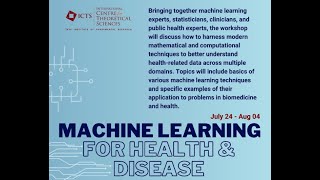
Training Deep Learning Computer Vision Models in Pytorch - Part I
Learn to train deep learning computer vision models using PyTorch, covering essential techniques and best practices for developing effective image analysis solutions.
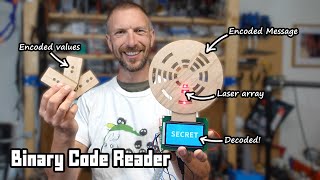
Binary Card Reader
Learn to create an escape room prop using ESP32 or Arduino to decode binary values from punched cards, featuring laser and LDR arrays, voltage divider circuits, and detailed code explanations.
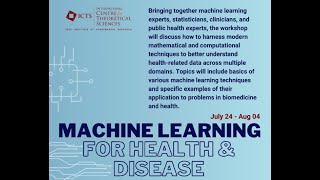
Bone Age Detection From Hand X-rays Using Deep Learning
Explore deep learning techniques for bone age detection from hand X-rays, enhancing medical diagnostics and patient care through advanced image analysis.