
Medical Polyp Image Segmentation with U-Net and TensorFlow Keras
Step-by-step guide to implement U-Net for medical polyp image segmentation using TensorFlow/Keras, covering data preprocessing, model architecture, training, and evaluation.
Achieving Full Situational Awareness of Multiple Kubernetes Clusters with Lens
Discover Lens, the popular Kubernetes IDE for streamlined cluster management. Learn multi-cluster observability, performance evaluation, and security features through practical demonstrations and expert insights.
Advanced Inheritance and Polymorphism - Example With Array of Objects
Explore advanced OOP concepts through practical examples. Learn to implement inheritance, polymorphism, and efficient memory management in arrays of objects for more robust and reusable code.
How to Incorporate ChatGPT into Your App with Qwik.js - Developing Smarter Apps With Generative AI
Learn to integrate ChatGPT into web apps using Qwik.js and JavaScript's fetch API. Covers OpenAI authentication, HTTP requests, QwikCity actions, environment variables, and response handling for smarter app development.

How to Setup RetroPie on Raspberry Pi 4
Comprehensive guide to setting up RetroPie on various Raspberry Pi models, covering hardware, emulation basics, and step-by-step installation process for retro gaming enthusiasts.

How to Run LLaMA-2-70B on the Together AI
Learn to run LLaMA-2-70B on Together AI's platform. Explore the API, playground, and documentation. Gain hands-on experience with code implementation for this powerful language model.

An Observation on Generalization
Explore insights on generalization in large language models and transformers with OpenAI's Ilya Sutskever, delving into the capabilities and implications of advanced AI systems.
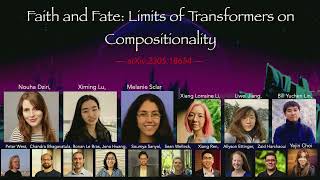
Possible Impossibilities and Impossible Possibilities
Explore the limits and potential of large language models, questioning fundamental constraints and alternative paths beyond scale in this thought-provoking discussion on AI's future.
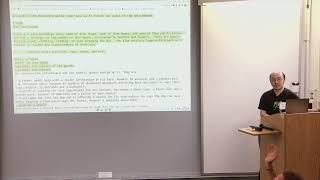
Sparks of Artificial General Intelligence
Exploring GPT-4's advanced capabilities and the potential for smaller models to exhibit AGI-like properties through high-quality data and efficient training methods.
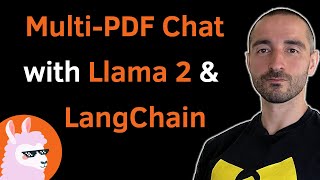
Chat with Multiple PDFs Using Llama 2 and LangChain - Use Private LLM and Free Embeddings for QA
Learn to build a chatbot using Llama 2 and LangChain to answer questions from multiple PDFs. Explore private LLM integration, vector stores, and efficient document retrieval techniques.

Machine Learning Methods for Climate Science - Lecture 2
Explore machine learning applications in climate science, focusing on advanced techniques and their impact on understanding and predicting climate phenomena.
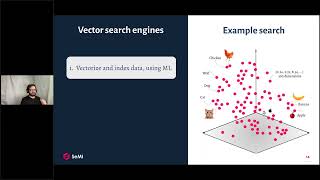
Vector Search - A Gentle Introduction - Zain Hasan
Explore vector search technology, its applications in semantic search and recommendation systems, and learn about implementing real-time vector search with CRUD support for production-scale ML models.

Formalizing Explanations of Neural Network Behaviors
Explores strategies for formally explaining neural network behaviors, discussing alternatives to informal interpretations and rigorous proofs, aiming to provide safety benefits in AI research.

Are Aligned Language Models "Adversarially Aligned"?
Explore techniques to manipulate aligned language models into harmful behavior, highlighting challenges in creating robustly aligned AI systems resistant to adversarial attacks.

Language Models as Statisticians, and as Adapted Organisms
Exploring language models as statistical tools and adapted systems to understand their behavior, capabilities, and potential for improvement in various applications.

On Localization in Language Models
Explore the role of individual components in language models, their characterization, and how analyzing internal structures can elucidate behavior in memorization, gender bias, and factual recall.
Data Alchemy - Unlocking GPT-4 Insights from Your Own Data
Explore how to leverage GPT-4 for extracting valuable insights from CSV data, transforming everyday transactions into a powerful decision-making tool for businesses.

How to Use Self-Play for Language Models to Improve at Solving Programming Puzzles
Explore how language models can generate and solve programming puzzles, improving their own performance through self-play and interpreter-verified solutions.
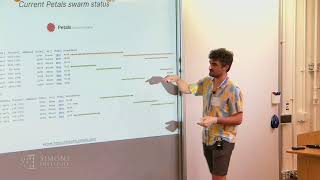
Build an Ecosystem, Not a Monolith
Explore the potential of specialist AI models in creating a more efficient and effective ecosystem, addressing technical challenges and collaborative development opportunities.

Interpretability via Symbolic Distillation
Explore symbolic distillation techniques for enhancing interpretability in large language models and transformers, focusing on practical applications and theoretical insights.
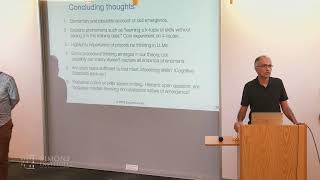
A Theory for Emergence of Complex Skills in Language Models
Explores statistical framework linking LLM cross-entropy loss to language skill competence, analyzing scaling laws' implications for efficient learning and emergence of complex abilities.