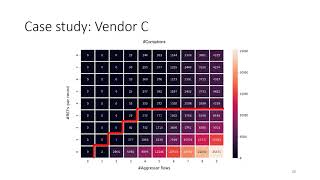
TRRespass- Exploiting the Many Sides of Target Row Refresh
Explore DRAM vulnerabilities and RowHammer attacks with TRRespass, a novel fuzzing technique that exposes weaknesses in Target Row Refresh mitigations, enhancing understanding of hardware security challenges.
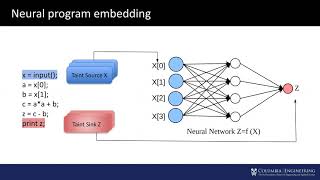
Neutaint- Efficient Dynamic Taint Analysis with Neural Networks
Explore efficient dynamic taint analysis using neural networks, overcoming limitations of traditional methods and improving performance in exploit analysis and fuzzing.
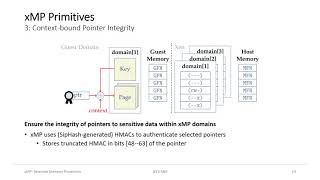
XMP: Selective Memory Protection for Kernel and User Space
Selective memory protection technique for enhanced security in kernel and user space, leveraging virtualization to isolate sensitive data and mitigate data-oriented attacks.
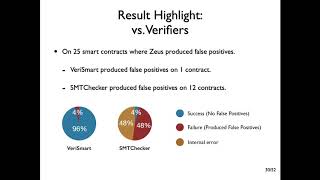
VeriSmart: A Highly Precise Safety Verifier for Ethereum Smart Contracts
Explore a precise safety verifier for Ethereum smart contracts, addressing critical security issues and showcasing advanced automated verification techniques for blockchain technology.
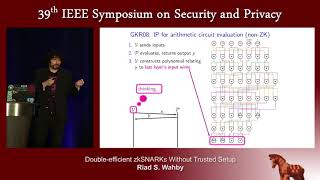
Double-Efficient ZkSNARKs Without Trusted Setup
Explores efficient zkSNARKs without trusted setup, introducing Hyrax - a new zero-knowledge argument for NP with low communication complexity and concrete costs, based on standard cryptographic assumptions.
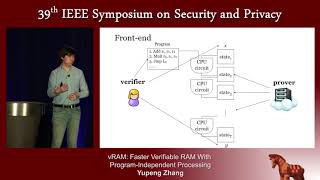
VRAM: Faster Verifiable RAM With Program-Independent Preprocessing
Explore faster verifiable RAM with program-independent preprocessing, reducing prover's memory and time while scaling to larger computations. Optimal prover overhead and comparable performance to program-specific schemes.
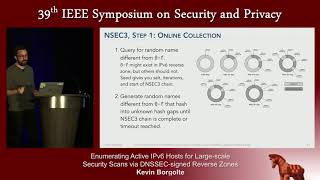
Enumerating Active IPv6 Hosts for Large-Scale Security Scans via DNSSEC-Signed Reverse Zones
Discover a novel technique for enumerating active IPv6 addresses through DNSSEC-signed reverse zones, revealing significant security vulnerabilities in IPv6-connected devices and infrastructure.
Cryptographic Function Detection in Obfuscated Binaries via Bit-Precise Symbolic Loop Mapping
Explore bit-precise symbolic loop mapping for identifying cryptographic functions in obfuscated binaries, enhancing malware defense and forensics through innovative detection techniques.
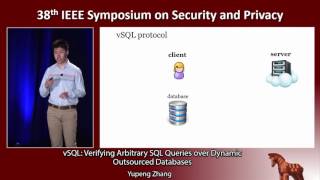
vSQL: Verifying Arbitrary SQL Queries over Dynamic Outsourced Databases
Explore verifiable SQL queries on outsourced databases with vSQL, a cryptographic protocol offering efficient verification and improved server performance compared to existing solutions.
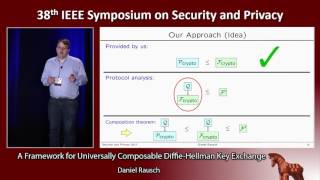
A Framework for Universally Composable Diffie-Hellman Key Exchange
Explore a framework for universally composable Diffie-Hellman key exchange, simplifying analysis of real-world protocols and reducing the need for complex reduction proofs in cryptographic security.
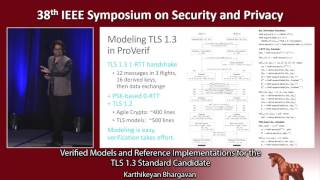
Verified Models and Reference Implementations for the TLS 1.3 Standard Candidate
Comprehensive analysis of TLS 1.3 Draft-18, addressing security concerns, verifying computational security, and extending guarantees to implementations through symbolic and computational models.
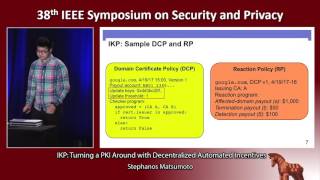
Turning a PKI Around with Decentralized Automated Incentives
Explore automated responses to unauthorized certificates and incentives for improved PKI security through blockchain-based consensus and smart contracts.
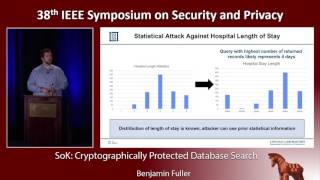
Cryptographically Protected Database Search
Exploration of cryptographically protected database search systems, analyzing primitive operations, current implementations, potential attacks, and future directions for enhancing data security and functionality.
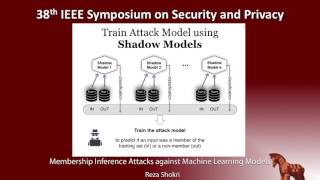
Membership Inference Attacks against Machine Learning Models
Explore membership inference attacks on machine learning models, focusing on techniques to determine if specific data was used in training, with implications for privacy and security in ML applications.
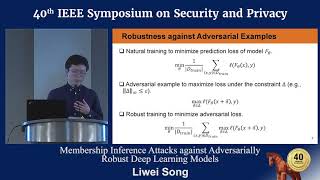
Membership Inference Attacks against Adversarially Robust Deep Learning Models
Explore membership inference attacks on adversarially robust deep learning models, examining the interplay between security defenses and privacy vulnerabilities in AI systems.
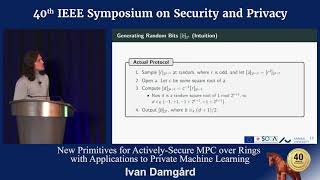
New Primitives for Actively-Secure MPC over Rings with Applications to Private Machine Learning
Explore new primitives for secure multi-party computation over rings, with applications to private machine learning. Efficient protocols for equality test, comparison, and truncation are presented and benchmarked.
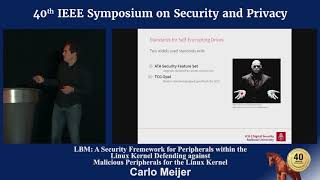
LBM - A Security Framework for Peripherals within the Linux Kernel
Explore a security framework for Linux kernel peripherals, focusing on defending against malicious devices and understanding self-encryption techniques and potential vulnerabilities.
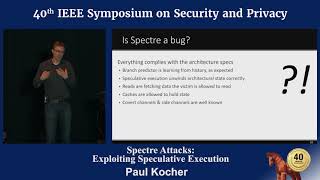
Spectre Attacks Exploiting Speculative Execution
Explore speculative execution vulnerabilities in modern processors, their impact on system security, and potential countermeasures to protect against Spectre attacks.
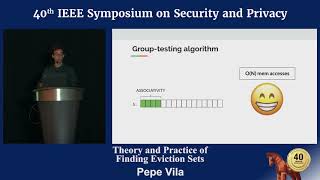
Theory and Practice of Finding Eviction Sets
Explores efficient algorithms for finding minimal eviction sets in cache attacks, improving speed and practicality through threshold group testing techniques and rigorous empirical evaluation.
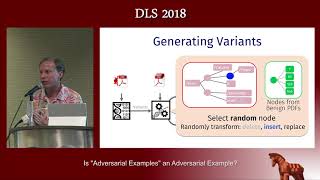
Is "Adversarial Examples" an Adversarial Example?
Explore adversarial examples in deep learning, their implications for security, and strategies for defense in this thought-provoking IEEE keynote by David Evans.
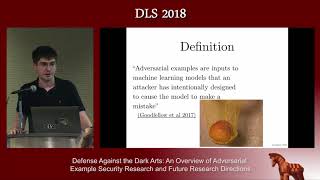
Defense Against the Dark Arts
Overview of adversarial example research in machine learning, exploring attacks, defenses, and future directions for enhancing AI security and robustness against malicious inputs.