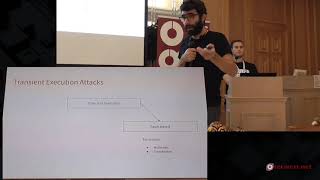
Speculative Execution Vulnerabilities: From Spectre to Control Flow Hijack
Comprehensive exploration of speculative execution attacks, from original Spectre to new vulnerabilities. Clear explanations of exploitation challenges and processor vulnerabilities, with insights on high-resolution timers as potential weapons.

Machine Learning with Python - Python for Data Science and Machine Learning
Comprehensive tutorial on NumPy, Pandas, and data visualization tools for Python-based machine learning, covering array operations, data manipulation, and creating statistical graphics.

Supervised Machine Learning Tutorial - Logistic Regression - Naive Bayes Classifier
Explore logistic regression and Naive Bayes classifiers for supervised machine learning. Learn their advantages, applications, and implementation in classification tasks for data-driven decision making.

Getting Started with CSS - CSS Tutorials for Beginners - Learn CSS
Comprehensive introduction to CSS, covering selectors, properties, and styling techniques. Includes practical demonstrations and examples for beginners to create visually appealing web pages.

Learn Divide & Conquer Algorithms - Great Learning
Explore divide and conquer algorithms: Binary Search, Quick Sort, and Merge Sort. Learn concepts, implementations, and complexities in this comprehensive session on efficient problem-solving techniques.
Introduction to Kubernetes
Comprehensive introduction to Kubernetes, covering containers, Docker, key functions, and YAML files. Includes demonstrations and examples for beginners to understand container orchestration in DevOps.

Data Structures and Algorithms for Tech Interviews - Tips & Tricks to Crack Interviews
Learn essential data structures and algorithms for tech interviews, covering arrays, linked lists, stacks, queues, searching, and sorting techniques with practical implementations and complexity analysis.

Getting Started with IoT
Comprehensive introduction to IoT fundamentals, covering evolution, architecture, and applications. Explores microcontrollers like Arduino and Raspberry Pi, with real-world examples and Q&A session.

Top 5 Sorting Algorithms - Data Structures and Algorithms - Sorting Algorithms
Explore five key sorting algorithms: Bubble, Selection, Insertion, Quick, and Merge. Learn concepts, implementations, time/space complexity, and compare their efficiency for various scenarios.
Introduction to DevOps - DevOps Tutorial for Beginners - What is DevOps
Learn DevOps fundamentals, benefits, phases, tools, and career prospects. Explore CI/CD, bridging development and operations, and modern software delivery methodologies for efficient product releases.
Palette Definitions for Amstrad CPC and CPC+ - Lesson P13
Explore CPC and CPC+ color palettes, learn to enable CPC+ features, and convert RGB definitions for compatibility across both systems in this graphics programming lesson.
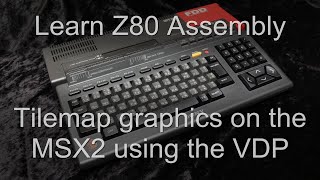
Tilemap Graphics on the MSX2 Using VDP or V9990 - Z80 Assembly Lesson 11
Learn to simulate tilemaps on MSX2 VDP using Z80 Assembly, with techniques applicable to V9990. Covers VDP commands, registers, and practical implementation for game development.
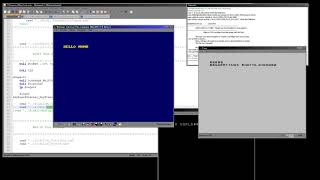
Keyreading on Amstrad CPC, ZX Spectrum and Sam Coupe - Lesson P6
Learn keyreading techniques for Amstrad CPC, ZX Spectrum, and Sam Coupe without firmware. Covers hardware, key clash, example code, and data conversion for retro game development.
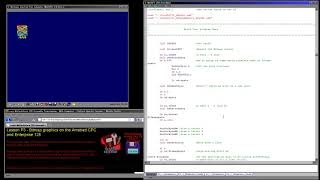
Bitmap Graphics on the Amstrad CPC and Enterprise 128 - Lesson P3
Learn bitmap graphics techniques for Amstrad CPC and Enterprise 128 systems. Explore screen memory, CRTC, color handling, and efficient data copying methods for retro game development.
Batch Normalization in PyTorch - Adding Normalization to Convolutional Neural Network Layers
Learn to implement batch normalization in convolutional neural networks using PyTorch. Explore the benefits, create and compare networks, and optimize performance through hands-on coding and practical examples.
PyTorch Sequential Models - Neural Networks Made Easy
Learn to build neural networks using PyTorch's Sequential class. Explore multiple ways to construct models, set random seeds for reproducibility, and understand the benefits of this approach for creating efficient deep learning architectures.
PyTorch DataLoader Source Code Debugging - Batch Building and Normalization
Debugging session exploring PyTorch DataLoader's inner workings, focusing on data normalization, batch building, and parameter impacts. Insights into efficient data handling for deep learning projects.
PyTorch Dataset Normalization Using torchvision.transforms.Normalize()
Learn to normalize datasets in PyTorch using torchvision.transforms.Normalize(). Explore feature scaling, standardization, and color channel normalization. Understand the impact on neural network training.

How Computers Work - Compilation of Computer Basics
Comprehensive overview of essential computer components and concepts, from hardware to binary and internet basics, ideal for beginners seeking foundational tech knowledge.
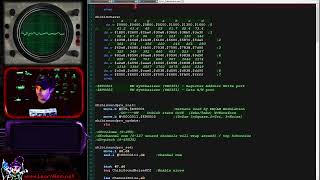
Sound Programming on the X68000 with ChibiSound Pro - Lesson P43
Explore sound programming on the x68000 using ChibiSound Pro. Learn hardware abstraction, testing, music coding, and sound creation techniques for this classic computer system.
PDP-11 Assembly: Addressing Modes - Lesson 2
Explore PDP-11 assembly's diverse addressing modes, from basic register operations to complex indexed and deferred techniques, enhancing your low-level programming skills.