
How to Use Color Histograms for Image Retrieval
Learn to use color histograms for image retrieval, including building histograms, using OpenCV, and implementing retrieval techniques. Explore pros, cons, and practical applications of this content-based approach.

Evaluation Measures for Search and Recommender Systems
Learn popular offline metrics for evaluating search and recommender systems, including Recall@K, MRR, MAP@K, and NDCG@K, with Python demonstrations and practical insights for improving information retrieval systems.
Long Form Question Answering in Haystack
Explore long-form question answering using Haystack, covering setup, data indexing, and generating responses. Learn to implement QA systems for efficient information retrieval in organizations.

Spotify's Podcast Search Explained
Explore Spotify's innovative podcast search system using natural language processing and learn to implement a similar solution with transformer models and vector search techniques.
Is GPL the Future of Sentence Transformers - Generative Pseudo-Labeling Deep Dive
Explore Generative Pseudo-Labeling for training high-performance sentence transformers using unlabeled text data. Learn implementation techniques, potential applications, and future implications for NLP and semantic search.
Train Sentence Transformers by Generating Queries - GenQ
Learn to train sentence transformers using GenQ, a technique that generates synthetic queries for effective bi-encoder models in semantic search, with practical code walkthroughs and implementation insights.

How to Build a Q&A AI in Python - Open-Domain Question-Answering
Learn to build an open-domain question-answering AI in Python, covering retriever training, fine-tuning, evaluation, vector database setup, and querying techniques for natural language interfaces.
Building Transformer Tokenizers - Dhivehi NLP #1
Learn to build an effective WordPiece tokenizer for Dhivehi, a low-resource language, overcoming unique challenges in NLP application. Explore tokenizer components, implementation, and usage for this fascinating language.
Question-Answering in NLP - Extractive QA and Abstractive QA
Explore question-answering in NLP, covering extractive and abstractive QA techniques. Learn about semantic search, ODQA, SQuAD format, and various QA approaches for efficient information retrieval and processing.
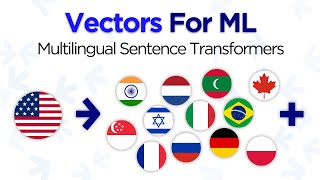
All You Need to Know on Multilingual Sentence Vectors - 1 Model, 50+ Languages
Learn to create and use multilingual sentence vectors for cross-language text comparison. Covers techniques like multi-task training and knowledge distillation, with practical implementation and evaluation steps.
Fine-Tune High Performance Sentence Transformers With Multiple Negatives Ranking
Learn to fine-tune sentence transformers using multiple negatives ranking loss, improving embedding quality for similarity prediction and outperforming SBERT. Includes PyTorch and sentence-transformers library implementations.

Fine-Tune Sentence Transformers the OG Way - With NLI Softmax Loss
Explore fine-tuning sentence transformers using NLI softmax loss. Learn preprocessing, PyTorch implementation, and Sentence-Transformers library usage for improved sentence embeddings in NLP applications.

HNSW for Vector Search Explained and Implemented with Faiss - Python
Demystifying HNSW algorithm for vector similarity search, explaining its foundations, implementation with Faiss, and optimization techniques for top-performing indexes in approximate nearest neighbor searches.

Metadata Filtering for Vector Search - Latest Filter Tech
Explore advanced metadata filtering techniques for vector search, including pre-filtering, post-filtering, and single-stage filtering. Learn to implement efficient filters on massive datasets using Pinecone's solution.
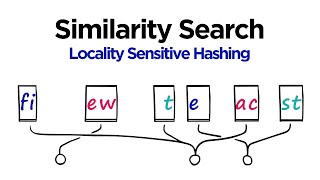
Locality Sensitive Hashing for Search with Shingling + MinHashing - Python
Learn efficient similarity search using Locality Sensitive Hashing (LSH) with shingling and MinHashing techniques in Python. Explore implementation steps, from data preprocessing to LSH tuning, for approximate nearest neighbor search.
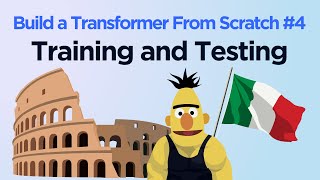
Training and Testing an Italian BERT - Transformers From Scratch
Guida pratica per addestrare e testare un modello BERT italiano, dalla configurazione al training loop, gestendo errori CUDA e valutando i risultati con test reali.

PyTorch Crash Course - Getting Started with Deep Learning
Comprehensive introduction to PyTorch, covering tensor basics, autograd, linear regression, neural networks, and CNNs. Ideal for beginners in deep learning.
JAX Crash Course - Accelerating Machine Learning Code
Accelerate machine learning with JAX: Learn NumPy-like operations on CPU, GPU, and TPU, automatic differentiation, and high-performance techniques for ML research in this comprehensive introduction.
Building a GAN From Scratch With PyTorch - Theory + Implementation
Learn to build a Generative Adversarial Network from scratch using PyTorch and PyTorch Lightning, covering theory, implementation, and testing in this comprehensive tutorial.
Building Machine Learning Applications Fast
Learn to rapidly create machine learning applications using Gradio, exploring its modalities and desktop interface for easy model demonstration and deployment.

Get Your Own Tokenizer With Transformers and Tokenizers
Learn to build and train custom tokenizers for Transformers, exploring their importance, implementation, and best practices in Natural Language Processing.