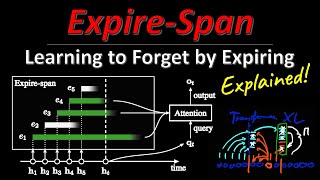
Not All Memories Are Created Equal - Learning to Forget by Expiring
Explore Facebook AI's Expire-Span, a Transformer XL variant that dynamically assigns expiration dates to signals, enabling efficient handling of long sequences while maintaining performance and reducing resource consumption.
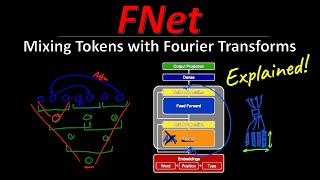
FNet - Mixing Tokens with Fourier Transforms
Explores FNet, a Transformer variant replacing attention with Fourier transforms. Discusses architecture, token mixing, and performance comparisons, highlighting efficiency gains and accuracy trade-offs in natural language processing tasks.
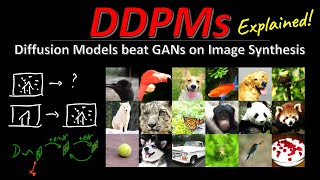
Diffusion Models Beat GANs on Image Synthesis - Machine Learning Research Paper Explained
Explore how Diffusion Models outperform GANs in image synthesis, with improved architecture, classifier guidance, and better sample quality while maintaining distribution coverage.
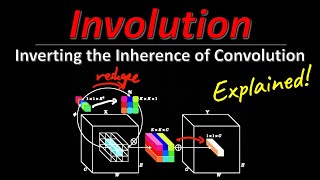
Involution - Inverting the Inherence of Convolution for Visual Recognition
Explores involution, a novel neural network operation inverting convolution principles. Compares it to self-attention, demonstrating improved performance and efficiency in various computer vision tasks.
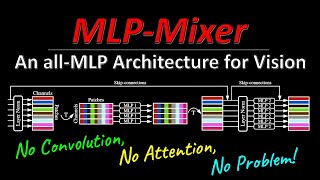
MLP-Mixer - An All-MLP Architecture for Vision - Machine Learning Research Paper Explained
Explores MLP-Mixer, a novel architecture using only multi-layer perceptrons for image classification. Discusses its design, performance, and implications for computer vision beyond CNNs and Transformers.

Emerging Properties in Self-Supervised Vision Transformers - Facebook AI Research Explained
Explore Facebook AI's DINO system, combining self-supervised learning with Vision Transformers for impressive image analysis without labels. Learn about its architecture, methodology, and groundbreaking results in computer vision.

NeRF - Representing Scenes as Neural Radiance Fields for View Synthesis
Explore NeRF, a neural network-based approach for 3D scene representation and novel view synthesis, achieving photorealistic results from sparse input images through volumetric rendering.
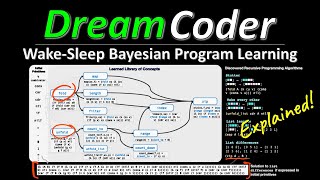
DreamCoder- Growing Generalizable, Interpretable Knowledge With Wake-Sleep Bayesian Program Learning
Explores DreamCoder's approach to program synthesis, combining neural-guided search with symbolic reasoning to learn generalizable knowledge and solve complex tasks through iterative abstraction and refinement.
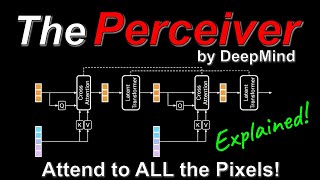
Perceiver - General Perception with Iterative Attention
Explore DeepMind's Perceiver model, a versatile architecture that processes diverse input modalities using iterative attention, solving the quadratic bottleneck problem in Transformers.
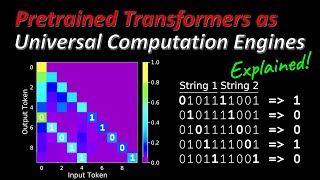
Pretrained Transformers as Universal Computation Engines
Explore how pretrained language transformers can be fine-tuned for diverse tasks like vision and protein folding, with minimal parameter adjustments, demonstrating their potential as universal computation engines.
Self-Supervised Learning - The Dark Matter of Intelligence
Explore self-supervised learning as a promising approach for AI to develop background knowledge and common sense, with insights from Yann LeCun and Ishan Misra of Facebook AI Research.
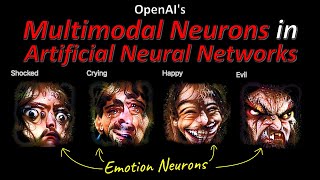
Multimodal Neurons in Artificial Neural Networks - With OpenAI Microscope, Research Paper Explained
Explore multimodal neurons in CLIP model, revealing how AI recognizes concepts across various visual representations. Gain insights into neural networks' inner workings and their ability to process diverse information.
Reproducible Machine Learning and Experiment Tracking Pipeline with Python and DVC
Learn to build reproducible machine learning pipelines using Python and DVC. Track experiments, manage data versions, and compare model metrics for improved ML workflow efficiency.
Deploy with FastAPI - Sentiment Analysis with BERT Using Huggingface, PyTorch, and Python Tutorial
Learn to deploy a pre-trained BERT model for sentiment analysis as a REST API using FastAPI, PyTorch, and Hugging Face. Covers project setup, API creation, model integration, and real-time predictions.

Sentiment Analysis with BERT Using Huggingface, PyTorch, and Python Tutorial
Learn to build a sentiment classification model using BERT, Hugging Face, and PyTorch. Covers BERT basics, fine-tuning for sentiment analysis, model training, evaluation, and prediction from raw text.
Sentiment Analysis with BERT Using Huggingface, PyTorch and Python Tutorial
Learn text preprocessing for sentiment analysis using BERT, Hugging Face, and PyTorch. Covers tokenization, padding, attention masks, dataset creation, and data splitting for NLP tasks.

Transfer Learning for Image Classification with PyTorch & Python Tutorial - Traffic Sign Recognition
Learn to classify traffic signs using transfer learning with PyTorch. Explore data, build datasets, train a pre-trained ResNet model, evaluate performance, and make predictions on new images.

LSTM Time Series Prediction Tutorial Using PyTorch in Python - Coronavirus Daily Cases Forecasting
Learn to forecast Coronavirus cases using LSTM and PyTorch. Covers data preprocessing, model building, training, evaluation, and future predictions with real-world time series data.

OpenCV Python Tutorial for Beginners - Image Processing for Computer Vision & Deep Learning
Comprehensive guide to image processing with OpenCV in Python, covering essential techniques from basic operations to advanced manipulations for computer vision applications.
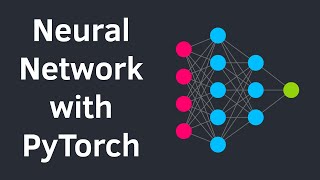
Build a Neural Network with Python Tutorial - Deep Learning with PyTorch
Learn to build, train, and evaluate a neural network for weather prediction using PyTorch. Covers data preprocessing, model architecture, GPU acceleration, and practical applications.
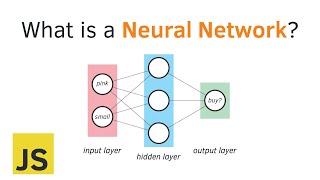
What Is a Neural Network? - Machine Learning for JavaScript Hackers with TensorFlow.js
Explore neural networks, perceptrons, and sigmoid neurons using TensorFlow.js. Learn about activation functions, network architecture, and weight initialization for machine learning in JavaScript.