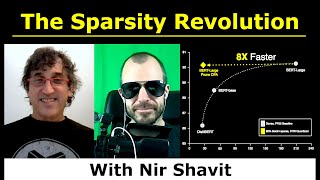
How to Make Your CPU as Fast as a GPU - Advances in Sparsity with Nir Shavit
Explore advances in sparsity and how CPUs can match GPU performance in neural networks. Learn about pruning, efficient algorithms, and the future of sparse architectures in deep learning.
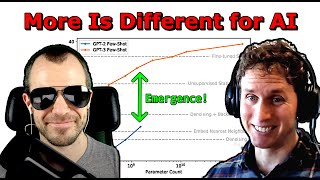
More Is Different for AI - Scaling Up, Emergence, and Paperclip Maximizers
Explore AI scaling, emergence, and safety with Jacob Steinhardt. Discuss qualitative changes in AI systems, implications for alignment, and thought experiments like the Paperclip Maximizer. Gain insights on future AI challenges and potential solutions.

How to Represent Part-Whole Hierarchies in a Neural Network - Geoff Hinton's Paper Explained
Explore GLOM, a novel computer vision model combining transformers, neural fields, and capsule networks to dynamically construct parse trees for object recognition and scene understanding.
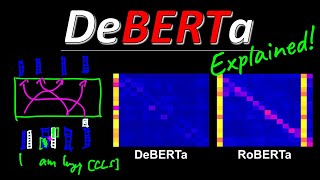
DeBERTa - Decoding-Enhanced BERT with Disentangled Attention
Explore DeBERTa, an advanced BERT model with disentangled attention and enhanced mask decoder, surpassing RoBERTa in NLP tasks. Learn about its architecture, improvements, and performance gains.
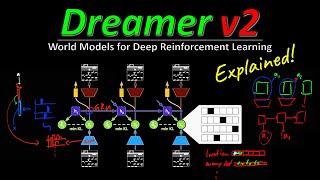
Mastering Atari with Discrete World Models - Machine Learning Research Paper Explained
Explore cutting-edge reinforcement learning with DreamerV2, a model-based AI agent achieving human-level performance on Atari games using discrete world models and latent space predictions.
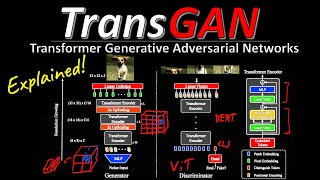
TransGAN - Two Transformers Can Make One Strong GAN - Machine Learning Research Paper Explained
Explore TransGAN, a novel approach using transformers for image generation. Learn about its architecture, key techniques, and competitive performance in various datasets.
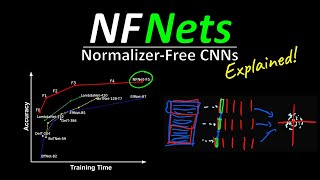
NFNets - High-Performance Large-Scale Image Recognition Without Normalization
Explore Normalizer-Free Networks, a novel approach to image recognition that achieves state-of-the-art accuracy without batch normalization, offering faster training and improved transfer learning performance.
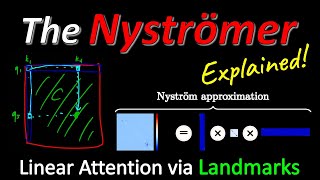
Nyströmformer- A Nyström-Based Algorithm for Approximating Self-Attention
Explore Nyströmformer, a novel algorithm for approximating self-attention in Transformers with linear complexity, enabling processing of longer sequences and improving scalability in natural language tasks.
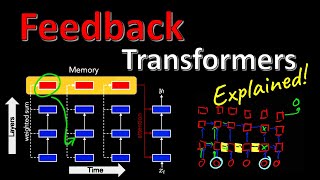
Feedback Transformers - Addressing Some Limitations of Transformers with Feedback Memory
Explores Feedback Transformers, an architecture that improves on standard Transformers by allowing higher-level representations to inform lower-level processing, enhancing performance on complex reasoning and long-range dependency tasks.
SingularityNET - A Decentralized, Open Market and Network for AIs
Explore SingularityNET's decentralized AI marketplace, enabling open development and interoperability of AI services. Learn about its blockchain foundation, token economy, and potential impact on the future of artificial intelligence.
Switch Transformers: Scaling to Trillion Parameter Models with Simple and Efficient Sparsity
Explore Switch Transformers: a novel approach to scaling AI models to trillion parameters using sparsity and hard routing, offering improved speed and efficiency compared to dense counterparts.

OpenAI CLIP- Connecting Text and Images
Detailed explanation of OpenAI's CLIP model, which connects text and images using contrastive learning on 400M image-text pairs, enabling zero-shot transfer to various computer vision tasks.

OpenAI DALL·E - Creating Images from Text - Blog Post Explained
Explore OpenAI's DALL·E model, its architecture, capabilities, and limitations in generating high-quality images from text descriptions. Learn about its potential impact on AI applications combining text and visuals.
ReBeL - Combining Deep Reinforcement Learning and Search for Imperfect-Information Games
Explores ReBeL, an AI framework combining reinforcement learning and search for imperfect-information games. Explains its application to poker, convergence to Nash equilibrium, and superhuman performance with minimal domain knowledge.
Language Models Are Open Knowledge Graphs
Explore how pre-trained language models can be used to construct knowledge graphs without human supervision, uncovering new relations and outperforming existing methods in automated KG construction.
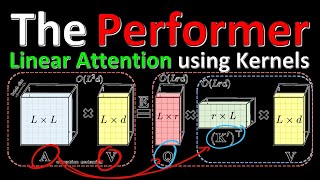
Rethinking Attention with Performers
Explore a novel approach to efficient attention mechanisms in Transformers using random positive orthogonal features, enabling linear-time approximation of attention matrices for scalable deep learning architectures.
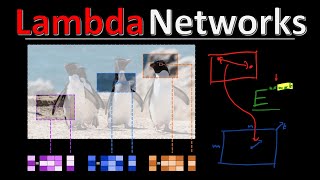
LambdaNetworks- Modeling Long-Range Interactions Without Attention
Explore LambdaNetworks, a novel approach to modeling long-range interactions in AI without traditional attention mechanisms, offering improved efficiency and performance in computer vision tasks.
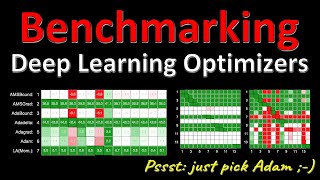
Descending Through a Crowded Valley - Benchmarking Deep Learning Optimizers
Comprehensive analysis of popular deep learning optimizers, comparing performance across tasks and providing evidence-based recommendations for algorithm selection and parameter tuning.
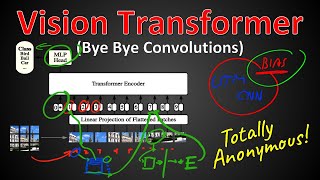
An Image is Worth 16x16 Words - Transformers for Image Recognition at Scale
Explore how Transformers outperform CNNs in image recognition, delving into Vision Transformer architecture, experimental results, and implications for AI research.
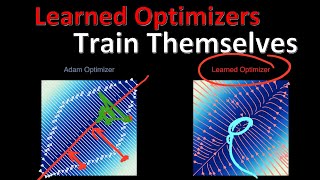
Training More Effective Learned Optimizers, and Using Them to Train Themselves - Paper Explained
Explores a novel approach to machine learning optimization using neural networks, discussing its architecture, training process, and potential to revolutionize model training through self-improvement and generalization.
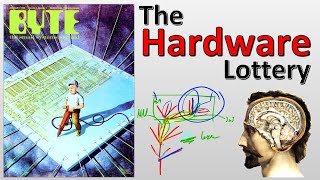
The Hardware Lottery - Paper Explained
Explores the "hardware lottery" concept in AI research, discussing how hardware availability influences algorithmic success, with historical examples and future implications for machine learning progress.