Federated Automatic Differentiation - Seminar 96
Explore advanced concepts in federated automatic differentiation with Google researcher Zachary Charles, covering innovative approaches to distributed machine learning and privacy-preserving computation.
A Bayesian Approach for Personalized Federated Learning - Seminar 93
Discover how Bayesian approaches enhance personalized federated learning through innovative statistical methods and practical applications in distributed machine learning environments.
Leveraging Spatial and Temporal Correlations in Distributed Learning - Seminar 91
Explore advanced distributed learning techniques focusing on spatial and temporal correlations, with insights into FedAvg algorithm, client participation, and optimization strategies.
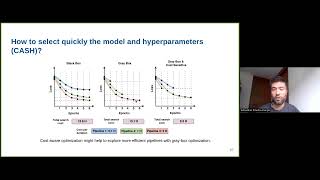
Quick-Tune: Quickly Learning Which Pretrained Model to Finetune and How
Discover a methodology for efficiently selecting and fine-tuning pretrained models through meta-learning, optimizing model selection and hyperparameter configurations for new datasets.
MotherNet: A Foundational Hypernetwork for Tabular Classification
Discover how MotherNet hypernetwork architecture revolutionizes tabular classification by generating optimized neural networks through in-context learning, offering faster training and competitive performance against XGBoost.
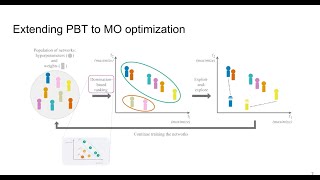
Multi-Objective Population Based Training for Hyperparameter Optimization
Discover advanced hyperparameter optimization techniques through Population Based Training (PBT) and its multi-objective evolution, focusing on real-world applications in precision, fairness, and robustness.
LLMs for Automated Data Science - Introducing CAAFE for Context-Aware Automated Feature Engineering
Discover how CAAFE leverages large language models to enhance automated feature engineering in data science, improving model performance through context-aware feature generation and semantic understanding.
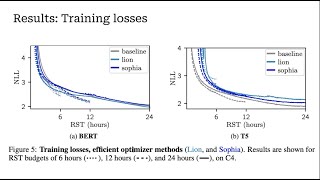
No Train No Gain - Revisiting Efficient Training Algorithms for Transformer-based Language Models
Delve into efficient training algorithms for Transformer models, exploring dynamic architectures, batch selection, and optimizers while examining their effectiveness against baseline methods.
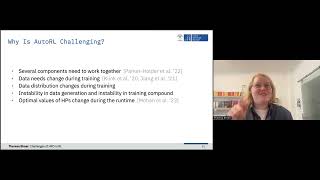
Challenges in Hyperparameter Optimization for Reinforcement Learning - Understanding AutoRL Through AutoML
Explore the complexities of hyperparameter optimization in Reinforcement Learning, examining AutoML tools and methods to better understand and tune RL algorithms for improved performance.
Multi-objective Bayesian Optimization with Heuristic Objectives for Biomedical and Molecular Data Analysis Workflows
Discover advanced Bayesian optimization techniques for biomedical data analysis, focusing on multi-objective approaches with heuristic objectives in unsupervised bioinformatics workflows.
Discovering Black-Box Optimizers via Evolutionary Meta-Learning
Delve into evolutionary meta-learning techniques for discovering black-box optimizers, exploring advanced concepts in evolution strategies and genetic algorithms through self-attention architectures.
Hyperparameter Optimization and Algorithm Configuration from a Black-Box Optimization Perspective
Explore dynamic algorithm configuration and hyperparameter optimization approaches, comparing AutoML and black-box optimization methods for efficient, adaptive parameter tuning.
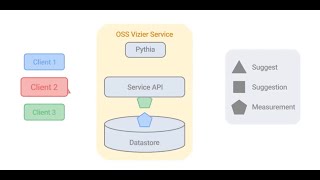
Open Source Vizier: Distributed Infrastructure for Blackbox Optimization and Hyperparameter Tuning
Explore Google's Vizier system for blackbox optimization and hyperparameter tuning, covering its distributed infrastructure, Python implementation, and integration with AutoML ecosystem.
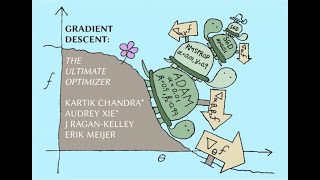
Gradient Descent: The Ultimate Optimizer - Automating Hyperparameter Optimization
Discover how to automatically optimize hyperparameters in gradient-based ML algorithms through an elegant modification to backpropagation, making optimizer tuning more efficient and less sensitive to initial choices.

Generating Well-Typed Terms That Are Not "Useless"
Explore a novel algorithm for generating well-typed lambda terms that use their arguments effectively, improving random testing of functional language compilers.

On Learning Polynomial Recursive Programs
Explore P-finite automata, a generalization of weighted automata with polynomial transition weights. Learn about their polynomial-time learnability in Angluin's MAT exact learning model.

Ill-Typed Programs Don't Evaluate - Two-Sided Type Systems for Program Verification
Explore two-sided type systems for symmetrical well-typing and ill-typing, enabling incorrectness reasoning in higher-order program verification and precise data-flow typing.

Semantic Code Refactoring for Abstract Data Types
Explore automated semantic code refactoring for Abstract Data Types using a novel method that generates equivalent implementations based on new data representations and relational invariants.

Polymorphic Reachability Types: Tracking Freshness, Aliasing, and Separation in Higher-Order Generic Programs
Explore polymorphic reachability types for tracking freshness, aliasing, and separation in higher-order generic programs. Gain insights into advanced type systems and their applications in programming languages.

Polyregular Functions on Unordered Trees of Bounded Height
Explore polyregular functions on unordered trees with bounded height, examining first-order interpretations, decidability of equivalence problems, and applications to graph classes with bounded tree-depth.

Fusing Direct Manipulations into Functional Programs
Explore a novel framework for bidirectional live programming that fuses direct manipulations into functional programs, enabling code-insensitive output modifications and automatic source code updates.