
Lessons Learned from Building Blockchain Consortia Apps
Discover best practices for building blockchain consortium apps, from network setup to data management and scaling. Learn to optimize for throughput and move efficiently from concept to production.

How to Write and Deploy a Smart Contract
Learn to write, deploy, and test Ethereum smart contracts using Hardhat and MetaMask. Set up a development environment and interact with the Goerli test network.
Scalable OpenAI GPT Applications in the Cloud
Explore integrating OpenAI GPT models into applications and leveraging cloud services for scalability. Learn implementation methods and strategies for building AI-powered, scalable apps.
Imagined Dragons: Building an Imagination-Powered Music Recommendation Platform
Explore building an AI-powered music recommendation platform using LLMs. Learn prompt engineering, chatbot memory management, and open-source tool creation for innovative mixtape generation.
How Open Standards Can Heal the Open Wound of AI
Explore how open standards can address AI's threats to individual freedom and data privacy, offering solutions to regulate AI development and protect user interests.
Quantum Machine Learning - Cutting Through the Buzzword BS
Explore the intersection of quantum computing and machine learning, examining QML's viability, progress, and challenges. Learn how ML developers can contribute to open-source QML projects like Qiskit Machine Learning.
Deep Learning Meets Nonparametric Regression: Are Weight-decayed DNNs Locally Adaptive?
Explore deep learning's curve-fitting capabilities, comparing DNNs to classical methods and uncovering insights on their strength, generalization, and the role of sparsity in neural networks.
The Computational Gauntlet of Human-Like Learning
Explore AI systems that mimic human-like learning in mathematics and driving. Discover characteristics of human behavior that challenge traditional machine learning approaches and offer new paths to expertise acquisition.
Prioritized Training Using Reducible Holdout Loss Selection (RHO-LOSS) - Accelerating Machine Learning
Accelerate machine learning training by prioritizing data points that reduce generalization loss, improving efficiency and accuracy across various architectures and datasets.
Pragmatic Interpretability - A Human-AI Cooperation Approach
Explore pragmatic interpretability in machine learning, focusing on human-AI cooperation, selective explanations, and incorporating human intuition to enhance decision-making and model understanding.
Challenges in Deep Learning - Open Problems and Recent Observations
Explore key open problems in deep learning, focusing on continual learning and implicit biases. Gain insights from a leading researcher on crucial areas for advancing the field.
Cyberinfrastructure Needs for Field Geology - Insights from Yosemite and Owens Valley
Explore challenges and opportunities for AI in field geology through a computer scientist's perspective on a unique interdisciplinary field trip to Yosemite and Owens Valley.
Expert-Informed, User-Centric Explanations for Image Classification with Deep Learning
Explore expert-informed, user-centric explanations for image classification using deep learning. Gain insights into diagnostic feature labeling and its applications in various fields.
Modular and Composable Transfer Learning
Explore parameter-efficient transfer learning with adapters, enabling modular and composable fine-tuning for improved task performance and cross-lingual generalization in transformer-based models.
Learning Visual Representations with Limited Labels for Semantic Image Understanding
Explore visual representation learning techniques using limited labels, including self-supervised methods, image grouping, model distillation, and adversarial robustness in deep learning.
Unified-IO: A Unified Model for Vision, Language, and Multi-Modal Tasks
Explore a unified neural model for diverse AI tasks, including computer vision, image synthesis, and NLP. Learn about its innovative approach to homogenizing inputs and outputs across multiple domains.
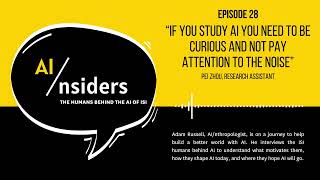
Curiosity and Focus in AI Studies: Navigating the Field
Explore AI's potential to build a better world, focusing on curiosity, communication, and interdisciplinary approaches while addressing challenges in model self-awareness and understanding subtext.
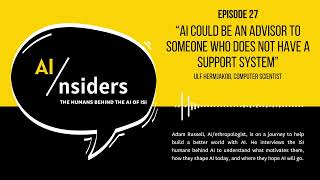
AI as a Personal Advisor: Potential and Implications
Explore AI's potential as a supportive advisor, its impact on education, and its expanding role across various fields. Gain insights into AI research and its applications for enhancing human understanding.
There Is No End Goal for AI Ethics - Mitigating Emerging Challenges
Explore ongoing challenges in AI ethics, from addressing inequity to adapting regulations, and discover potential tools for building a better world with AI.
AIs Will Give You Answers Even If They Don't Know - Understanding AI Limitations and Subjectivity
Explore AI's limitations in acknowledging uncertainty and the importance of understanding subjectivity to address bias in AI systems.
We Need to Determine Who is Responsible When AI Makes a Mistake
Explore AI accountability, explainability, and regulation in social media analysis, emphasizing teamwork and ethical considerations for future advancements.