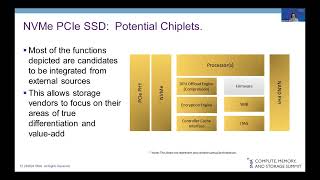
Enabling an Open Chiplet Ecosystem with UCIe - Introduction to UCIe 1.1 Specification
Explore the UCIe 1.1 specification's features and discover how it enables interoperable chiplet integration through standardized die-to-die interconnects and protocols for package-level solutions.
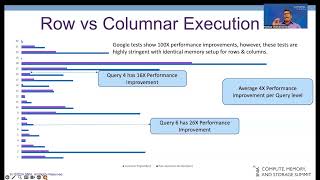
Generative AI - Data Architecture with Google AlloyDB and AI
Discover how Google AlloyDB Omni revolutionizes database management with AI-powered analytics acceleration, PostgreSQL compatibility, and advanced RAG capabilities for optimized OLTP and real-time data processing.
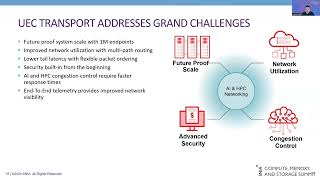
Ethernet Evolution: Powering AI's Future Through Ultra Ethernet Consortium
Discover how the Ultra Ethernet Consortium is revolutionizing network capabilities for AI and HPC, exploring technical innovations, enhanced performance metrics, and advanced RDMA solutions for next-gen computing.
Storage Architecture Optimized for AI Workloads - High Performance Solutions for GPU Clusters
Discover how to optimize storage architecture for AI workloads, exploring high-performance solutions, capacity-optimized tiers, and real-world implementations for machine vision applications.
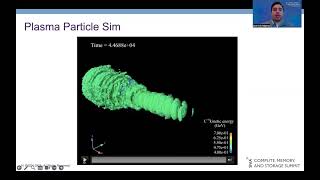
Streamlining Scientific Workflows - Computational Storage Strategies for HPC
Discover how computational storage strategies enhance scientific workflows in HPC environments, optimizing data processing for large-scale simulations and improving efficiency across I/O layers.
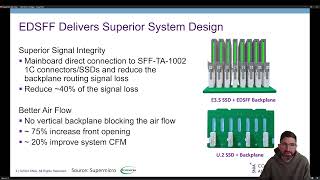
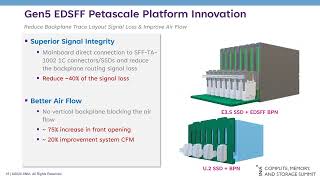
Latest Developments in SSD Form Factors and Data Center Optimization
Explore the evolution of SSD form factors and their impact on data center optimization, scalability, and TCO through SNIA's latest specifications and EDSFF-enabled platforms.

How AI is Challenging Enterprise Infrastructure - Building and Optimizing Data Centers
Explore key infrastructure challenges and solutions for enterprise AI deployment, from security and data privacy to balancing performance with sustainability goals and power consumption.

Approximate DNA Storage with High Robustness and Density for Images
Explore groundbreaking DNA storage techniques for images, focusing on enhanced robustness and density through innovative encoding schemes and error prevention mechanisms.
Deep Dive and Comparison of NVMe RAID Solutions - Performance Analysis and Datapath Breakdown
Dive into a comprehensive analysis of NVMe RAID engines, exploring performance characteristics, architectural differences, and optimization strategies across mdraid, xiraid, and SPDK RAID solutions.
In-SRAM Computing for Generative AI and Large Language Models
Explore innovative In-SRAM computing architecture and its role in reducing power consumption for large language models and generative AI in datacenter environments.
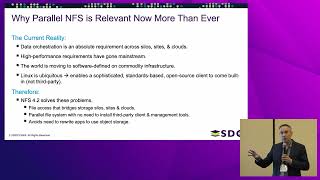
Standards-Based Parallel Global File Systems and Automated Data Orchestration with NFS
Discover how NFSv4.2 enables high-performance parallel file systems and automated data orchestration across diverse storage environments, eliminating proprietary clients while enabling seamless global data management and access.
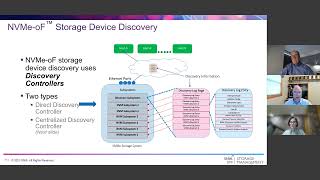
Managing NVMe and NVMe-oF Technology in Enterprise Storage with SNIA Swordfish
Discover how to effectively manage NVMe and NVMe-oF technologies in enterprise data centers using SNIA Swordfish specifications, with practical insights on discovery controllers and simplified management models.

Maximizing Efficiency with Fibre Channel Virtual Lanes
Dive into the architecture and implementation of Fibre Channel Virtual Lanes, exploring traffic segregation, enhanced throughput, and congestion control techniques for optimizing Storage Area Networks.
Optimizing Complex Hierarchical Memory Systems Through Simulations
Discover how modular simulation techniques can optimize complex memory systems, evaluate configurations, and achieve significant performance gains in a fraction of traditional testing time.

New Developments in Cloud Storage Acceleration Layer - SPDK Integration and Use Cases
Explore the latest advancements in Cloud Storage Acceleration Layer (CSAL), including new use cases, SLC support, RAID5F integration, and development of an NVMe-oF TCP target reference solution.
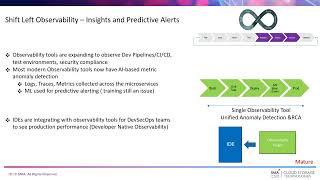
AIOps: Reactive to Proactive - Revolutionizing the IT Mindset
Discover how AIOps transforms IT operations from reactive to proactive through AI-powered automation, seamless integration, and intelligent workflows that anticipate and resolve issues before they impact systems.
Ceph - The Linux of Storage for Cloud Native Architecture
Discover how Ceph serves as a unified storage solution for cloud-native architectures, combining on-premises security with cloud scalability and agility for modern data center needs.
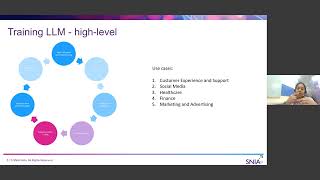
Fine-Tuning Large Language Models - Empowering AI for Specialized Applications
Discover the fundamentals of fine-tuning Large Language Models (LLMs), from basic concepts to advanced techniques, focusing on domain-specific applications and ethical considerations.
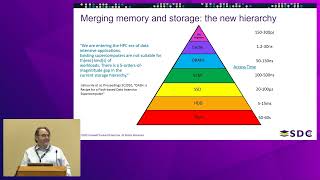
Fabric Attached Memory: Hardware and Software Architecture for HPC Systems
Explore hardware and software architecture of Fabric Attached Memory (FAM) in HPC clusters, focusing on large dataset management, CXL capabilities, and real-time analytics implementation using Arkouda.
PCIe 7.0 Specification - 128 GT/s Bandwidth for Future Data-Intensive Markets
Explore the next-generation PCIe 7.0 specification, featuring 128 GT/s transfer rates, PAM4 signaling, and enhanced power efficiency for advanced computing and data-intensive applications.
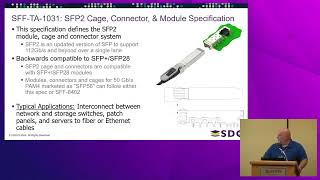
SFF Technical Specifications and Server Component Changes - 2023
Discover the latest specification changes from SFF TA TWG affecting server components, connectors, and transceivers, with insights on performance, size, and thermal improvements.