Make Your CPU Cores Sweat with Parallel Streams in Java 8
Explore parallel streams in Java 8 for efficient multicore processing. Learn best practices, underlying mechanisms, and how to avoid common pitfalls while leveraging parallelism in your code.
Java EE - Heavyweight or Lightweight Mythbusters
Debunking Java EE myths: deployment speed, WAR size, RAM usage, performance, transaction overhead, cloud compatibility, and server footprint. Explore with data and code.
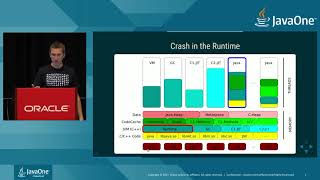
Analyzing HotSpot Crashes: Detection, Classification, and Handling - Java
Unveiling HotSpot crash analysis techniques, tools, and strategies to detect, classify, and handle Java VM issues for improved application stability and performance.
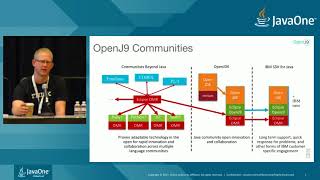
Ask the OpenJ9 Architects - Q&A Session on Open Source JVM
Explore OpenJ9, an open-source JVM, with IBM architects. Learn about its features, benefits, and implementation in this Q&A session covering memory management, GC policies, and supported platforms.
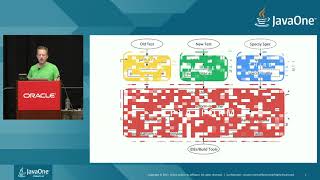
JUnit 5 - New Opportunities for Testing on the JVM
Explore JUnit 5's architecture, features, and extension model for enhanced Java testing. Learn about tagging, custom names, parameterized tests, and integration with Spring Framework 5.0.

Modules in One Lesson - Introduction to Project Jigsaw and Java Platform Module System
Practical introduction to Project Jigsaw and Java Platform Module System in Java 9, exploring configuration, encapsulation, security, and JDK configurability through live coding.
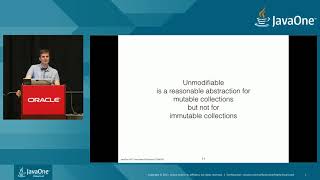
Immutable Collections in Java - Persistent Collections and Their Applications
Explore persistent collections in JVM languages, their structure, benefits, and performance. Learn how they integrate with Java APIs and assess their suitability for your projects.
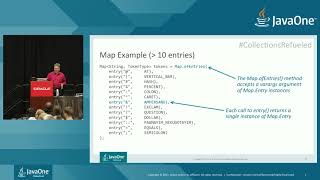
Collections Refueled - Java 9 Enhancements and Future Possibilities
Explore Java 9's collection enhancements, including convenience factory methods and new APIs, with insights into potential future developments for the collections framework.

MVC 1.0 - Building Secure and Flexible Web Applications
Explore MVC 1.0 fundamentals, core concepts, and practical implementation for building secure, flexible web applications. Includes code samples and tooling support demonstration.

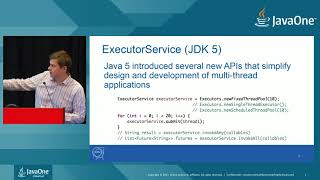
Parallel Streams and CompletableFuture: Concurrency in Java 8 - Optimization Techniques
Explore Java 8's parallel streams and CompletableFuture for optimizing program speed, with insights on ExecutorService and concurrent programming techniques.
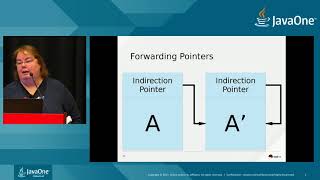
Shenandoah 2.0 - Advancing Garbage Collection Beyond Pause Time Control
Explores advancements in Shenandoah garbage collection, focusing on partial collections of heap regions using various heuristics to optimize performance for different application types beyond traditional generational GC.
Ask the JDK Architects - Java Platform Q&A Session
Explore Java's past, present, and future with Oracle's key architects in an open Q&A session covering memory, versioning, modules, optimization, and language features.
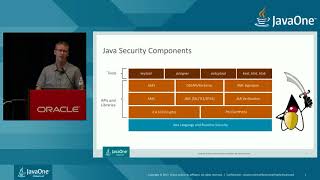
Making the JDK More Secure - New Features and Default Configuration
Explore JDK 9's enhanced security features, including SHA-3, OCSP stapling, and DTLS. Learn about Oracle's efforts to strengthen Java's cryptographic algorithms and default security configurations.
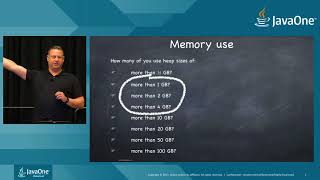
Understanding Java Garbage Collection
Explore Java garbage collection techniques, algorithms, and metrics. Learn to balance responsiveness, throughput, and memory usage for optimal application performance.
Servlet 4.0: New Features for Microservices and Cloud-Native Applications
Explore Servlet 4.0's new features for modern microservices architectures, including HTTP/2 support, server push, and HTTP trailers, with insights on adapting legacy apps to cloud-native technologies.

JDK 9 Hidden Gems - Performance Optimizations and New Features
Explore JDK 9's hidden features: enhanced performance, optimized libraries, and advanced technologies for big data, cloud, and HPC applications.
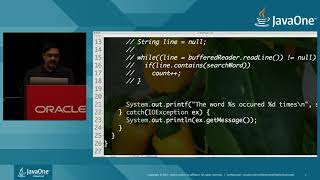
Refactoring to Functional Style in Java
Learn to refactor Java code from imperative to functional style, gaining benefits like conciseness, expressiveness, and easier maintenance. Explore practical examples and techniques for thinking functionally.
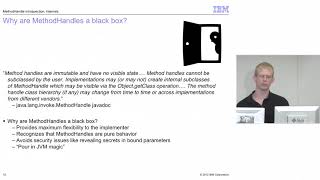
MethodHandle Introspection in Java
Explore MethodHandle introspection in Java, covering lambda implementation, metafactory bootstrap methods, and creating an introspector. Learn about limitations, security implications, and behavioral equivalence.
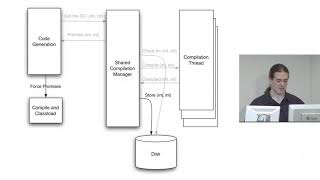
Implementing StreamBase - Best Practices and Optimization Techniques
Learn StreamBase implementation techniques to enhance code structure, control flow, and naming conventions for improved Java development.
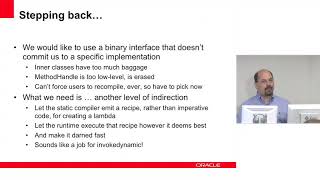
Implementing Lambda Expressions in Java
Explore lambda expressions in Java with Brian Goetz, covering implementation strategies, performance considerations, and potential VM support for enhanced functionality.
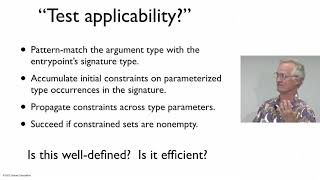
Dynamic Dispatch and Type Inference in Fortress - Lecture
Explore dynamic dispatch and type inference in Fortress, covering generic overloading, trait-based systems, and runtime type operations, with insights on JVM implementation challenges.