
Building a Scalable, Modularized, Testable Android App from Scratch
Learn to build a scalable, modular Android app using best practices. Covers architecture, data layer, UI with Jetpack Compose, testing, and Material Design customization through a real-world example.
What's New in App Performance - Android Runtime and Tools
Explore tools and techniques for optimizing Android app performance, including startup metrics, benchmark libraries, baseline profiles, and garbage collection improvements.
Android Architecture Refactoring - Lessons from Duolingo and Headspace
Discover how Duolingo and Headspace revamped their Android architectures, improving user experience and developer productivity. Learn from their strategies, challenges, and successes.

Reach and Devices for Game Development: Targeting, Optimization, and Analytics
Explore game development strategies using Reach and devices for targeting decisions, and Android vitals for performance tracking. Learn about new features for monetization and stability troubleshooting.
Gradle and AGP Build APIs - Live Q&A for MAD Skills
Expert-led Q&A session addressing advanced Gradle and Android Gradle Plugin (AGP) topics, covering APIs, build optimization, plugin compatibility, and future developments in Android development tooling.
Kotlin Flows in Practice for Android Development
Explore practical applications of Kotlin Flow for managing data streams in Android, including lifecycle-aware APIs and solutions for common use cases across all app layers.

Integrating Android Widgets with Google Assistant
Learn to integrate Android widgets with Google Assistant, enabling quick answers and interactive experiences on Assistant-enabled surfaces. Explore intermediate-level concepts for enhanced app functionality.

What's New in Android Development - Google I/O 2022 Keynote
Explore Android development updates: Jetpack, tooling, performance, platform enhancements. Learn about Compose, large screens, Android 13, ML, camera, media, accessibility, Google Wallet API, and cross-device features.
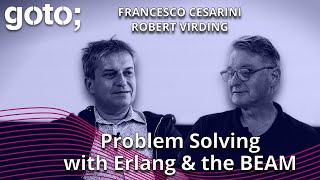
Problem Solving with Erlang & the BEAM - Robert Virding & Francesco Cesarini - GOTO 2023
Explore Erlang's journey from inception to its pivotal role in mission-critical applications, discussing its unique design, concurrency capabilities, and future in the BEAM ecosystem.
PostgreSQL Basics
Learn to add data to PostgreSQL tables: installation, database creation, data insertion, table editing, and basic queries.
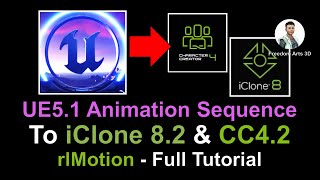
Export Unreal Engine 5.1 Animation Sequence to iClone and Character Creator as rlMotion
Learn to transfer animation sequences from Unreal Engine 5.1 to iClone 8.22 and Character Creator 4.22 using rlMotion format, streamlining your workflow for game development and virtual production projects.
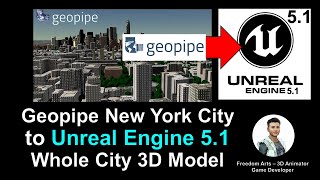
Importing Geopipe New York City 3D Models into Unreal Engine 5.1 - Game Ready with Collision
Step-by-step guide to import New York City 3D models from Geopipe into Unreal Engine 5.1, creating a game-ready scene with perfect collision for immersive game development projects.
How to Convert iClone 8 Motion to Unreal Engine 5.2 and Retarget on Any 3D Avatar - Tutorial
Learn to convert iClone 8 motion to Unreal Engine 5.2 and retarget it on any 3D avatar using Freedom Animation Pipeline V8.5 Plugin. Master FBX export, import, and animation sequence creation for game projects.
Import FBX Avatar as Player and NPC - Unreal Engine 5.1 Tutorial
Step-by-step guide for importing FBX avatars into Unreal Engine 5.1 as players or NPCs, covering root bone addition and retargeting for seamless integration in game projects.
Mixamo Motion to Unreal Engine 5.1 - Retargeting 3D Avatars with Root Motion
Learn to import and retarget Mixamo animations onto custom 3D avatars in Unreal Engine 5.1, including those with and without root bones. Essential skill for game developers with step-by-step guidance.
iClone 8.1 Avatar to Unreal Engine 5.1 - Retargeting for Main Avatar and NPC - Full Tutorial
Step-by-step guide for importing and retargeting iClone iAvatar to Unreal Engine 5.1, including facial and lip sync morphs, for use as player avatar or NPC in game projects.
Importing Daz Genesis 8.1 Avatar into Unreal Engine 5.1 - Tutorial
Learn to import Daz Genesis 8.1 avatars into Unreal Engine 5.1 for game characters with facial expressions. Step-by-step guide covers exporting, transforming, and setting up in UE5.1 with morph shapes and blueprints.
Google Map 3D to Unreal Engine 5.1 - Full Tutorial
Step-by-step guide to import Google Map 3D cities, buildings, and terrain into Unreal Engine 5.1 for game projects. Learn to transform real-world locations into immersive virtual environments.
Importing 100 Mixamo Characters into Smile Game Builder
Learn to import 100 free Mixamo characters into Smile Game Builder using 3DXchange and Simplygon. Step-by-step tutorial covers workflow and software integration for game development.
Character Creator 3.4 to Unreal Engine Integration - Full Tutorial
Step-by-step guide on transferring Character Creator 3.4 avatars directly to Unreal Engine, enabling them to run, walk, and jump as main characters or NPCs in game projects.
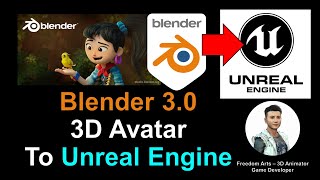
Blender 3D Avatar to Unreal Engine Game Character - Full Tutorial
Learn to create and integrate a custom 3D avatar from Blender into Unreal Engine as a playable game character, covering rigging, animation retargeting, and character setup for game development.