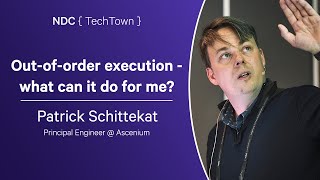
Out-of-Order Execution - What Can It Do for Me?
Explore out-of-order execution in CPUs, its advantages, limitations, and techniques to leverage it in C/C++ programs for improved performance and efficiency.
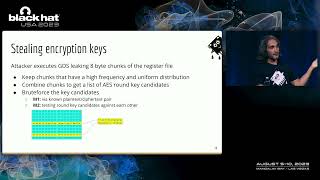
Single Instruction Multiple Data Leaks in Cutting-edge CPUs - AKA Downfall
Unveiling Downfall attacks: new transient execution vulnerabilities in Intel CPUs. Exploits Gather instruction to leak data across security boundaries, defeating previous defenses and necessitating critical hardware fixes.

HashTag - Hash-based Integrity Protection for Tagged Architectures
Innovative hash-based error detection and correction technique for DRAM, enabling efficient implementation of tagged memory architectures while maintaining strong data integrity protection.

Shellcode Time - Come on Grab Your Friends - Wartortell
Explore shellcode creation techniques, from assembly basics to advanced concepts like modular payloads and JSON objects, enhancing your understanding of low-level programming and security.

Intro to x86
Learn the fundamentals of x86 assembly language programming, covering basic concepts and practical applications for low-level system understanding and software development.
On the Untapped Potential of Encoding Predicates by Arithmetic Circuits and Their Applications
Explores innovative encoding techniques for predicates using arithmetic circuits, discussing their potential applications and implications for cryptographic systems.
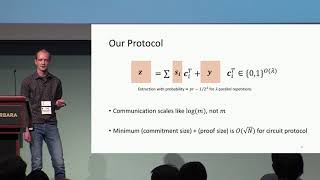
Sub Linear Lattice Based Zero Knowledge Arguments for Arithmetic Circuits
Explore cutting-edge cryptographic techniques for zero-knowledge proofs in arithmetic circuits, focusing on sub-linear lattice-based approaches presented at Crypto 2018.
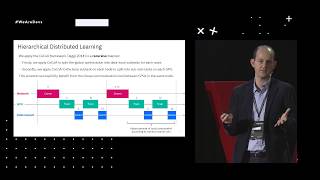
Snap ML - A Highly-Accelerated, Scalable Software Library for Machine Learning
Discover Snap ML, a high-performance framework for training generalized linear models. Learn about its GPU acceleration, pipelining, and distributed computing capabilities for faster machine learning on large-scale datasets.
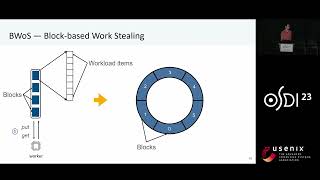
BWoS - Formally Verified Block-based Work Stealing for Parallel Processing
Innovative block-based work stealing technique for parallel processing, improving performance and reducing interference in multicore systems. Formally verified and optimized for weak memory models.
Effectively Scheduling Computational Graphs of Deep Neural Networks toward Their Domain-Specific Accelerators
Innovative approach for scheduling DNN computational graphs on domain-specific accelerators, optimizing resource utilization and enhancing performance through synergy between network and hardware architectures.
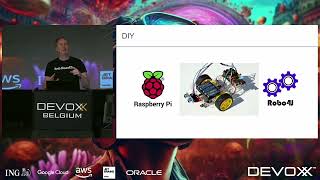
Java on Arm - New Horizons
Explore Java's performance on Arm architecture, uncovering optimization techniques and new possibilities for efficient application development.
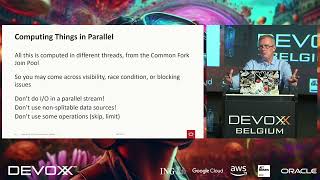
SIMD Parallel Programming with the Vector API
Explore SIMD parallel programming techniques using the Vector API, enhancing performance and efficiency in Java applications.
Revisiting Secondary Indexing in LSM-based Storage Systems with Persistent Memory
Explores PERSEID, an efficient secondary indexing mechanism for LSM-based storage systems using persistent memory, offering improved performance over existing techniques.
LLFree - Scalable and Optionally-Persistent Page-Frame Allocation
Innovative page-frame allocator design for improved scalability, memory efficiency, and optional persistence in operating systems. Outperforms Linux's allocator in multi-core systems and heterogeneous memory environments.
RISC-V Software Ecosystem in 2020
Explore RISC-V software ecosystem's evolution, current status, and future goals. Gain insights into key projects and opportunities for developers to contribute to this growing open-source platform.

Microwatt Microarchitecture
Detailed exploration of Microwatt, an open-source soft-core implementation of Power ISA, discussing its microarchitecture and design choices influenced by the ISA specifications.

What UNIX Cost Us
Exploring UNIX's impact, limitations, and alternatives, this talk challenges conventional wisdom and examines what could have been done differently in operating system design.
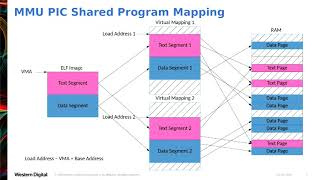
RISC-V FDPIC - NOMMU Toolchain - Runtime Support
Explores RISC-V FDPIC/NOMMU support, detailing design for FDPIC psABI, toolchain and runtime changes for Linux/GNU systems, and addressing challenges in NOMMU systems with shared read-only segments.
Linux in the Cloud, on Prem, or on a Mainframe?
Explore Linux on mainframes: history, benefits, and future potential. Discover alternative architectures like ARM and POWER, and learn about hardware-driven encryption technologies for enhanced data protection.
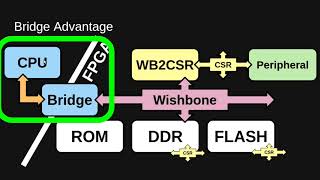
Universal Tools for Acceleration, Timing, Integration & Machine Enhancement
Explore open-source tools and methods for accelerating Open ISA processors, including implementation of specialized compute functions and RISC-V extensions.
Picolibc - A C Library for Small 32-Bit Systems
Exploring picolibc: a C library for 32-bit embedded systems, blending newlib and avr-libc functionalities to reduce development costs and enhance capabilities for ARM and RISC-V projects.