Approximations and Workarounds in Intuitive Physics and Imagination
Explores computational models and behavioral studies of human intuitive physics, examining approximations and limitations in mental simulations for everyday object interactions.
Computational Models of Human Cognition - Part 2
Explore advanced computational methods in cognitive science, covering perception, memory, language, and reasoning. Gain insights into modeling human cognition and intelligence.
Computational Models of Human Cognition - Part 1
Explore computational methods in cognitive science, covering perception, memory, language, and reasoning. Gain insights into modeling human cognition through advanced techniques.
Deep and Multi-Fidelity Learning with Gaussian Processes
Explore uncertainty quantification using Gaussian Process emulators for complex systems, focusing on deep learning and multi-fidelity approaches in climate, tsunami, and earthquake modeling.
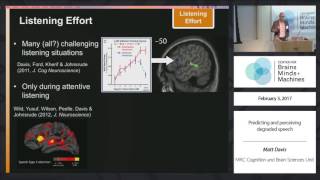
Predicting and Perceiving Degraded Speech
Explore speech perception challenges, cochlear implants, and predictive coding in this talk on improving speech understanding and perceptual learning for degraded speech signals.
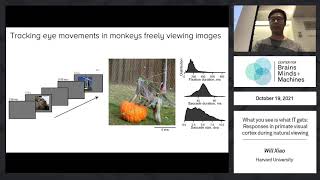
What You See Is What IT Gets - Responses in Primate Visual Cortex During Natural Viewing
Explores primate visual cortex responses during natural viewing, revealing how neurons in the interior temporal cortex react to faces and repeated fixations, providing insights into our stable visual perception.

What Neural Machinery is Needed for Language Acquisition
Explore the neural mechanisms underlying language acquisition, integrating insights from AI, psychology, and neuroscience to understand higher-level intelligence.
A Converse for Fault-tolerant Quantum Computation - Fundamentals and Lower Bounds
Delve into quantum computation fundamentals, exploring fault tolerance, redundancy bounds, and noise thresholds in quantum systems through advanced mathematical and theoretical frameworks.
AI on the Edge: Neuromorphic Computing - Session 2
Explore neuromorphic computing through research on brain-machine interfaces, electronic skin, hippocampal memory prostheses, and retina-inspired circuits.
The Computational Gauntlet of Human-Like Learning
Explore AI systems that mimic human-like learning in mathematics and driving. Discover characteristics of human behavior that challenge traditional machine learning approaches and offer new paths to expertise acquisition.

Visualizing a Nondeterministic to Deterministic Finite-State Machine Transformation
Explore the visualization of transforming nondeterministic finite-state machines to deterministic ones in this insightful presentation.
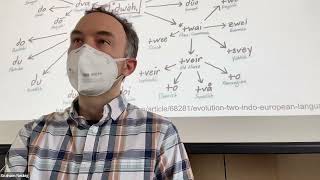
Multilingual NLP 2022 - Language Contact and Change
Explore language change, contact, and crosslingual similarities. Learn about loanwords, cognates, and computational models for transliteration and lexicon induction.
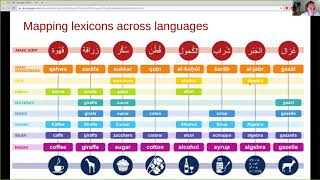
CMU Multilingual NLP: Language Contact and Similarity Across Languages
Explore computational models of language contact, lexical borrowing, and cross-lingual similarities in this multilingual NLP lecture on language evolution and interaction.
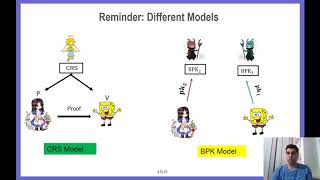
On QA-NIZK in the BPK Model
Exploration of QA-NIZK in the BPK model, discussing soundness, subversion security, and new results for Kiltz-Wee QA-NIZK, with implications for persistent zero-knowledge.
Post-Quantum WireGuard
Explore post-quantum cryptography in WireGuard, covering core handshake security, computational models, and key confidentiality for enhanced network protection.
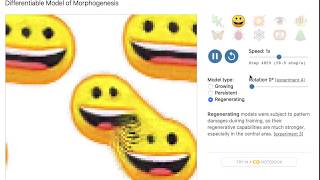
Growing Neural Cellular Automata
Explore neural cellular automata that learn to grow complex patterns through local interactions, mimicking biological morphogenesis and self-organization in a fascinating, interactive model.
The Science of Cause and Effect - From Deep Learning to Deep Understanding
Explore the foundations of causal reasoning and its impact on AI, decision-making, and scientific understanding with UCLA's Judea Pearl, a Turing Award winner and pioneer in probabilistic reasoning.
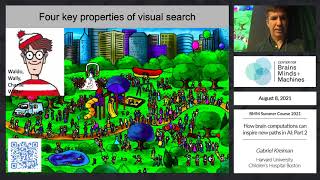
How Brain Computations Can Inspire New Paths in AI - Part 2
Explore brain-inspired AI advancements, focusing on object recognition, contextual reasoning, and model performance. Gain insights into cutting-edge computational approaches and their applications.
Computational Models - Turing Machines - CMU - CS Theory Toolkit
Explore Turing Machines as a computational model, covering historical advantages, multitape variations, and key concepts like memory, time, and space bounds in theoretical computer science.
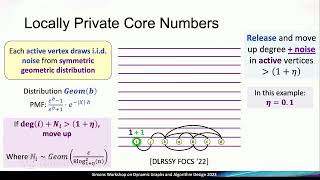
Practical Dynamic Graph Algorithms - Data Structures and Connections Between Models
Explore efficient data structures and techniques for dynamic graph algorithms across multiple computational models, focusing on k-core decomposition, densest subgraph, and triangle counting problems.
Alan Turing and the Other Theory of Computing and Can a Machine Be Conscious?
Explore neuroscience advances in understanding consciousness, including the Global Workspace Model and its computational implications, with insights on free will and determinism.