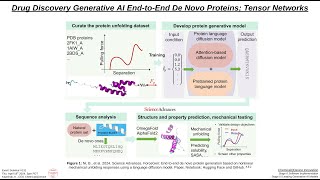
Drug Discovery Generative AI: End-to-End De Novo Proteins and Tensor Networks
Explore advanced protein design using generative AI, focusing on a novel diffusion model for creating proteins with specific mechanical properties. Learn about model architecture and potential tensor network enhancements.
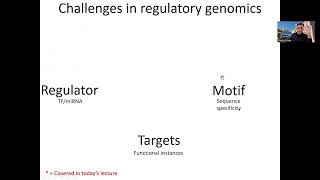
Regulatory Circuitry and Networks - Lecture 7
Explore regulatory circuitry and networks in biological systems, focusing on gene regulation mechanisms and their interconnected pathways.
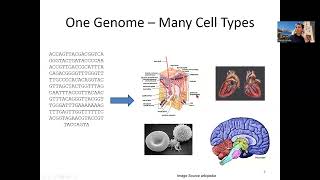
Epigenomics and Hidden Markov Models in Computational Biology - Lecture 5
Explore epigenomics, histone modifications, and DNA profiling techniques. Learn about read mapping, quality control, and Hidden Markov Models for analyzing chromatin states in computational biology.
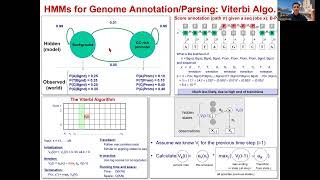
Regulatory Circuitry - Lecture 6
Explore regulatory circuitry in genomics, uncovering mechanisms of gene expression control and cellular regulation through advanced computational analysis techniques.
Vertex Model for Tissue Mechanics - Part I
Explore vertex models for tissue mechanics, focusing on fundamental concepts and applications in biological systems.
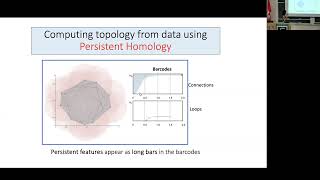
Applications of Topological Data Analysis in Cancer - Lecture 2
Explore applications of topological data analysis in cancer research, focusing on mathematical modeling of treatments, resistance, and optimization.
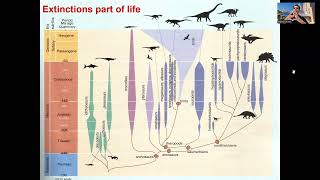
Sequence Alignment and Dynamic Programming in Computational Biology - Lecture 4
Comprehensive exploration of sequence alignment techniques, from comparative genomics to dynamic programming, covering local alignment, hashing, and BLAST for efficient genomic analysis and evolutionary insights.
Machine Learning for Protein Engineering in Drug Discovery
Discover how machine learning intersects with molecular biology and protein engineering through insights from UC Berkeley Professor Jennifer Listgarten's keynote address on advancing drug discovery innovations.
Geometric Deep Learning for Protein Understanding and Design
Discover how geometric deep learning advances protein understanding and design, exploring cutting-edge AI applications in drug discovery and development.
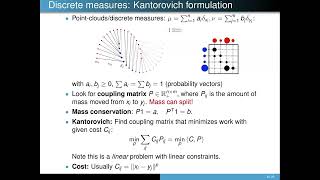
Trajectory Inference in Wasserstein Space
Explore advanced trajectory inference methods using Wasserstein geometry and B-spline approximation for analyzing dynamic processes in computational biology and point cloud data.
Tipping Points in Cancer - Mathematical Oncology and Computational Biology
Explore the mathematical dynamics of cancer progression through computational analysis of fluid mechanics, biology, and critical transition points in tumor development.
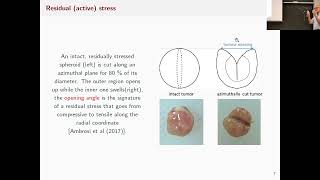
Stress and Growth in Tumor Spheroids
Explore the mathematical modeling of tumor growth dynamics, focusing on stress factors and spheroid development in oncological research and computational biology.
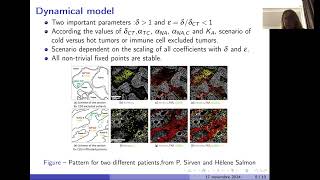
How Cancer-Associated Fibroblasts Promote T-Cell Exclusion in Human Lung Tumors: A Physical Perspective
Explore the physical mechanisms behind cancer-associated fibroblasts and their role in T-cell exclusion within lung tumors through mathematical and biological perspectives.
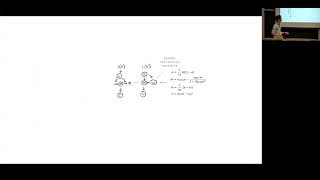
Balancing Interpretability and Predictive Accuracy in Mathematical Models of T Cell Activation
Explore mathematical modeling approaches for T cell activation, examining the trade-offs between model interpretability and accuracy in immunological systems.
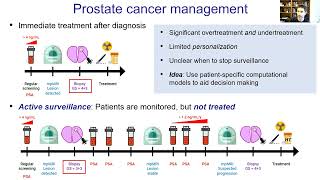
Prostate: Small Organ, Big Problems - Informing Clinical Decisions with Computational Models
Explore how computational models enhance clinical decision-making for prostate-related conditions through advanced mathematical and biological approaches.
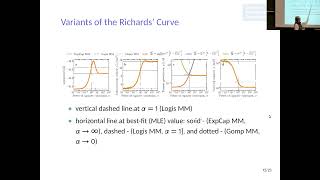
Practical Parameter Identifiability and Handling of Censored Data with Bayesian Inference in Models of Tumour Growth
Explore Bayesian inference techniques for tumor growth modeling, focusing on parameter identification and censored data analysis in mathematical oncology research.
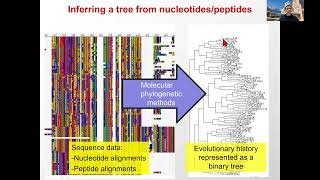
Evolution in Machine Learning and Computational Biology - Lecture 21
Dive into computational approaches for studying evolutionary biology, exploring genomic patterns, molecular evolution, and machine learning applications in evolutionary analysis.
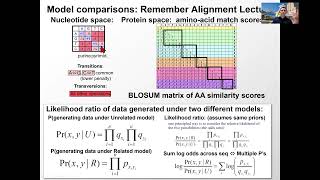
Comparative Genomics - Lecture 20
Explore comparative genomics principles and methodologies for analyzing DNA sequences across species to understand evolutionary patterns and functional elements.
Comprehensive Profiling of Cancer Neoantigens From Aberrant RNA Splicing
Discover how computational methods identify and analyze cancer neoantigens from aberrant RNA splicing, focusing on DNA mutations and de novo RNA aberrations for advancing immuno-oncology treatments.

Does Life Compute? Understanding Protein Folding and Biomolecular Assembly
Explore the mathematical structures behind protein folding and biomolecular assembly, examining computational approaches and theoretical models that illuminate life's fundamental processes.
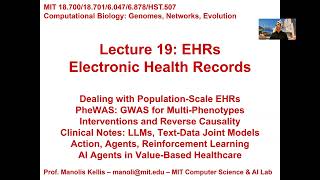
Machine Learning for Computational Biology: Electronic Health Records - Lecture 19
Dive into machine learning applications for Electronic Health Records (EHRs), exploring computational biology approaches and data analysis techniques for healthcare systems.