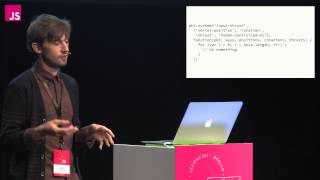
Developing Games Using Data Not Trees
Explore data-oriented game development for flexible, efficient design. Learn to create adaptable systems that can easily accommodate major gameplay changes without extensive code restructuring.
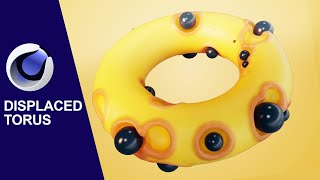
Cinema 4D Volume Collision with Volume, MoGraph and Deformers
Master volume collision techniques in Cinema 4D using Mograph and deformers to create dynamic visual effects and enhance your 3D animation workflow.
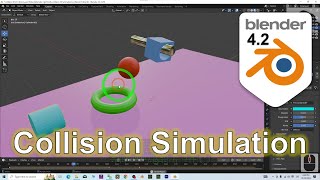
Creating Rigid Body Collision Animations in Blender 4.2
Learn how to create dynamic rigid body collision animations in Blender 4.2 through a practical step-by-step demonstration of physics simulation techniques.
On the Instance Optimality of Detecting Collisions and Subgraphs
Explore instance optimality in detecting collisions and subgraphs, examining how structural knowledge impacts algorithm efficiency for various detection tasks in functions and graphs.
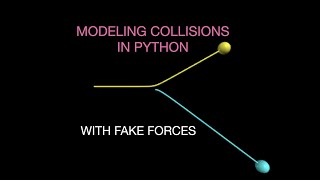
Modeling 2D Collisions in Python with Fake Forces
Simulate 2D collisions using Python and fake forces. Learn a simplified approach to modeling object interactions in programming.
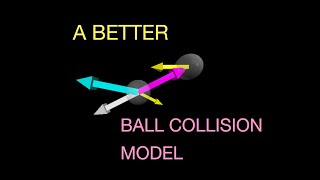
Building a Better Ball Collision Model for Solar System Simulation in Python
Improve ball collision modeling for a flat solar system simulation, focusing on conservation of momentum and angular momentum.
Building Games in .NET MAUI
Explore game development with .NET MAUI using the Orbit engine. Learn key concepts, optimization techniques, and practical skills through a working example, combining MAUI graphics with familiar framework elements.
Writing Cross Platform Games with MonoGame and .NET
Explore game development with MonoGame and .NET, covering game loops, rendering, asset management, collision detection, and input handling. Learn to build cross-platform games using a custom 2D engine.
3D Game Development in Wolfram Language
Explore 3D game development using Wolfram Notebooks, mastering Graphics3D, Dynamic, camera control, and essential gaming mechanics.
Game Programming: Collision Detection and Resolution - Lecture 8
Explore collision detection and resolution in game programming, focusing on bounding shapes, AABB techniques, and practical examples like Super Mario Bros.
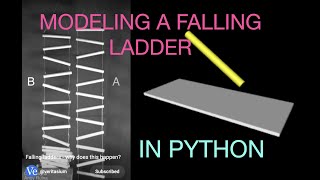
Modeling a Bouncing Stick with Python - Veritasium Falling Ladder Problem
Model a falling and bouncing stick using Python, inspired by Veritasium's falling ladder problem. Explore physics simulations and coding techniques.
Game Programming: Collision Detection and AABB - Lecture 8
Explore collision detection in game programming, focusing on AABB techniques. Learn to implement and resolve collisions for realistic gameplay mechanics.
Game Programming: Collision Detection - Lecture 8
Explore collision detection techniques in game programming, covering algorithmic approaches and data structures for efficient collision handling.
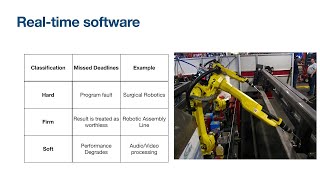
Robotics at Compile Time: Optimizing Robotics Algorithms With C++'s Compile-Time Features - Lecture
Optimize robotics algorithms using C++ compile-time features. Learn to leverage template metaprogramming, constexpr, and concepts for enhanced performance and safety in real-time robotic applications.
Building Pac-Man Game in JavaScript - 1 Hour Tutorial
Learn to build a functional Pac-Man game using JavaScript in just one hour, covering game logic, movement mechanics, and basic AI for ghost characters.
How to Make a Video Game - Godot Beginner Tutorial
Learn to create your first game using Godot engine, covering player movement, world design, enemies, scoring, and audio. Gain practical skills for game development from start to export.
Game Programming: SFML Circles, Polygons, and Collisions - Lecture 7
Explore game programming concepts, including SFML graphics, entity-component systems, and game architecture. Learn to implement player controls, enemies, scoring, and special abilities.

Game Programming: Introduction to Entity Component System (ECS) - Lecture 5
Explore Entity Component System architecture for game development, enhancing performance and flexibility in C++ game programming.
Game Programming: Assignment 3 Overview and Implementation - Lecture 11
Explore game programming fundamentals, including vector math, rendering, AI, physics, and UI. Learn to build functional games using ECS architecture, C++, and SFML graphics library.
Game Programming: Introduction to Entity Component System - Lecture 5
Explore Entity Component System architecture for game development, learning its principles and implementation in C++ with SFML graphics library.
Game Programming: Assignment 3 Specification and Implementation - Lecture 11
Develop a 2D game with player movement, bullet spawning, collisions, and animations using C++ and SFML. Implement level loading, physics, and entity-component systems for a complete gaming experience.