Embodiment in Artificial Intelligence - Session 8
Explore the concept of embodiment in AI and robotics, examining how physical form influences cognitive processes and interactions with the environment.
Embodiment in Artificial Intelligence - Session 15
Explore advanced concepts of embodiment in AI and robotics, delving into the integration of physical form and cognitive processes for enhanced machine intelligence.
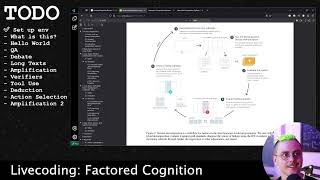
Factored Cognition Primer by Ought
Explore factored cognition through a hands-on livecoding session, diving into Ought's primer to understand complex problem-solving techniques and AI-assisted reasoning.
Social Cognition - A Peek Through a Multimodal Lens
Explore social cognition through multiple perspectives, examining how we perceive and interact with others. Gain insights into human behavior and decision-making processes in social contexts.
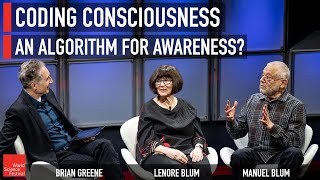
Coding Consciousness - An Algorithm for Awareness?
Explore theories of consciousness with computer scientists Lenore and Manuel Blum as they discuss the potential for coding self-awareness into algorithms, moderated by Brian Greene.
Understanding Multiple Intelligences Across Evolution and Development - There Is No Such Thing as AGI
Explore multiple intelligences across evolution and development, challenging the concept of AGI and examining diverse cognitive abilities in various species.
How Can We Detect Consciousness in Infants?
Exploring methods to detect infant consciousness using neurophysiological markers, behavioral indicators, and theoretical predictions. Discusses challenges and implications for understanding consciousness emergence.
Educability - Understanding Higher-Level Intelligence
Exploring human educability: synthesizing learning from experience, others, and chaining knowledge. Proposes a computational approach to understanding and replicating broader human capabilities beyond example-based learning.
Cultural Evolution - Understanding Higher-Level Intelligence
Explore higher-level intelligence through AI, psychology, and neuroscience perspectives, focusing on cultural evolution and its impact on human cognition.
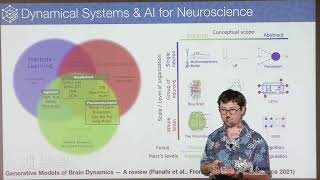
Emerging Interactions in Humans and Machines: From Social Physiology to Social Neuro-AI
Explore social cognition through multi-brain neuroscience and neuro-inspired AI, bridging intra-personal mechanisms and inter-personal dynamics to understand higher-level intelligence in humans and machines.
Bridging the Data Gap Between LLMs and Children - Understanding Higher-Level Intelligence
Explores the disparity in data requirements between AI models and human learning, examining potential explanations and presenting new insights on multimodal input and evaluation methods.
Attention and Presencing - Cultivating Conscious Connection with the World
Explore the concept of attention as a cognitive act shaping our experiences and connection with the world. Learn how attention influences our accomplishments and ways to overcome attention poverty.
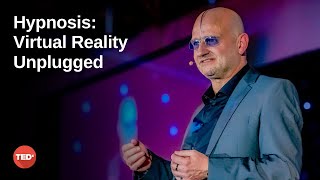
Hypnosis - Virtual Reality Unplugged
Explore hypnosis as a natural psychological phenomenon and its potential for self-improvement. Learn how understanding cognitive mechanisms can unlock mental wellness through self-hypnosis techniques.
Understanding Lower-Level Intelligence from AI, Psychology, and Neuroscience Perspectives
Explore lower-level intelligence through AI, psychology, and neuroscience perspectives with Gily Ginosar's insightful presentation.
The Platonic Representation Hypothesis - Understanding Lower-Level Intelligence
Explore the concept of Platonic representation in AI, psychology, and neuroscience, examining its implications for understanding lower-level intelligence across disciplines.
Robot Learning: Inspiration from Child Development
Explore how insights from child development can enhance robot learning, bridging AI, psychology, and neuroscience perspectives.
Pathway to Robot Intelligence: Learning Complex Sensorimotor Skills
Explore a framework for learning complex, generalizable sensorimotor skills in robotics, bridging the gap between language processing and reliable task execution.
Approximations and Workarounds in Intuitive Physics and Imagination
Explores computational models and behavioral studies of human intuitive physics, examining approximations and limitations in mental simulations for everyday object interactions.
Toward a Theory of Perspective Perception in Pictures
Explore a new theory of projection perception in pictures, challenging traditional linear perspective and offering insights into how humans interpret and create realistic 2D representations of 3D scenes.
Combining Innate Concepts with Learning to Perceive the World
Explore how innate concepts and learning processes interact to shape our perception of the world, drawing insights from AI, psychology, and neuroscience perspectives.
Unlock Your Learning - Secrets from Cognitive Science
Discover evidence-based strategies to enhance learning and retention, tailored to how our brains naturally work. Gain insights on effective study techniques for academic success.