Probabilistic Thinking in Language and Code
Explore the intersection of Bayesian models and LLMs, examining how natural and programming languages serve as languages-of-thought for human-like cognitive representations and reasoning.
The Relationship Between Language and Thought - Episode 2
Explore the intricate connection between human language and cognitive abilities through expert discussions on evolution, intelligence, and the fundamental role of communication in human society.
Cognitive Collectives - Understanding Multi-Scale Collective Intelligence
Explore groundbreaking research on collective animal behavior and intelligence through Max Planck Institute's examination of cognitive systems and group decision-making dynamics.
Collective Behavior from Surprise Minimization
Explore how cognitive principles and probabilistic decision-making drive collective behavior in animal groups, offering new perspectives on emergent patterns in biological and engineered systems.
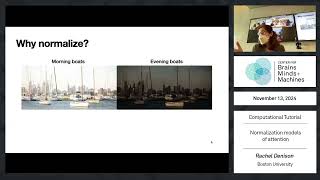
Normalization Models of Attention - From Neural Computation to Behavioral Goals
Explore how attention interacts with neural normalization to shape perception and behavior, featuring hands-on MATLAB exercises and computational modeling frameworks for cognitive processing.
Mechanistic Theory of Social Foraging
Explore the quantitative framework of animal foraging behavior, examining decision-making strategies and cognitive dynamics in both individual and social contexts through mechanistic theoretical models.
A Simple Visual Model for a Science of Education
Explore how visual models from natural sciences can revolutionize educational theory, drawing insights from military applications to enhance teaching and learning methodologies.
Exploring the Human Mind Through AI, VR, and Neuroscience
Explore how AI, VR, and neuroscience intersect to advance our understanding of human cognition, perception, and behavior while developing more culturally-aware and intuitive technologies.
Why Nature Does Not Like Zombies - Unifying Lower and Higher Order Theories of Consciousness: A Computational Approach
Explore a computational theory unifying consciousness levels, explaining why natural selection favors conscious beings over unconscious zombies through causal learning and self-awareness mechanisms.
Do Nothing Meditation as a Potential Shortcut to Minimal Phenomenal Experience
Explore groundbreaking research on Do Nothing meditation, comparing its efficiency to traditional practices in achieving mental stillness and minimal phenomenal experience through scientific studies.
Anticipation and Collective Surprise in Information Theory and Consciousness
Explore the intersection of consciousness theories, information processing, and surprise mechanisms in the brain, examining integrated approaches to understanding predictive cognition and sensory anticipation.
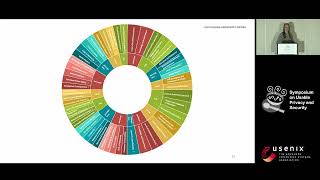
Beyond Fear and Frustration - Towards a Holistic Understanding of Emotions in Cybersecurity
Explore groundbreaking research on the emotional dimensions of cybersecurity, examining how diverse emotions impact security behaviors and organizational outcomes through qualitative studies and interviews.
Cognitive Mechanisms That Power Learning and Creativity
Explore the fascinating intersection of neuroscience and creativity, examining how working memory drives learning and innovative thinking, with insights for developing more effective AI systems.
Scaling Intelligence the Human Way
Explore groundbreaking insights into human-inspired AI development and intelligence scaling through MIT researcher Josh Tenenbaum's analysis of naturalistic approaches to artificial intelligence.
Understanding Human Intelligence Through Human Limitations
Explore how human cognitive limitations shape intelligence and learning, examining efficient resource use, limited-data learning, and collective problem-solving in the context of AI advancement.
Why Enactivism Entails the Acceptance of Cultural Relativity
Explore the philosophical intersection of enactivism and cultural relativity, examining how context shapes mind and meaning through detailed analysis of Sapir-Whorf hypothesis and enactive cognition principles.
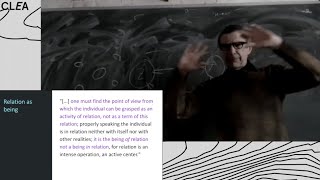
Open-Ended Intelligence in the Light of Simondon's Philosophy of Individuation
Explore Simondon's theory of individuation and its implications for understanding open-ended intelligence, generative AI, and the nature of consciousness through physical, biological, and psychic perspectives.
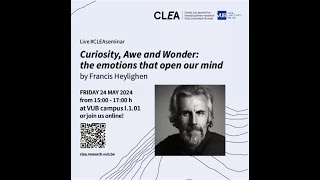
Curiosity, Awe and Wonder - The Emotions That Open Our Mind
Explore how curiosity, awe, and wonder shape our understanding of the universe, driving scientific progress and cognitive growth through emotional engagement with vast, mysterious phenomena and infinite potential.

Can You Picture Things in Your Mind? I Can’t | Alex Rosenthal | TED
Alex Rosenthal explores aphantasia, the inability to generate mental images, using the example of visualizing a rocket crash-landing on a planet. He explains why our minds are more different than we think, recorded at TEDNext 2025.

How Your Brain Alters Your Reality (W/ Anil Seth) | How to Be a Better Human | TED
Anil Seth, Professor of Cognitive and Computational Neuroscience, discusses consciousness, identity, and the limitations of describing the brain as a "supercomputer." The conversation explores ethical questions around brain-computer interfaces, how hallucinogenic drugs affect consciousness, and what makes us who we are.

Co se stane, když se sladíme? | Jakub Cerulík & Michaela Cmíralová | TEDxPrague
Co se stane, když se na chvíli sladíme? Psycholožka a vědkyně Michaela Cmíralová zve publikum k jednoduchému experimentu, který spolu s ní na pódiu vedl Jakub Cerulík. Experiment prostřednictvím pohybu, rytmu a hlasu ukazuje, jak společná synchronizace těla ovlivňuje to, jak vnímáme sami sebe i druh