Unlocking Natural Artificial Intelligence - Bridging AI and Natural Skill Acquisition
Explore natural AI's potential beyond language models. Discover efficient skill learning through environmental interactions and the Free Energy Principle's role in brain computation.
Carving Reality at its Digital Joints - Ontology in Information Systems
Explore ontology's role in structuring reality and its impact on information systems. Gain insights into semantic precision, data integration, and the shift towards intelligent augmentation.
Modeling and Measuring Scientific Creativity
Explore scientific creativity through modeling and measurement techniques, gaining insights into innovative thinking and research methodologies.
How to Learn to Learn - Unleashing Your Learning Potential
Unlock your learning potential with transformative strategies and insights, empowering you to conquer any challenge and embark on a journey of personal growth.
Unlocking the Hidden Science of Reasoning - Applying Logic to Improve Personal and Professional Lives
Discover how logic can be applied as a powerful science to enhance personal and professional decision-making, challenging conventional understanding of reasoning.
Cognitive Computational Modeling Made Easy with Julia
Explore cognitive computational modeling using Julia, featuring ActionModels.jl for flexible simulations and HierarchicalGaussianFiltering.jl for advanced learning and perception models.
Determining AI Consciousness - Key Indicators and Limitations
Explores the minimal ingredients for consciousness and examines whether AI models like ChatGPT possess consciousness, discussing limitations of robot consciousness and implications for future AI development.

AI - Humanity's Final Invention?
Exploring the potential impact of artificial superintelligence on humanity's future, discussing its development, risks, and implications for our species' dominance on Earth.
Who Do You Trust? Beware of Your Brain
Explore cognitive biases affecting trust and collaboration. Learn strategies to overcome hardwired tendencies, fostering better teamwork and decision-making in professional environments.
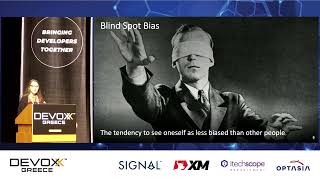
Cognitive UX - Using Cognitive Science and Psychology to Drive UX Design
Explore cognitive science principles to create effective UX designs, leveraging mental shortcuts and addressing biases for improved user experiences and emotional connections.
Modelling vs Reality
Exploring categorization in software development: from intuitive concepts to precise technical models, examining the challenges and trade-offs in representing complex realities.
AI and the Future of Consciousness Science - Exploring Artificial Systems and Consciousness
Explore the complex relationship between AI advancement and consciousness, examining philosophical challenges and how human-machine interactions may ultimately shape our understanding of machine consciousness.
Meditation and the Scientific Study of Consciousness: From Consciousness to Pure Awareness to Complete Cessation of Awareness
Explore how meditation practices influence consciousness, from focused attention to complete awareness cessation, through scientific research and predictive brain framework analysis.
Towards Understanding Adaptive Intelligence
Explore groundbreaking research on adaptive intelligence and its implications for neuroscience and AI, examining the fascinating intersection between biological and artificial learning systems.
A Less Artificial Intelligence - Neuroscience and AI Co-evolution
Explore the intersection of neuroscience and AI through Andreas Tolias's examination of developing more natural and brain-inspired artificial intelligence systems at Stanford's symposium.
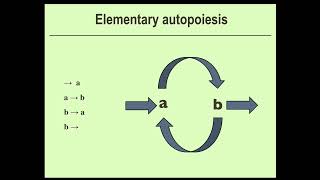
The Origins of Agency, Cognition, and Consciousness
Explore the fundamental concepts of agency, cognition, and consciousness through expert insights from leading researchers in cognitive science and philosophy of mind.
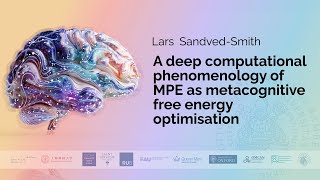
A Deep Computational Phenomenology of MPE as Metacognitive Free Energy Optimization
Explore the computational modeling of minimal phenomenal experience through Bayesian mechanics and free energy principles, examining belief dynamics and metacognitive processes.
Subjectivity vs Phenomenal Character - Understanding Consciousness Theory
Explore the fundamental distinction between subjectivity and phenomenal character in consciousness, examining their roles in contemporary debates and theoretical frameworks.
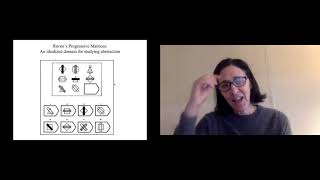
Abstraction and Analogy in Natural and Artificial Intelligence
Explore the role of analogy-making in conceptual abstraction and understanding, and its importance for developing AI systems with humanlike intelligence.

Understanding Human Functioning and Enhancing Human Potential through Computational Methods
Explore computational methods for analyzing human functioning, enhancing potential, and improving efficiency through multimodal approaches in diverse contexts.
Language Games - NDC Oslo 2024
Explore rigorous frameworks for effective communication in software engineering, addressing challenges with both humans and computers, and learn strategies to improve project outcomes.