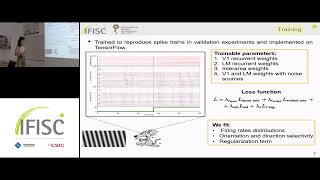
Understanding the Role of Top-Down Input in Visual Information Processing
Explore how top-down input influences visual information processing, examining its impact on perception and cognitive functions.
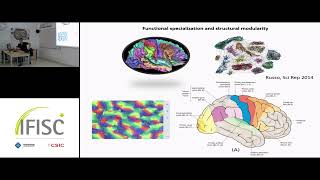
Information Processing in Oscillating Brain
Explore how oscillations in the brain contribute to information processing and cognitive functions. Gain insights into neural dynamics and their role in cognition.
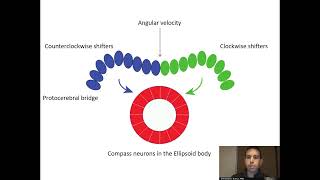
Recurrent Neural Networks in Brains and Machines
Explore neural networks as models for brain activity, examining their evolution and potential for bridging multiple cognitive systems. Gain insights into ongoing research and future directions in neuroscience.
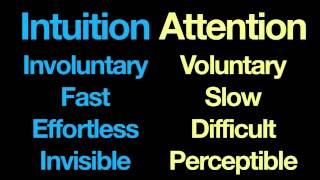
The Programming Ape: Optimizing Software Development for Human Cognition
Exploring human cognition to optimize software development tools, focusing on Yammer's experience in creating human-centric engineering solutions and addressing sociotechnical challenges.
Stroop, Whorf, and Elixir - Expanding Programming Paradigms - Philly ETE 2014
Explore how learning Elixir, a functional language inspired by Ruby, can transform your programming mindset and expand your coding vocabulary, enhancing problem-solving skills.
Psychology of Programming: Approaches to Evaluating Proposed Changes in Rust - 2022
Explore psychological aspects of programming and decision-making processes in Rust language development with insights from Felienne Hermans.

Emotion and Cognition in Virtual Reality - IEEE VR 2022
Explore cutting-edge research on emotion and cognition in virtual reality, including studies on cognitive load, emotional sharing, jury understanding, disability simulation, and mood-driven colorization.

Batteries-included Scala with Scala Toolkit
Discover Scala Toolkit: simplifying development, smoothing learning curves, and enhancing ecosystem navigation. Learn about its design, processes, and practical applications for improved Scala programming.

Mission: Impossible - Testing Language Models on Unnatural Grammar Rules
Explore groundbreaking research challenging assumptions about language models' ability to learn impossible languages through systematic experiments with synthetic language variations and GPT-2.
Multi AI-Agents Reasoning with LLMs - Python Code Examples
Master the creation and implementation of multi-agent LLM systems in Python, from basic agent coding to complex hierarchical reasoning structures using GPT-4, including practical examples and real-world applications.

Inside the Black Box of AI Reasoning - Understanding LLM Knowledge and Complex Problem-Solving
Delve into groundbreaking research exploring how AI models process complex reasoning tasks, using novel graph-based frameworks to analyze knowledge integration and problem-solving capabilities.
Mirror, Mirror: LLMs and the Illusion of Humanity
Explore the fascinating phenomenon of anthropomorphizing LLMs, examining why we attribute human traits to AI and how understanding these misconceptions leads to better practical applications.

The Games of Intelligence - Human, Artificial and Emotional
Explore os jogos da inteligência humana, artificial e emocional, discutindo os avanços da IA e propondo uma nova abordagem para avaliar a inteligência emocional das máquinas.

The Computational Gauntlet of Human-Like Learning
Explore AI systems that mimic human-like learning in mathematics and driving. Discover characteristics of human behavior that challenge traditional machine learning approaches and offer new paths to expertise acquisition.
Curiosity and Focus in AI Studies: Navigating the Field
Explore AI's potential to build a better world, focusing on curiosity, communication, and interdisciplinary approaches while addressing challenges in model self-awareness and understanding subtext.
Beyond the Buzz: Navigating AI's Myths and Realities
Explore AI's realities, debunking myths about superhuman intelligence. Examine open-source initiatives, licensing, and the current state of AI capabilities. Gain practical insights into AI's true potential and limitations.
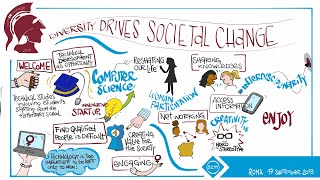
Simulation of Cognitive Agents to Explore Occupants’ Wayfinding Experience in Future Buildings
Explore innovative pre-occupancy simulation tools for designing human-centered buildings, focusing on wayfinding behavior in complex urban structures using interdisciplinary approaches.
AI and Artificially Enhanced Brains - With Susan Schneider
Exploring the philosophical and ethical implications of merging human brains with AI, including consciousness in robots, mind-machine interfaces, and the future of human intelligence.

On Localization in Language Models
Explore the role of individual components in language models, their characterization, and how analyzing internal structures can elucidate behavior in memorization, gender bias, and factual recall.
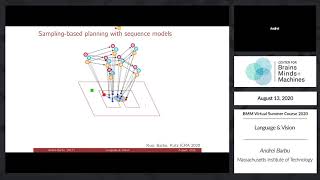
Language & Vision
Explore the intersection of language and vision in AI, covering deep networks, sampling-based planners, and multitasking models for advanced communication and perception.
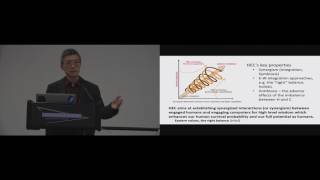
Human Computer Integration versus Powerful Tools
Experts debate the future of human-computer relationships, exploring symbiosis, integration, and powerful tools. Discusses implications for design, research, and society in this thought-provoking panel.