Multi-Tenancy vs. Multi-Cluster - When Should You Use What?
Explore multi-tenancy and multi-cluster strategies in Kubernetes, discussing use cases, benefits, and considerations for effective resource sharing and isolation in cloud-native environments.
CRI-O Still Loves Kubernetes
Explore CRI-O as a Kubernetes-exclusive container runtime, featuring improved Kubelet communication, container stats, user namespaces, and seccomp profiles. Learn its advantages and real-world applications.
Lessons Learned from Operating ETCD
Insights on operating ETCD clusters at scale, covering observability, deployment, and management strategies. Learn from OVHcloud's experience in maintaining ETCD health while supporting rapid growth.
How to Break Your Kubernetes Cluster with Networking
Explore common networking pitfalls in Kubernetes clusters, including DNS issues, protocol unreliability, and unexpected behaviors. Learn to prevent production problems through real-world examples and expert insights.
Multi-Tenancy in Kubernetes - How We Avoided Clusters Sprawl With Capsule
Discover how Capsule, an open-source Kubernetes Operator, enhances multi-tenancy, prevents cluster sprawl, and improves resource isolation while maintaining native Kubernetes UX for efficient operations.
Understanding Isolation Levels in the Kubernetes Landscape
Explore isolation and security levels in Kubernetes, from clusters to containers. Learn tradeoffs, impacts, and how to optimize isolation at different layers, with a focus on Jupyter Notebooks as a case study.
Resource Requests and Limits Under the Hood - The Journey of a Pod Spec
Explore Kubernetes resource management through fun illustrations, understanding how requests and limits work from Pod spec to Linux kernel, enhancing your ability to optimize cluster performance.

RabbitMQ on Kubernetes Deep Dive
Explore RabbitMQ deployment on Kubernetes, covering cluster operations, monitoring, upgrades, and declarative resource management. Learn best practices and upcoming features for efficient messaging infrastructure.
How We Built a Cloud On K3s - The Learnings Of Growing Up Fast
Explore Civo's journey building a cloud on K3s, covering infrastructure, networking, and lessons learned in scaling clusters, observability, and company culture for a multi-tenant environment.
Building Catalogs of Operators for OLM the Declarative Way
Explore architectural updates to Operator-lifecycle-Manager tools for building and maintaining Operator Catalogs. Learn about goals, motivations, lessons learned, and future developments in OLM.
GitOps in the Real World - Opportunities for Developer Experience Improvement
Explore GitOps implementation at scale, focusing on manifest generation and repository management. Learn from Chick-fil-A's experiences and discover opportunities to enhance the frontend process.
How to Efficiently Manage Tens of Thousands of etcd Clusters
Explore efficient management of large-scale etcd clusters using Tencent's open-source kstone platform. Learn about visualization, automated hazard detection, self-healing, and seamless migration for improved stability and reduced maintenance costs.
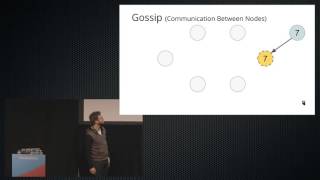
Hands on Introduction to Distributed Systems Concepts with Akka Clustering
Explore distributed systems concepts through a hands-on demonstration using Akka and Raspberry Pi's. Learn about cluster management, gossip protocols, and leader election in a gamified, interactive format.
Beyond Shuffling - Scaling Apache Spark
Scaling Apache Spark: best practices for large datasets, performance optimization, and efficient data processing techniques. Covers counters, key/value operations, caching, and functional transformations with Datasets.
Debugging a Large Node Cluster
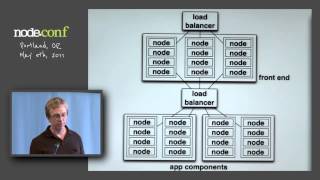
Explore techniques for debugging large-scale Node.js clusters, including CPU considerations, mirroring, and testing strategies for complex distributed systems.
Distributed Computing Made Easy with Azure Service Fabric
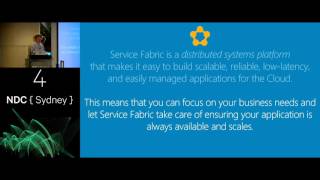
Explore distributed computing with Azure Service Fabric, a platform for building scalable, resilient services. Learn to develop and manage enterprise-level applications efficiently.
Stairway to Cloud - Orleans Framework for Building Halo-Scale Systems
Explore the Orleans Framework for building scalable cloud systems, focusing on virtual actors, stateful middle tiers, and its origins in Microsoft Research and game development.
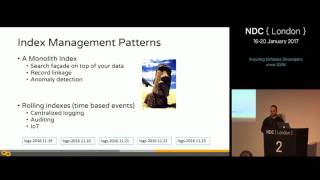
Elasticsearch Do's, Don'ts and Pro-Tips
Discover Elasticsearch best practices, pitfalls, and expert tips for efficient deployment, scalability, and performance optimization in search and analytics applications.
Building a Raspberry Pi Kubernetes Cluster and Running .NET Core
Learn to build a Raspberry Pi Kubernetes cluster, run OpenFaas, and explore cloud concepts. Gain hands-on experience with containerization, orchestration, and serverless computing to enhance your cloud development skills.
Building Advance Analytics Pipelines with Azure Databricks
Explore Azure Databricks for advanced analytics: Learn Spark basics, collaboration features, cluster management, and Azure integration through a detailed network intrusion anomaly detection pipeline walkthrough.
Data Lakes Beyond Clusters
Explore serverless data lakes using Azure Data Lake Analytics. Learn to run on-demand experiments efficiently, leveraging familiar languages and tools for advanced analytics without cluster maintenance.