Practical Chaos Engineering - Breaking Things on Purpose to Make Them More Resilient Against Failure
Learn to implement chaos engineering on AWS, revealing system failures before they become outages. Discover tools and methods for injecting failures to enhance architecture resilience.
Building APIs Rapidly with Azure Functions
Learn to rapidly build scalable, OpenAPI-compliant APIs using Azure Functions. Discover how to create, extend, and maintain APIs efficiently, with practical demonstrations and comparisons to other frameworks.
Azure Functions 2.0 - Enterprise-Grade Serverless
Explore enterprise-grade serverless solutions with Azure Functions 2.0, covering identity integration, containerization, workflow management, and cold start latency reduction for complex applications.
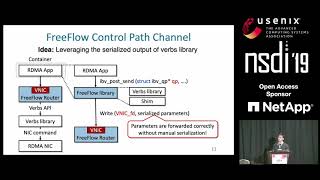
FreeFlow - Software-based Virtual RDMA Networking for Containerized Clouds
FreeFlow: software-based RDMA virtualization for containerized clouds, enabling high-performance networking with isolation, portability, and controllability. Achieves near bare-metal RDMA performance for applications like TensorFlow and Spark.
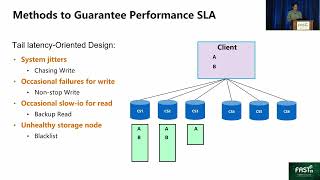
More Than Capacity - Performance-Oriented Evolution of Pangu in Alibaba
Evolution of Alibaba's Pangu storage system: embracing SSD and RDMA technologies, reducing I/O latency, and transitioning to performance-oriented storage with innovative designs for improved efficiency and reliability.
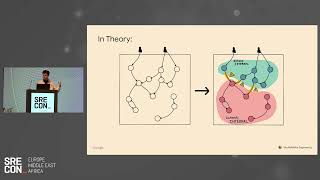
Hunting for Risky Dependencies in the World of Microservices
Discover how to identify and mitigate hidden vulnerabilities in microservice architectures using OpenTelemetry, with real-world examples from Google Maps' high-risk dependencies.
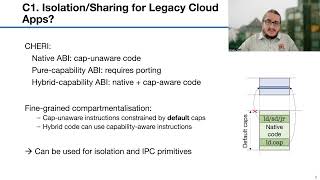
CAP-VMs - Capability-Based Isolation and Sharing in the Cloud
Explore capability-based isolation and efficient data sharing in cloud environments using cVMs, a novel VM-like abstraction leveraging memory capabilities for enhanced security and performance.
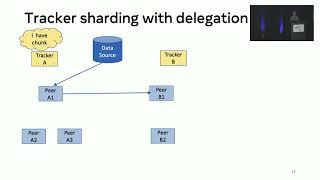
Owl - Scale and Flexibility in Distribution of Hot Content
Explore Owl, Meta's high-scale content distribution system combining centralized control with peer-to-peer data transfer, offering improved speed and flexibility over traditional methods.
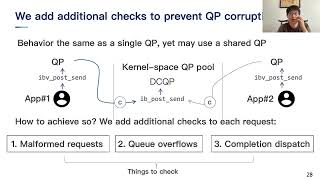
KRCORE - A Microsecond-scale RDMA Control Plane for Elastic Computing
Microsecond-scale RDMA control plane for elastic computing, enabling rapid connection establishment and efficient data transfer in distributed systems and serverless environments.
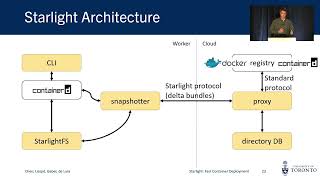
Starlight - Fast Container Provisioning on the Edge and over the WAN
Accelerates container provisioning for edge and WAN environments by redesigning deployment protocols, filesystem, and image storage, achieving 3x faster deployment with minimal overhead.
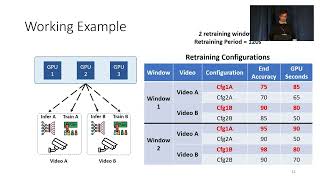
Ekya - Continuous Learning of Video Analytics Models on Edge Compute Servers
Continuous learning for edge video analytics models, addressing data drift and balancing inference-retraining tradeoffs. Ekya optimizes resource allocation for improved accuracy with fewer GPU resources.
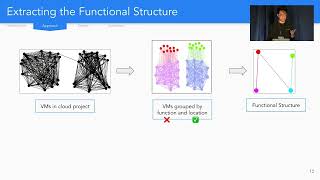
CloudCluster - Unearthing the Functional Structure of a Cloud Service
Unearths cloud service functional structure using VM-to-VM traffic matrix clustering. Aids management by revealing design patterns, enabling cost reduction, and identifying anomalies and misconfigurations.

Un-F*#$ing Cloud Storage Encryption
Explore secure key rotation for cloud storage encryption, addressing current vulnerabilities and introducing new schemes with improved security and performance trade-offs.

BECs and Beyond - Investigating and Defending Office 365
Explore Office 365 security through real-world attack case studies. Learn investigation techniques, log analysis, and defense strategies to protect cloud-based enterprise environments.
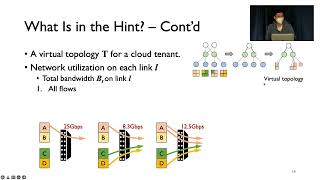
NetHint - White-Box Networking for Multi-Tenant Data Centers
Explore NetHint, a white-box networking approach for multi-tenant data centers. Learn how cloud providers and tenants can collaborate to enhance application performance through adaptive data transfer scheduling.
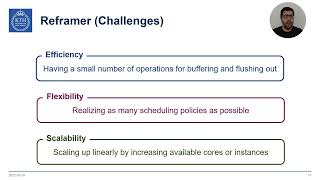
Packet Order Matters! Improving Application Performance by Deliberately Delaying Packets
Explores improving application performance by deliberately delaying and reordering network packets to increase traffic locality, enhancing cache efficiency in high-speed network interfaces.
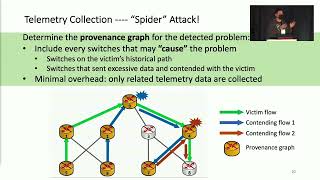
Closed-Loop Network Performance Monitoring and Diagnosis with SpiderMon
Innovative closed-loop network monitoring system using programmable switches for efficient performance diagnosis in data centers, leveraging "wait-for" relations to balance coverage and overhead.
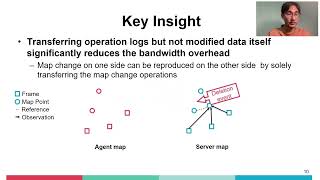
SwarmMap - Scaling Up Real-time Collaborative Visual SLAM at the Edge
Scaling up real-time collaborative visual SLAM for edge-based multi-agent systems, addressing data explosion and improving performance with innovative modules for synchronization, scheduling, and map representation.
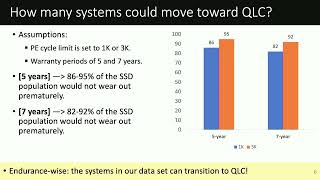
Operational Characteristics of SSDs in Enterprise Storage Systems - A Large-Scale Field Study
Comprehensive field study analyzing operational characteristics of SSDs in enterprise storage systems, covering performance, lifespan, write amplification, and NAND usage rates across nearly 2 million drives.
Spike Detection in Alert Correlation at LinkedIn
Discover how LinkedIn uses spike detection in alert correlation to quickly identify root causes of outages in their complex microservices architecture, reducing false positives and engineer toil.
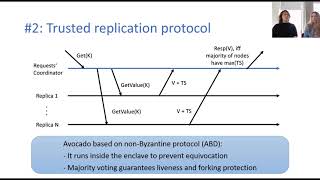
Avocado - A Secure In-Memory Distributed Storage System
Explore Avocado, a secure in-memory distributed storage system for untrusted cloud environments, offering strong security, fault-tolerance, consistency, and performance through innovative design and implementation.