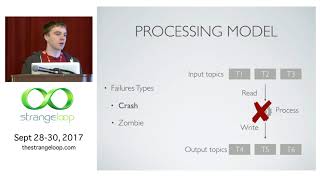
EoS in Kafka - Listen Up, I Will Only Say This Once
Explore Kafka's exactly-once semantics, including idempotence and transactions. Learn about distributed transaction mechanics, two-phase commit protocols, and future improvements for stream processing.
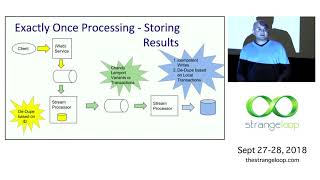
Chasing the Stream Processing Utopia
Explore stream processing challenges and solutions at internet scale, covering event ingestion, real-time data processing, and performance optimization techniques for large-scale applications.
The Holy Grail of Systems Analysis - From What to Where to Why
Explore advanced distributed tracing techniques to pinpoint latency issues in complex microservice architectures, moving beyond traditional monitoring approaches for more effective system analysis.

Stop Rate Limiting - Capacity Management Done Right
Explore capacity management alternatives to rate limiting, using Little's Law and concurrency control for better API performance and resource isolation in microservices architectures.
Why Kubernetes is Not Enough
Explore Farfetch's journey in migrating 500 microservices to Kubernetes, focusing on the creation of blueprints to manage service metadata and dependencies for improved agility and control.
Capability Mapping
Explore business capability mapping for effective microservice design, enhancing agility and product velocity through alignment with organizational capabilities and technical concerns.
Beyond Infrastructure as Code DSLs
Explore Pulumi: Use TypeScript, Python, or Go to declare infrastructure. Learn about projects, stacks, dynamic resources, and component resources for efficient infrastructure management.
gRPC for ASP.NET Core - A New Framework for High Performance APIs
Explore gRPC for ASP.NET Core, a high-performance framework for creating lightning-fast microservices and frontend applications, with insights on its advantages, implementation, and integration with existing technologies.
Apache Kafka Event Streaming Platform for .NET Developers
Explore Apache Kafka's event streaming platform for .NET developers, covering architecture, pub/sub messaging, and real-time stream processing applications at scale.
Static Sites, Dynamic Microservices, and Azure - How We Built Microsoft Docs and Learn
Explore Microsoft's JAMStack-based approach for building Docs and Learn, focusing on scalability, performance, and community contributions through GitHub integration.
GraphQL, gRPC or REST - Resolving the API Developer's Dilemma
Explore API styles like GraphQL, gRPC, and REST, understanding their strengths and limitations to make informed decisions for your specific application context and deliver exceptional developer experiences.
DataDevOps for the Modern Data Warehouse on Microsoft Azure
Explore DevOps principles for Big Data Analytical Pipelines using Azure Data Platform, including Data Factory, Databricks, and Data Lake Gen2. Learn to build and operationalize multi-source Modern Data Warehouses.
DevOps for the Commodore 64 - So What's Your Excuse?
Explore automated delivery from cloud to Commodore 64, debunking common DevOps excuses and showcasing innovative solutions for embracing modern practices in legacy environments.
Using Flutter to Develop Cloud Enabled Mobile Applications
Learn to develop cloud-enabled mobile apps with Flutter, connecting to Azure services like Identity and App Center. Discover how Azure accelerates app development across frameworks.
Build Your Cloud Infrastructure as Code With .Net Core
Learn to provision cloud infrastructure using .NET Core with Pulumi, an open-source IaC tool. Explore benefits over traditional methods, create reusable abstractions, and leverage existing programming skills.
Forget about HTTP
Explore alternatives to HTTP for microservices communication, including messaging and RPC. Learn benefits and challenges of different approaches for efficient, scalable, and resilient architectures.
Infrastructure as Code - Is It Really?
Explore infrastructure provisioning approaches, comparing cloud provider solutions, Terraform, and Pulumi. Learn pros, cons, and advanced scenarios to make informed decisions for your infrastructure automation needs.

It's A Trap! Sunk Cost Fallacy and the Private Cloud
Analyzing concerns about public cloud adoption, exploring reasons for private cloud failures, and debunking myths surrounding cloud computing to help organizations make informed decisions.
Big Data Analytics in Near-Real-Time with Apache Kafka Streams
Explore near-real-time data analytics using Apache Kafka streams. Learn to process, aggregate, and distribute large volumes of data efficiently, moving beyond traditional ETL methods for instant insights.
Navigating Microservices with .NET Core
Explore microservices and Kubernetes from a .NET Core perspective, covering key concepts, demos, and future trends in distributed systems architecture.
Serverless Containers with Knative and Cloud Run
Explore serverless containers with Knative and Cloud Run, combining agility and flexibility. Learn deployment, management, and modernization through demos and a case study of transforming a monolith into microservices.