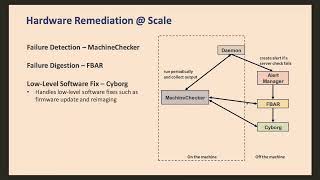
Debugging Flash Issues in Hyperscale Environments - Methods and Tools
Dive into advanced debugging methodologies for flash storage issues in hyperscale environments, focusing on Meta's innovative tools like tracewatch and retrace for efficient failure analysis and monitoring.
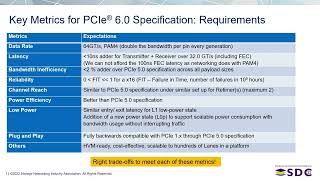
PCIe 6.0 Specification and Beyond - Enabling Storage for Machine Learning Applications
Explore PCIe 6.0's groundbreaking features and their impact on AI/ML applications, including PAM4 signaling, error correction, and flit-based encoding for enhanced data center performance and future developments.
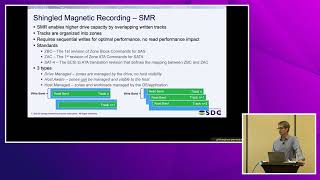
24G SAS Advancements for Hyperscale Environments - Power Optimization and Capacity Scaling
Discover how 24G SAS technology optimizes hyperscale storage environments through advanced features that address capacity requirements and power consumption challenges while improving infrastructure efficiency.
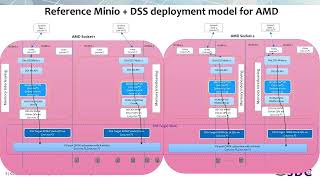
Evolving Storage Solutions for AI/ML Performance and Scale
Discover how Samsung's innovative object storage solutions and DSS stack optimize AI/ML workloads, enabling unprecedented performance and scalability for machine learning applications.
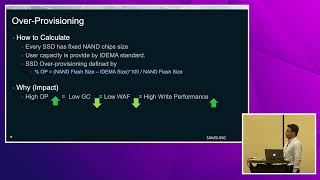
Impact Analysis of Flash Behavior on Quality of Service in Data Center and Enterprise SSDs
Delve into SSD performance metrics, NAND characteristics, and QoS optimization for enterprise storage systems, focusing on latency, throughput, and consistent performance analysis.
The Looming Need for Molecular Storage - Data Growth and Future Storage Solutions
Explore the future challenges of data storage capacity and discover how molecular storage, particularly DNA-based solutions, could address the impending storage crisis beyond 2030.
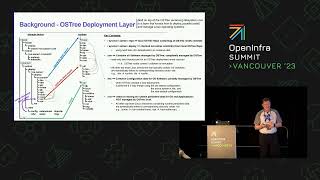
Using OSTree Atomic Updates to Reduce Outage Times in StarlingX Cloud Upgrades
Discover how OSTree enables atomic upgrades and reduces outage times in Linux-based systems, focusing on filesystem management, pre-deployment installations, and efficient root filesystem updates through hardlinks.
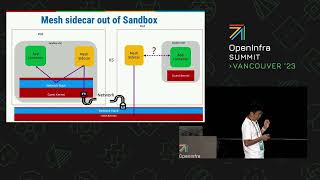
Towards Kata Containers 4 - When Kata Containers Meet Service Mesh
Explore security challenges and solutions for Kata Containers in service mesh environments, focusing on threat models, infrastructure sidecar designs, and performance benchmarks.
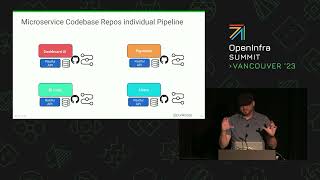
Continuous Delivery for Microservices Architecture
Discover effective strategies for implementing continuous delivery in microservice architectures, addressing common challenges and orchestrating CI/CD practices for distributed systems.
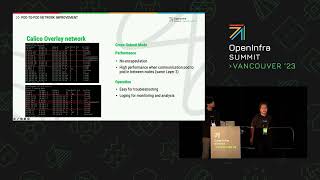
Improving Container Networking Performance with BGP Using Calico in OpenStack Cloud
Discover how to enhance container networking in OpenStack cloud using BGP and Calico, optimizing performance through Jumbo frames MTU while implementing ECMP routing for improved load balancing and redundancy.
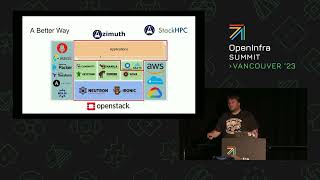
Self-Service LOKI Applications for Non-Technical Users with Azimuth Platform
Discover how Azimuth enables non-technical users to self-deploy and manage complex applications on LOKI through a simple web interface, featuring SSO authentication and support for advanced hardware capabilities.
Storage Business Continuity and Disaster Recovery with Ceph and OpenStack
Discover how CERN implements business continuity and disaster recovery across their 100+ PB Ceph storage infrastructure, including RBD snapshots, CephFS backups, and multi-center storage service deployment.
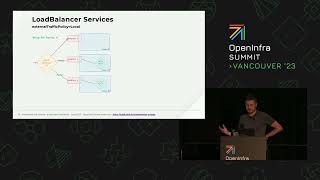
Kubernetes and Octavia Integration: LoadBalancer Services and Cloud Provider Implementation
Explore the intricacies of Kubernetes-Octavia integration in OpenStack, covering configuration choices, troubleshooting methods, and alternative solutions for exposing services effectively.
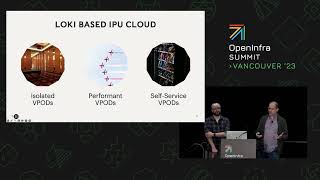
Satisfying AI's Demanding Data Needs Using Infrastructure as Code
Discover how to optimize AI infrastructure deployment using OpenStack, Terraform, and Ansible for efficient IPU-POD management, focusing on maximizing data processing and enabling flexible resource allocation.
Deploying and Managing Baremetal Kubernetes with Ironic
Discover how G-Research leverages Ironic to automate baremetal Kubernetes deployment, managing hardware provisioning, security compliance, and firmware updates across multiple datacenters for efficient HPC operations.
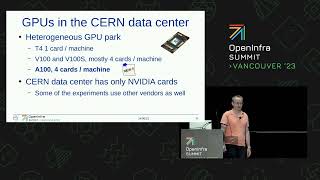
Multi-Instance GPU Deployment for Machine Learning and Particle Beam Simulations at CERN
Explore CERN's implementation of Multi Instance GPU technology using NVIDIA A100s, covering deployment strategies, virtualization approaches, and practical applications in machine learning and particle physics.
Rise, Fall and Re-Rise of the Semantic Layer - Evolution and Future of Data Management
Explore the evolution of semantic layers in data management, from traditional systems to modern metric stores, while understanding key challenges and future directions in data truth management.

EfficientML.AI - Introduction to Efficient Machine Learning
Master efficient machine learning techniques and optimization strategies for deploying ML models in resource-constrained environments, focusing on practical implementation methods.
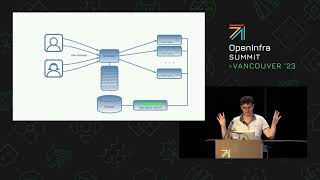
Building a Research Platform with Armada on OpenStack and Kubernetes
Discover how to build a high-throughput research platform combining OpenStack and Kubernetes for managing quantitative research workflows, featuring Armada for efficient job scheduling across multiple clusters.
Kata Containers 3.0 - Virtualization Optimized for Cloud Native Environments
Discover the latest evolution of Kata Containers 3.0, featuring the new Dragonball hypervisor and async rust runtime for enhanced container virtualization and cloud-native performance.
Zero Trust Architecture for Containers with Kata and Confidential Computing
Dive into advanced container security using Kata and Confidential Computing to implement zero-trust architecture, protect sensitive workloads, and achieve attestable pod integrity in Azure environments.