Machine Learning for Analysis of High-Dimensional Spatiotemporal Chaotic Dynamical Systems
Discover how machine learning techniques can analyze and predict complex chaotic systems, with insights from cutting-edge research in physics and data science.
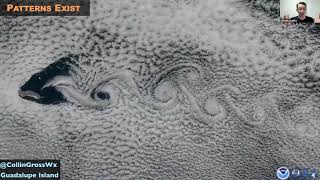
Machine Learning in Fluid Dynamics and Climate Physics
Explore machine learning applications in fluid dynamics and climate modeling, including physics-informed approaches, data integration, and simulation validation techniques.
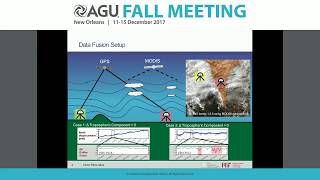
Recent Advances in Deep Learning and Data Analytics in Earth Sciences - 2017
Explore cutting-edge deep learning applications in geosciences, featuring talks from NASA, MIT, and other leading institutions on solving complex Earth and planetary challenges.
Machine Learning Tutorial Exercise
Hands-on tutorial exploring machine learning applications in geophysical fluid dynamics, covering data analysis, modeling, and prediction techniques for climate and ocean systems.
Basic Aspects of Convolutional Neural Networks - Tutorial
Explore fundamental concepts of convolutional neural networks in this tutorial, covering key principles and applications in deep learning for image processing and pattern recognition.
How AI/ML is Revolutionizing Weather and Climate Science
Explore how AI and machine learning are transforming weather and climate science, revolutionizing predictions and enhancing our understanding of complex atmospheric systems.
Machine Learning Meets Data Assimilation - Physics-Based Data-Driven Digital Twins
Explore the intersection of machine learning and data assimilation for creating physics-based, data-driven digital twins in weather and climate modeling.
Data Assimilation - Variational Methods - Lecture 8
Explore variational methods in data assimilation for weather and climate modeling. Learn theoretical foundations and practical applications to enhance atmospheric state estimation and forecasting accuracy.
How We Are Building Trustworthy AI for Weather and Climate in AI2ES
Explore innovative approaches to developing reliable AI systems for weather and climate prediction, enhancing forecasting accuracy and environmental understanding.

Some Thoughts on Gaussian Processes for Emulation of Deterministic Computer Models
Explore Gaussian Process emulators for complex computer models in uncertainty quantification, focusing on theoretical aspects and applications to climate, tsunami, and earthquake problems.
Artificial Intelligence, Data Assimilation, and Data-Driven Surrogate Models for Climate Prediction
Explore AI's impact on weather prediction, including deep learning techniques, surrogate models, and data assimilation for improved forecasting and climate modeling.
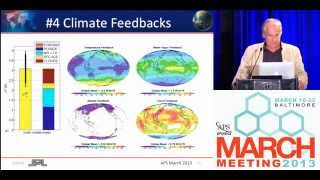
Physical Controls of the Earth's Climate and Climate Change
Explore Earth's climate systems, energy balance, and climate change factors. Learn about cloud effects, ocean heat content, and climate feedbacks in this comprehensive overview.
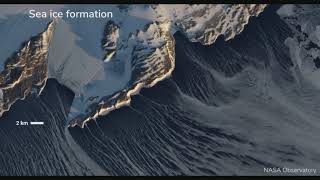
Mathematical Diseases in Climate Models and How to Cure Them
Explore innovative approaches to climate modeling using Julia and GPUs, aiming to improve accuracy and usability while overcoming computational limitations in simulating small-scale physics.

Hurricanes Harvey, Irma and Maria - Part 1
Researchers share new discoveries from 2017 Atlantic hurricanes, discussing novel technologies, rainfall studies, and implications for future hurricane science and forecasting.
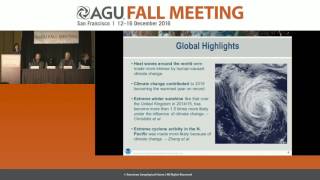
Explaining Extreme Events in 2015 from a Climate Perspective
Experts discuss the 2015 "Explaining Extreme Events from a Climate Perspective" report, examining natural and human causes of extreme weather events and exploring progress in extreme event attribution research.
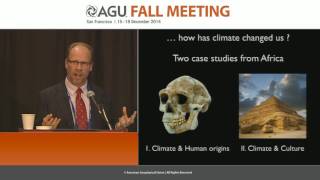
Climate and Life - A Human Retrospective
Explore climate's impact on human evolution, from early hominins to Holocene populations. Discover how paleoclimate data reveals connections between environmental changes and human development.
Social Impacts of Climate Change and Climate Variability
Explore climate change's social impacts, from carbon costs to disaster effects, through diverse topics like tropical cyclones, electricity consumption, and seasonal influenza.
Global Environmental Change Section Early-Career & Mid-Career Award Lecture - II
Exploración de los impactos de los aerosoles en la salud y el clima, mecanismos de formación de partículas, y dinámica del carbono en suelos y bosques. Análisis de modelos climáticos y observaciones para comprender mejor estos procesos ambientales comple…

The Southern Ocean’s Role in Glacial Cycles - Engine Not Caboose?
Explore the Southern Ocean's critical role in Earth's climate engine and glacial cycles through multiple proxies, focusing on its impact on atmospheric CO2 levels and ocean dynamics.
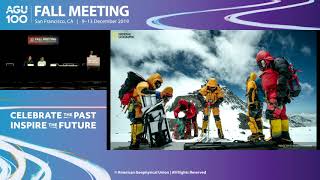
The Importance and Vulnerability of the World's Water Towers
Climate scientists discuss the critical role of mountain regions as "water towers" for global water supply, their vulnerability to climate change, and strategies for sustainable management.
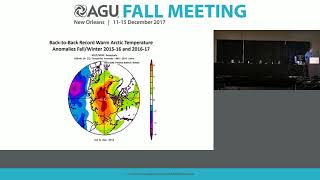
Indicators of Processes and Feedbacks Contributing to Arctic Change and Their Linkages to Global Change
Explores indicators of Arctic change, including permafrost, glaciers, sea ice loss, and their global impacts. Discusses climate models, temperature anomalies, and regional panels addressing Arctic-midlatitude connections.