The Role of Gamification in Participatory Environmental Sensing - A Study In the Wild
Explore the impact of gamification on citizen engagement in participatory environmental sensing through a mobile app study for lake ice coverage data collection in sub-arctic regions.
Preparing for the 2017 Total Solar Eclipse - Workshop
Learn about the 2017 total solar eclipse, its scientific significance, and safe viewing methods. Experts discuss what to expect, the path of totality, and opportunities for scientific observations during this rare astronomical event.
PANOPTES - Open Source Exoplanet Discovery
Discover exoplanets using open-source PANOPTES: a distributed network of robotic telescopes combining cloud computing, affordable electronics, and innovative software.
Everyone Can Be a Citizen Scientist
Discover how everyday activities like reading and gaming can contribute to scientific research, and learn about the accessible world of citizen science from an ecology PhD student.

Anyone Can Be a Citizen Scientist
Discover how everyday activities like reading and gaming can contribute to scientific research. Learn about citizen science opportunities and how to engage in conservation biology from a passionate ecologist.
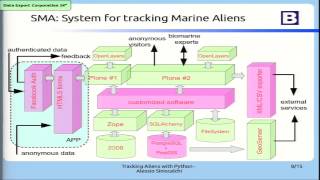
Citizen Science - Tracking Aliens with Python
Learn to track invasive marine species using Python in citizen science projects. Explore strategies for data collection, workflow design, and technology choices for mobile apps and web platforms.
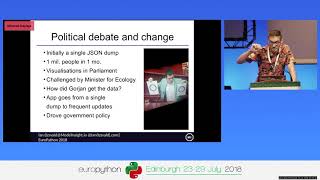
Citizen Science with Python
Explore data-driven humanitarian and healthcare projects using Python, with audience experiments and inspiration for running your own scientific experiments using the Python stack.

Science Didn't Understand My Kids' Rare Disease Until I Decided to Study It
Sharon Terry's journey from stay-at-home mom to citizen scientist, revolutionizing rare disease research through collaboration and determination, inspiring others to take action and make a difference in medical science.
Citizen Science and the Fight for Water Equity
Discover how citizen science empowers communities to address South Africa's water crisis, promote environmental justice, and work towards equitable access to clean water for all.
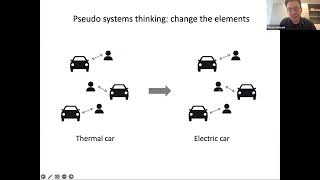
The 1972 Meadows Report: A Wake-up Call for Plant Science
Explore the impact of the 1972 Meadows report on plant science, examining paradigm shifts and new responsibilities in an increasingly turbulent world.
Using Python to Assess Landslide Risk: A Matter of Life and Death
Exploring Python's role in analyzing landslide risk in Southeast Alaska, showcasing how data analysis can create a community-driven early warning system for potential disasters.

Using Python to Assess Landslide Risk: A Matter of Life and Death
Exploring Python's role in analyzing river data to predict landslide risk in Southeast Alaska, showcasing its impact on community safety and anxiety reduction during heavy rainfall.
Observe Exoplanets with Exoplanet Watch - A Citizen Science Project
Learn to observe exoplanets with NASA's Exoplanet Watch project. Explore data reduction techniques and contribute to efficient space telescope usage through this citizen science initiative.
Urban Astronomy: How to Observe in the City
Discover urban astronomy techniques: overcome light pollution, find safe spots, navigate limited horizons, and explore smart telescopes for productive city stargazing.

The Invisible Universe and the Power of Citizen Science
Explore how citizen scientists contribute to mapping the universe through radio astronomy, collaborating with researchers to identify and classify distant galactic transmissions.

La Banda de los Insectos | Diego Gómez | TEDxYouth@Usaquén
En esta charla, el biólogo Diego Gómez explora cómo los sonidos de insectos como grillos, chicharras y esperanzas pueden revelar información clave sobre la salud de los ecosistemas. A través del estudio de los paisajes sonoros y el uso de sensores acústicos e inteligencia artificial, su investigació

Grassroots Genomics: Student Scientists Protecting the Ocean | Stanley Bishop | TEDxPacific Avenue
NOTE FROM TED: TEDx events are independently organized by volunteers. The guidelines we give TEDx organizers are described in more detail here: http://storage.ted.com/tedx/manuals/tedx_content_guidelines.pdf The ocean is a $7 trillion economy that produces half the oxygen we breathe, feeds billions

Co má společného věda, ženy a komunikace? | Pavla Hubálková | TEDxPragueWomen
Proč je důležité, aby bylo více žen ve vědě? Co můžeme mít společného s vědeckými novináři? Původně si myslela, že bude neurovědkyní. Během Fulbrightovy stáže v USA, ale zjistila, že místo bádání v laboratoři se chce více věnovat komunikaci vědy. Nyní působí jako vědecká novinářka na volné noze, nej

The Joy Of Noticing: Why Paying Attention Could Save The Planet | Ram Dayal Vaishnav | TEDxOsmaniaU
The Earth is sending us signals, and it’s time we start noticing. This talk explores the accelerating loss of biodiversity and the hidden data gaps that hinder conservation, showing how ordinary people can make a difference. By reconnecting curiosity with action, it reveals how small observations ca