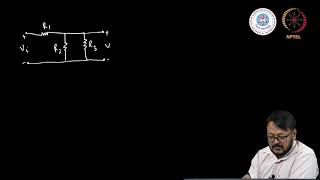
Input-Output Relation for RLC Circuits - Lecture 6
Explore input-output relationships in RLC circuits, analyzing their behavior and characteristics for enhanced understanding of electrical systems.

Elmore Delay in Digital CMOS Circuits - Lecture 4.2
Explore Elmore delay in digital CMOS circuits, understanding its significance and applications in circuit analysis and design.
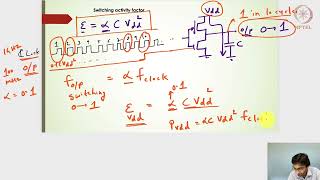
Activity Factor and Estimating Dynamic Power for Combinational Circuit Design - Lecture 9.2
Explore probabilistic methods for estimating activity factors and dynamic power in combinational circuits, analyzing primitive gates and multi-stage designs.
Kirchoff's Current and Voltage Laws, and the Incidence Matrix - Lecture 1.2
Explore Kirchoff's Current and Voltage Laws and the Incidence Matrix in electrical engineering, enhancing your understanding of circuit analysis fundamentals.

Bad CMOS Buffer Design Analysis - Part 1
Analyze bad buffer design and its implications in CMOS technology. Learn key concepts for improving circuit performance and reliability.
Output Voltage Ripple of a Buck Converter
Learn to analyze and minimize output voltage ripple in buck converters, enhancing power supply design skills for improved efficiency and performance.

RC Approximated Delay for CMOS Inverter Circuits - Lecture 3.7
Explore CMOS inverter circuit approximation to RC equivalent for estimating propagation delay.
Finding the Poles of the Error Amplifier - Part 2
Explore error amplifier pole identification techniques, enhancing understanding of circuit analysis and design for improved electronic system performance.
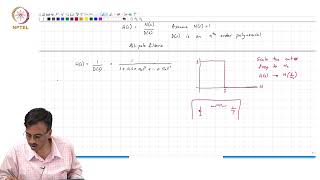
Magnitude Approximation Principles in Circuit Analysis - Lecture 3.5
Explore magnitude approximation principles for circuit analysis, enhancing analog design skills with Prof. Shanthi Pavan.

Power Conservation and Tellegen's Theorem - Lecture 1.3
Explore power conservation principles and Tellegen's Theorem in electrical engineering, gaining insights into energy flow in circuits.
Linear versus Switching Regulators
Explore the differences between linear and switching regulators, understanding their principles, advantages, and applications in power supply design.

MNA Stamp of an Ideal Opamp - Circuit Analysis for Analog Designers - Lecture 3.2
Explore MNA stamp techniques for ideal op-amps in circuit analysis, enhancing your analog design skills with Prof. Shanthi Pavan.

Why is Reciprocity Useful in Practice? - Lecture 1.6
Explore the practical applications and benefits of reciprocity in electrical engineering, enhancing understanding of circuit analysis and design.

Noise Margin Parameters for Inverter Design
Explore noise margin parameters for inverter design, focusing on characterization techniques and their importance in digital circuit analysis.

Asymmetric Gates Analysis Using Short-Channel Current Model - Lecture 6.3
Analyze asymmetric gates using short-channel current models and evaluate logical efforts for 2-NAND asymmetric gates, comparing with long-channel models.

Input Referred Noise in Electrical Networks - Part 1
Explore input-referred noise in electrical networks, focusing on fundamental concepts and analysis techniques for understanding noise sources.
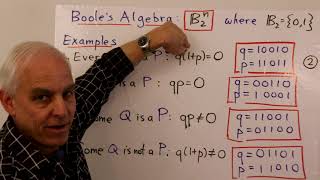
The Algebra of Boole Is Not Boolean Algebra - Math Foundations
Exploring Boole's original algebra, its connection to Aristotelian logic, and its distinction from modern Boolean algebra. Delves into syllogisms, existential import, and applications in mathematics.
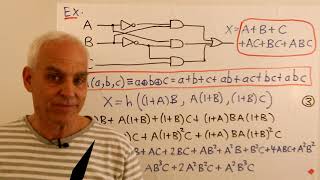
Boole Reduction - A Challenge for Programmers - MathFoundations - N J Wildberger
Exploring challenges in implementing Boole reduction for circuit analysis, including programming strategies and SAT solver development in the Algebra of Boole context.
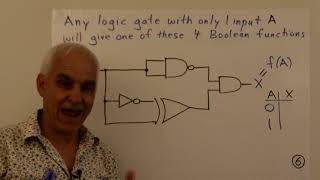
Canonical Forms for Logic Circuits - Math Foundations
Explore canonical forms for logic circuits, Boolean functions, and their geometric interpretations. Learn to express Boolean functions algebraically using Boolean algebra and Boole's original algebra.
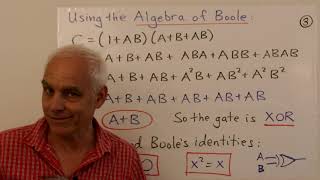
How the Algebra of Boole Simplifies Circuit Analysis - Math Foundations - N J Wildberger
Explore how the Algebra of Boole simplifies circuit analysis, comparing it with traditional Boolean algebra for encoding logic gates and solving engineering problems.
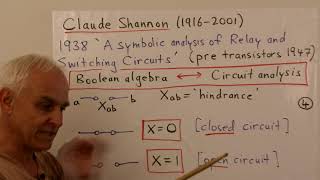
Boolean Algebra and Shannon's Circuit Analysis - Math Foundations - N J Wildberger
Explores Boolean algebra's connection to circuit analysis, focusing on Huntington's formulation and Shannon's groundbreaking 1938 paper linking the two fields.