Marine Carbon Dioxide Removal: Research, Funding, Applications and Ethics
Experts discuss advances in marine carbon dioxide removal, including research, funding, applications, and ethical considerations, with insights on a Pacific Northwest pilot project.
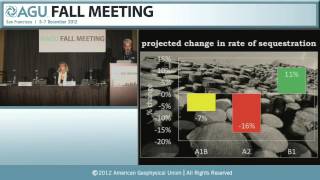
Carbon Storage in Western U.S. Ecosystems - USGS Report Findings
Explore USGS findings on carbon storage in Western U.S. ecosystems, covering 2 million square miles. Learn about current sequestration rates and future projections under various scenarios.
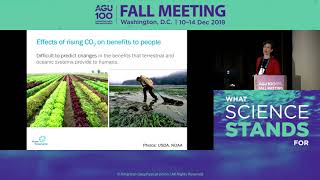
New Findings in Carbon Cycle Science
New research on carbon cycle science, focusing on carbon-climate dynamics in atmosphere, oceans, land, and soils. Explores management implications and carbon sequestration potential of soils in light of recent findings.

The Ocean Fertilization Plan and Its Potential Consequences
Explores ocean fertilization as a potential solution to combat global warming, discussing its mechanisms, consequences, and challenges. Analyzes the feasibility and environmental impacts of this controversial climate intervention strategy.
Nurturing Nature - The Science of Sustainability and Sequestration
Explore innovative solutions to climate change, sustainable forestry practices, and the role of wood in carbon sequestration. Learn about impactful wildlife initiatives and revolutionary mangrove plantation work.
Carbon Sequestration and Albedo Cooling Solutions for Climate Change
Explore carbon sequestration and albedo cooling methods to combat climate change, including afforestation, soil regeneration, and space mirrors. Analyze effectiveness and potential risks of each approach.

Putting Carbon Where It Belongs - Biochar and Climate Change Solutions
Explore innovative solutions to rebalance carbon distribution in ecosystems and combat climate change through forest restoration and biochar implementation.
Reforesting with Resilience: Leveraging Bamboo to Combat Climate Change
Discover bamboo's potential in combating climate change, reforesting coastal areas, and boosting farmer livelihoods. Learn how this versatile plant absorbs carbon rapidly and offers sustainable solutions for a greener future.
Quantifying Marine Carbon Dioxide Removal Through Ocean Modeling - Lecture 1
Explore ocean modeling techniques to quantify marine carbon dioxide removal, focusing on theoretical and practical aspects of geophysical fluid dynamics and climate science.
How Sharks Can Help Save Us from a Climate Crisis
Discover how sharks, often misunderstood, play a crucial role in maintaining ocean balance and mitigating climate change. Learn about their importance as environmental guardians.
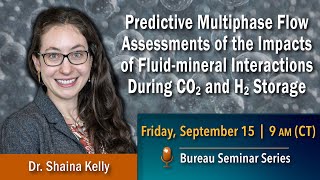
Predictive Multiphase Flow Assessments of Fluid-Mineral Interactions During CO2 and H2 Storage
Explore multiphase flow assessments for CO2 and H2 storage, combining experimental and numerical methods to evaluate fluid-mineral interactions and petrophysical implications in various rock types.
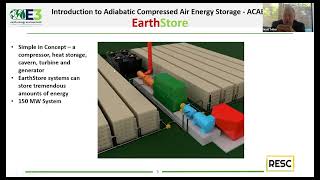
Carbon Capture, Utilization, and Storage/Sequestration: The Transition to a Low-Carbon Economy
Explore carbon capture, utilization, and storage strategies for transitioning to a low-carbon economy with industry experts in this insightful panel discussion.
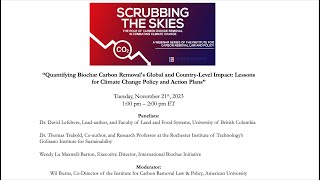
Quantifying Biochar Carbon Removal's Global and Country-Level Impact
Explore biochar's potential for global carbon removal, its impact on national emissions reduction goals, and its role as a circular climate change solution.
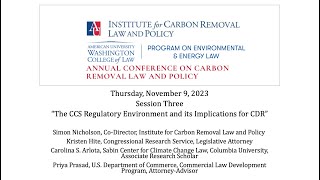
Carbon Dioxide Removal Deployment: Law and Policy for CCS Regulatory Environment - Session 3
Explore legal and policy implications of carbon dioxide removal deployment, focusing on CCS regulations, national and international considerations, and data-driven insights.
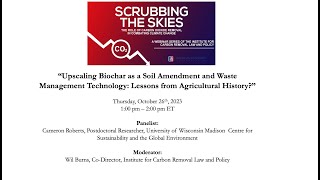
Upscaling Biochar as a Soil Amendment and Waste Management Technology - Lessons from Agricultural History
Explore biochar's potential for carbon sequestration and soil improvement, examining challenges in upscaling through historical analogues of fertilizer, ethanol fuel, and compost.
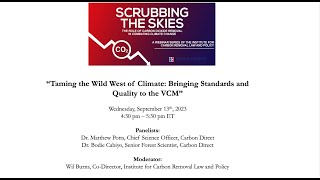
Taming the Wild West of Climate: Bringing Standards and Quality to the Voluntary Carbon Market
Explore challenges in the voluntary carbon market and learn key considerations for evaluating carbon dioxide removal credits to meet climate mitigation targets.
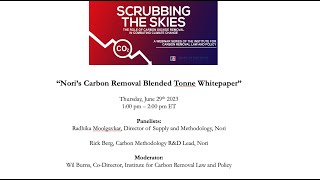
Nori's Carbon Removal Blended Tonne Approach - Webinar
Explore Nori's 'blended tonne' approach to carbon removal, combining nature-based and permanent CO2 removal methods for effective net-zero solutions.

Enhanced Rock Weathering in the Global South: Exploring Potential for Agricultural Productivity and Carbon Dioxide Drawdown
Explore enhanced rock weathering's potential for agricultural productivity and carbon drawdown in the Global South, focusing on benefits for smallholder farmers in low- and middle-income countries.
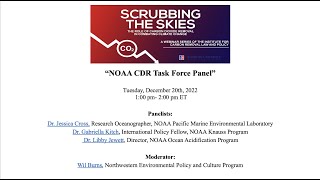
NOAA's Carbon Dioxide Removal Research Strategy - Webinar
Explore NOAA's carbon dioxide removal strategy, including research needs, agency assets, and equity considerations in climate change mitigation efforts.
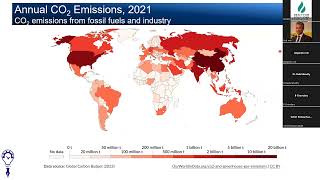
Underground CO2 Storage for Carbon Capture and Sequestration (CCS)
Explore underground CO2 storage for carbon capture and sequestration (CCS), understanding key concepts and technologies in this critical climate change mitigation strategy.
Modeling Flow and Transport in Fractured Rock Using Machine Learning
Integrating computational physics, machine learning, and graph theory to model flow and transport in fractured rock systems, offering a paradigm shift from high-fidelity models to efficient coarse-scale graphs.