Carbon Cycle - Greenhouse Gases, Photosynthesis, Respiration, C Burial, and More
Comprehensive exploration of the carbon cycle, covering greenhouse gases, photosynthesis, respiration, and carbon burial. Discusses elemental cycles, climate change, and the use of carbon isotopes in studying Earth's history and potential extraterrestria…
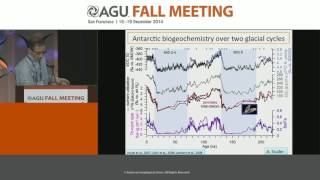
Southern Ocean Biogeochemical Control of Glacial/Interglacial Carbon Dioxide Change
Explore the Southern Ocean's role in glacial/interglacial CO2 changes through biogeochemical processes, Antarctic data, and model results in this comprehensive AGU presentation.
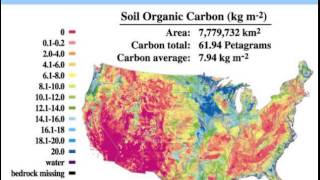
The Global Carbon Cycle and Human Impact - AGU Fall Meeting 2001
Explore the global carbon cycle, human impacts, and key processes affecting atmospheric CO2 levels in this comprehensive overview of Earth's carbon budget and climate change dynamics.
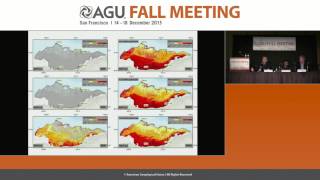
Alaska's Thawing Permafrost: Impacts and Future Projections
Experts discuss Alaska's thawing permafrost, unveiling new findings and projections. They explore impacts on ecology, infrastructure, and carbon release, introducing a permafrost forecast system.
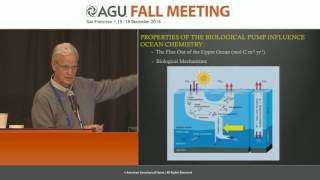
Evaluating the Ocean's Biological Carbon Pump
Explore the ocean's biological carbon pump, its role in climate regulation, and methods for evaluating its efficiency in this comprehensive lecture on marine biogeochemistry.
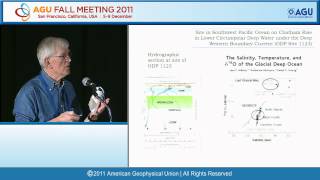
What a Single Celled Organism Can Tell Us About Climate History - A Status Report on Paleocean Proxies
Explore climate history through single-celled organisms in this lecture by Henry Elderfield. Discover paleocean proxies and their role in understanding Earth's past climate changes.
Why We Study Earth's Past and How We Apply This Knowledge
Explore Earth's 4.5 billion-year history and its relevance to predicting future climate, life, and disasters. Learn how past geological events inform resource discovery and the search for extraterrestrial life.
The Southern Ocean and Global Climate Change
Explore the Southern Ocean's crucial role in global climate change with Prof. Andy Thompson, delving into its impact on Earth's climate system and future environmental challenges.

COVID-19 and the Earth System
Explore the impacts of COVID-19 mitigation strategies on emissions, the Earth System, and virus dynamics. Learn about research efforts examining these complex interactions.
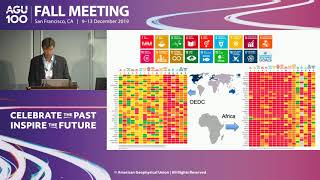
How Space Agencies Are Responding to Grand Challenges in Earth System Science
Explore how space agencies address Earth observation challenges, focusing on energy, water, carbon cycles, and global environmental changes to support understanding, forecasting, and mitigation efforts.

Engine Earth - Christmas Lectures 2020 - Lecture 1
Geologist Chris Jackson explores Earth's climate history, revealing how ancient rocks and fossils tell a story of radical changes and how volcanoes have controlled atmospheric carbon dioxide levels throughout time.

Biogeochemical Cycles: Carbon, Oxygen, Nitrogen, Sulfur, and Phosphorus - How They Work
Explore major global biogeochemical cycles, their factors, and impacts on climate and environment. Learn about carbon, oxygen, nitrogen, sulfur, and phosphorous cycles and their crucial role in Earth's systems.
How Earth's Lithosphere Affects and Is Affected by Climate Change
Explore the lithosphere's role in Earth's climate system, from rock weathering to carbon burial. Learn how geological processes impact global climate and life on our planet.
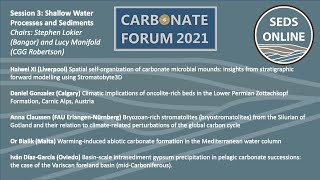
Shallow Water Processes and Sediments in Carbonate Systems - Session 3
Explore carbonate sedimentology through diverse topics: microbial mounds, oncolites, bryostromatolites, abiotic carbonate formation, and gypsum precipitation in pelagic successions.
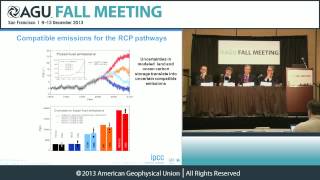
IPCC: The Future of Climate Change Assessment
IPCC authors discuss findings from the latest climate change assessment report, highlighting key observations, uncertainties, and future research needs in atmospheric science and biogeochemical cycles.
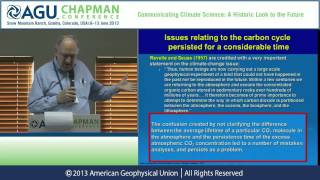
Retrospective on Early Climate Science: A Physical Scientist's Point of View
Explore early climate science through a physical scientist's perspective, covering key figures, models, and milestones in understanding climate change and its implications.
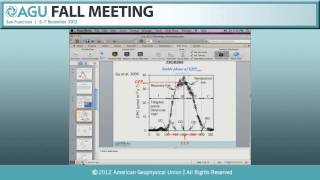
Climatic Controls on Net Ecosystem Exchange - Part 2
Explore cutting-edge research on climate's impact on ecosystem carbon exchange, featuring studies on North American forests, drought effects, and photosynthetic capacity across various landscapes.
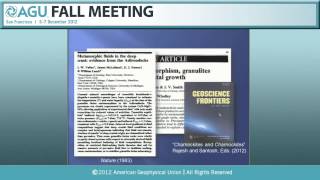
Deep Crustal Metamorphic Carbon Cycling in Collisional Orogens - Daly Lecture
Explore deep crustal metamorphic carbon cycling in mountain belts, examining CO2 release processes, flux rates, and potential impacts on global carbon cycles and climate change.
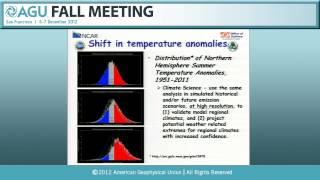
The Transformation of Climate Models to Earth System Models - Schneider Lecture 2012
Evolution of climate models to Earth system models, incorporating interactive cycles and components. Discusses future research challenges and Steve Schneider's vision for interdisciplinary collaboration in global change science.
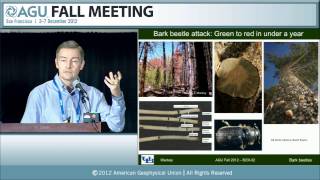
Disturbance Impacts and Responses in Forest Ecosystems - 2012
Explore forest ecosystem responses to climate change, droughts, fires, and other disturbances. Gain insights into carbon dynamics, plant hydraulics, and community structure across various scales and regions.
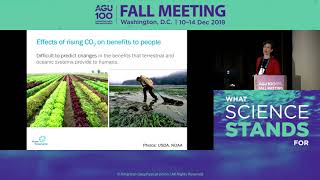
New Findings in Carbon Cycle Science
New research on carbon cycle science, focusing on carbon-climate dynamics in atmosphere, oceans, land, and soils. Explores management implications and carbon sequestration potential of soils in light of recent findings.