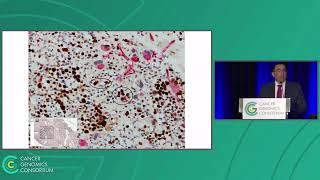
TP53 Alterations in Myelodysplastic Neoplasms and Acute Myeloid Leukemia
Explore TP53 alterations in myelodysplastic neoplasms and acute myeloid leukemia, gaining insights from expert Joseph Khoury at the CGC 2023 Annual Meeting.
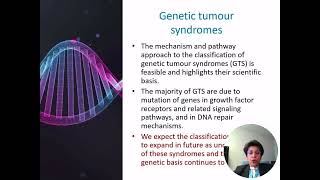
WHO/IARC Overview and CGC Collaboration
Explore WHO/IARC's collaboration with CGC, focusing on best practices in clinical cancer genomics and accurate diagnosis for targeted therapy.
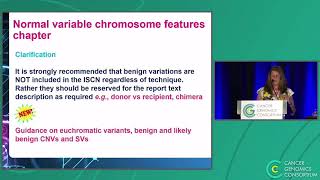
ISCN 2024 Update: Preview of New Genomic Mapping Nomenclature
Explore updates to ISCN 2024 and preview new genomic mapping nomenclature. Gain insights into evolving standards for clinical cancer genomics and their impact on patient care.
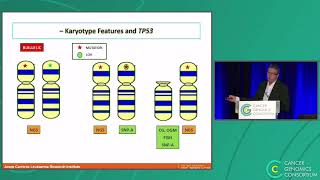
Cytogenetics in the Era of Genomics - Invited Speaker Presentation
Explore the continued relevance of cytogenetics in modern genomics, highlighting its crucial role in cancer diagnosis and treatment strategies.
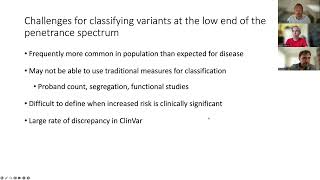
Recommendations for Interpretation of Low Penetrance Variants and Risk Alleles
Explore challenges and recommendations for interpreting low penetrance variants and risk alleles in cancer genomics, improving harmonization across molecular diagnostics.
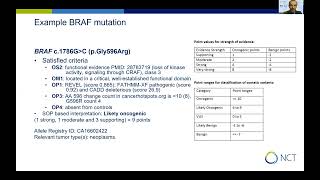
Real World Classification of Variants in Cancer Using ClinGen/CGC/VICC Oncogenicity Recommendations
Explore standardized classification of oncogenic somatic variants in cancer, improving consistency through validated SOP and real-world case demonstrations.
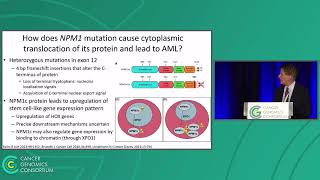
NPM1 Mutation in Myeloid Malignancies - Advancing Precision Medicine
Explore NPM1 mutations in myeloid malignancies and their impact on precision medicine through molecular testing. Gain insights from expert Robert Hasserjian on advancing cancer diagnostics and treatment.
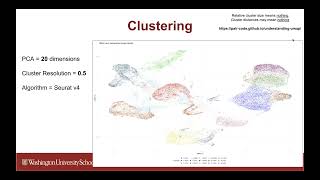
Cancer Genomics Consortium 2023 Webinar Series - CGC 2022 Annual Meeting Poster Winners
Explore cutting-edge cancer genomics research, focusing on childhood brain tumors and ovarian cancer. Gain insights into copy number alterations, single-cell RNA sequencing, and their impact on patient outcomes.
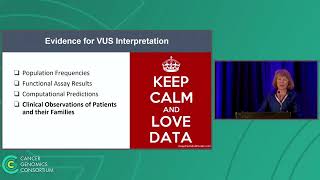
Federated Analysis for Germline Variant Interpretation in Cancer Genomics
Explore federated analysis for germline variant interpretation in cancer genomics, focusing on privacy-preserving data sharing techniques and overcoming challenges in workflow security and data standards.
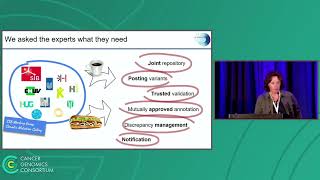
Next-Generation Curating: When Pathology Meets Bioinformatics
Explore the intersection of pathology and bioinformatics in next-generation curating for cancer genomics. Gain insights into best practices and advancements in clinical cancer genomic testing.
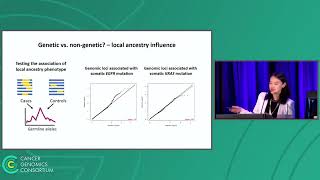
Genetic Ancestry, Somatic Alteration and Outcome in Cancer Genomics - Invited Presentation
Explore the relationship between genetic ancestry, somatic alterations, and cancer outcomes in this insightful presentation by Jian Carrot-Zhang at the 2022 CGC Annual Meeting.
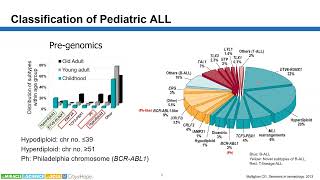
Deconvoluting the Heterogeneous Signatures of B-cell Acute Lymphoblastic Leukemia
Explore genomic signatures of B-cell acute lymphoblastic leukemia subtypes and their impact on classification, diagnosis, and treatment strategies for improved patient outcomes.
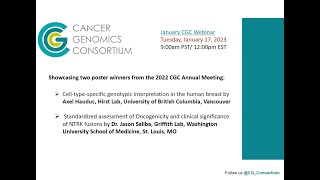
CGC 2022 Annual Meeting Poster Winners - January 2023 Webinar
Explore cutting-edge cancer genomics research with presentations on cell-type-specific breast genotyping and standardized assessment of NTRK fusions.
Long Molecule Footprints of Complex Cancer Genome Structure - Invited Presentation
Explore complex cancer genome structures through long molecule footprints. Gain insights into advanced genomic analysis techniques for accurate cancer diagnosis and personalized treatment.
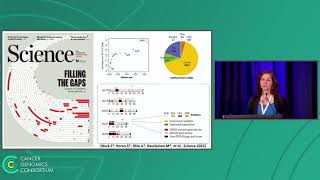
Discovering New Biology and Function in Complete Telomere-to-Telomere Genomes
Explore groundbreaking research in complete genome sequencing, uncovering new biological insights from telomere to telomere. Gain valuable knowledge on advancements in cancer genomics and their clinical implications.

Clinical Validation of Whole Genome Methylation Profiling Classifier for Central Nervous System Tumors
Explore whole genome methylation profiling for CNS tumor classification. Learn about workflow, data analysis, and clinical applications in this comprehensive genomics presentation.
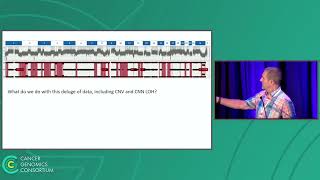
Beyond CNVs: Leveraging SNP Arrays in Cancer
Explore leveraging SNP arrays in cancer genomics beyond CNVs, focusing on mosaic gains/losses, HRD scores, and noninformative SNPs for improved diagnosis and treatment.

Translating Human Readable Variation Descriptions to Unique Computable Variations with the Variation Normalizer
Learn to translate human-readable genetic variation descriptions into unique computable variations using the Variation Normalizer tool for improved cancer genomics analysis and diagnosis.
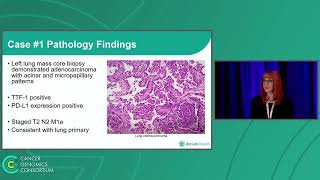
Two Co-occurring Driver Mutations in Primary Lung Adenocarcinoma - Who's Driving Treatment?
Explore co-occurring driver mutations in lung adenocarcinoma, their impact on RAS signaling, and implications for targeted therapies. Gain insights into clinical cases and treatment strategies.
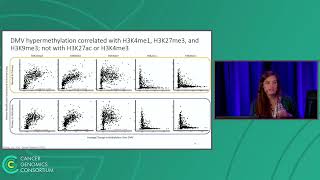
Epigenetic Reprogramming of Brain Development Pathways During Non-Small Cell Lung Cancer Metastasis
Explore epigenetic reprogramming in brain development pathways during non-small cell lung cancer metastasis. Gain insights into cutting-edge cancer genomics research and its implications for diagnosis and treatment.
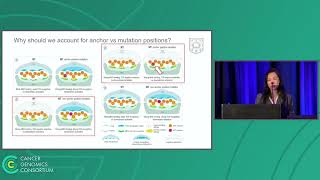
Computational Prediction of MHC Anchor Locations for Neoantigen Identification and Prioritization
Explore computational methods for predicting MHC anchor locations to enhance neoantigen identification and prioritization in cancer genomics, improving patient diagnosis and treatment.