
How Calculus Is Changing Architecture
Explore how calculus and digital tools are revolutionizing architectural design, moving beyond traditional forms to create innovative structures and objects.
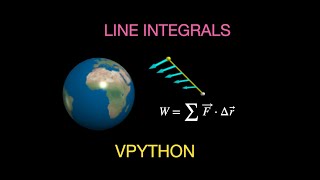
Python Physics: Numerical Line Integrals with Python
Explore numerical line integral calculations in Python for classical mechanics, breaking paths into short steps and comparing with analytical methods.
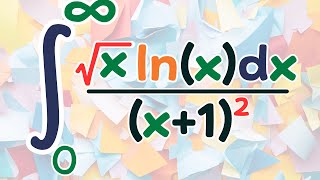
Solving Complex Integrals - Mixed Methods and Techniques
Master advanced integration techniques through a challenging problem that combines multiple mathematical concepts and methods.
Capturing Types: A Calculus for Tracking Free Variables in Type Systems
Explore a calculus representing captured variables in types for enhanced safety, enabling effect implementation via scoped capabilities and guiding practical capture checking in programming languages.
Incremental Computation: What Is the Essence? - Lecture 24
Explore incremental computation's essence through incrementalization, a systematic method for efficient algorithm and program design. Gain insights into high-level abstractions for developing optimized solutions.
What's New in Calculus and Algebra - Upcoming Wolfram Language Features
Explore upcoming calculus and algebra features in Wolfram Language, including performance improvements, new functions, and algorithmic advances for symbolic and numerical computations.
Changing Variables and Other Calculus Tools in Wolfram Language
Explore advanced calculus techniques with new Wolfram Language functions for implicit differentiation and variable changes in integration and differential equations.
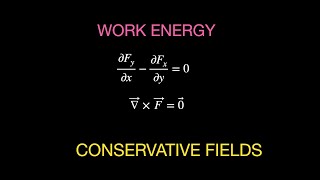
Conservative Forces: Deriving the Curl
Explore the concept of conservative forces and learn how to determine if a force is conservative by deriving the curl in classical mechanics.
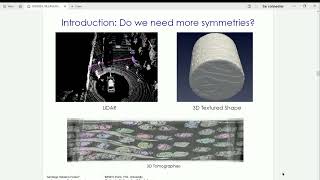
Can Generalized Divergences Help for Invariant Neural Networks?
Explore the potential of generalised divergences in enhancing invariant neural networks, examining their impact on network performance and robustness.
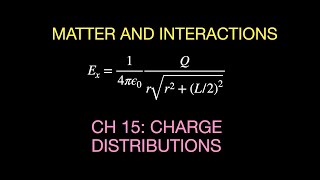
Electric Fields and Charge Distributions - Matter and Interactions Chapter 15 Summary
Explore electric fields and charge distributions, from charged rods to capacitors. Learn to set up and test field expressions for various configurations.
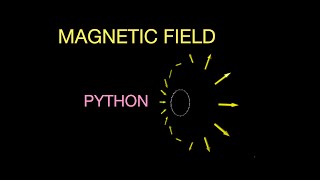
Visualizing the Magnetic Field of a Current Loop with Python
Visualize magnetic fields around current loops using Python. Learn to plot and scale vector fields for enhanced understanding.
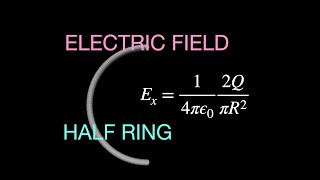
Electric Field due to Half Ring of Charge - Bonus Python Calculation
Explore the electric field at the origin due to a charged half ring, with an added Python calculation bonus.
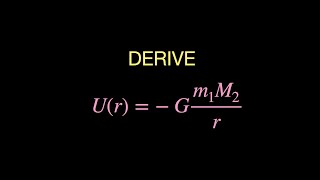
Derivation of the Gravitational Potential Energy - Plus Numerical Integrals with Python
Derive gravitational potential energy through work calculations and explore numerical integration using Python for practical applications.
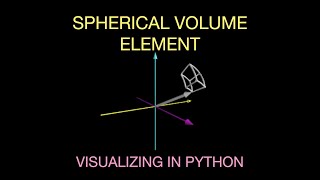
Drawing the Spherical Volume Element in Python
Visualize spherical volume elements using Python and VPython, enhancing understanding of sphere geometry and moment of inertia calculations.
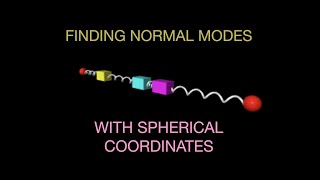
Finding Normal Modes of Oscillation with a Varying Vector
Explore oscillation normal modes using varying vectors, with code examples and animations to visualize complex physical concepts.
How to Solve Relative Velocity Problems in Physics
Master relative velocity concepts in physics through practical problem-solving. Tackle train, boat, and airplane scenarios to understand vector-based calculations and real-world applications.
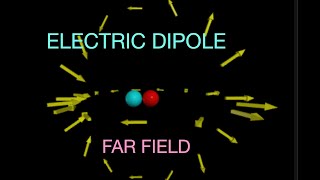
Electric Field due to a Dipole - Far Field Approximation
Derive the far field approximation for an electric dipole, exploring its mathematical foundations and practical applications in electromagnetic theory.
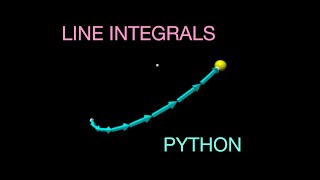
Numerical Line Integrals with Python
Explore numerical line integrals using Python to calculate work done in force fields. Gain practical coding skills for solving complex physics problems.
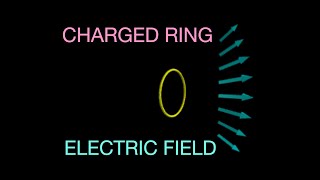
Electric Field due to a Charged Ring - Python Calculation and Derivation
Derive the electric field of a uniform charged ring using Python and analytical methods. Compare numerical and theoretical approaches.
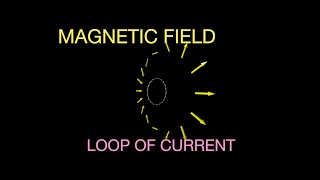
Magnetic Field due to a Loop of Current - Python Calculation Included
Derive the magnetic field from a current loop and perform numerical calculations using Python, enhancing understanding of electromagnetic principles.
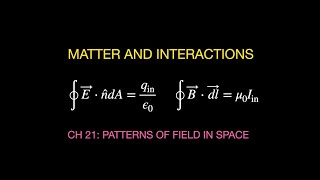
Matter and Interactions: Patterns of Fields in Space - Chapter 21 Summary
Explore fundamental concepts of electromagnetic fields, including flux, Gauss's Law, and Maxwell's equations, with practical applications and in-depth explanations.