Video Game AI - C++ Setup and Assignment 1 - Lecture 3
Set up C++ environment and explore Assignment 1 for video game AI development, focusing on movement techniques, search algorithms, and decision-making systems.
Video Game AI - Starcraft and Minecraft Project Setup - Lecture 6
Explore AI techniques for Starcraft and Minecraft, including project setup and implementation strategies for game bots using C++ and SFML.
Video Game AI - Tron AI Tournament - Lecture 19
Explore AI techniques for video games, including movement, search, planning, decision-making, and procedural content generation. Implement a Tron AI bot in C++ using SFML.

COMP4300 - Game Programming - SFML and ImGui Tutorial - Lecture 4a
Explore SFML and ImGui for game development, covering rendering, animation, and user interfaces in C++. Learn to create functional games using ECS architecture.

COMP4300 - Game Programming - Intro to C++ - Lecture 3
Explore advanced C++ concepts for game programming, including object-oriented design, memory management, and efficient coding practices.
Game Programming: Introduction to Entity Component System - Lecture 5
Explore Entity Component System architecture for game development, learning its principles and implementation in C++ with SFML graphics library.
Game Programming: Sprites, Textures, and Animations - Lecture 9
Explore sprite rendering, texture management, and animation techniques for game development using C++ and SFML graphics library.
Game Programming: Assignment 3 Specification and Implementation - Lecture 11
Develop a 2D game with player movement, bullet spawning, collisions, and animations using C++ and SFML. Implement level loading, physics, and entity-component systems for a complete gaming experience.
Pathfinding and Steering in Game Programming - Lecture 15
Explore pathfinding and steering techniques in game development, enhancing AI movement and navigation for more realistic and engaging gameplay.
C++ Visual Code Profiling for Game Programming - Lecture 20
Learn C++ Visual Code profiling techniques for game programming, focusing on performance optimization and efficient code analysis.
Game Programming: Introduction to Shaders - Lecture 21
Explore game shader fundamentals, including rendering techniques, animation, and graphics programming for enhanced visual effects in game development.
Game Programming: Assignment 1 and C++ Environment Setup - Lecture 3
Learn game programming fundamentals, including vector math, rendering, AI, and physics. Set up C++ environment and understand assignment structure for creating functional games using ECS architecture and SFML library.
Introduction to Entity Component System (ECS) in Game Programming - Lecture 5
Explore Entity Component System (ECS) architecture for game programming, covering design principles, implementation details, and practical coding examples using C++ and SFML.

What Do You Mean by Cache Friendly - Optimizing Data Structures for CPU Performance
Explore cache-friendly data structures and algorithms in C++. Learn techniques to analyze and improve cache efficiency, optimizing performance through memory layout and access patterns.

Recipes for Reducing Allocations by C++ Containers - C++ on Sea 2022
Explore techniques to minimize allocations in C++ containers, including vector reservations, container choices, constructors, scope promotion, view types, and PMR allocators. Gain insights with benchmarks and diagnostics.

How to Rangify Your Code - C++ on Sea 2022
Learn to apply C++20 ranges to real-world code examples, using standard library and range-v3 library. Explore techniques for refactoring existing algorithms and thinking in terms of ranges.
Contractual Disappointment in C++ - Ensuring Robust Software Development
Explore effective strategies for robust C++ software development, focusing on contracts and interfaces to enhance usability, efficiency, and reliability in program operation.
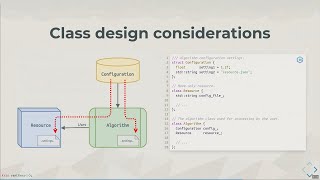
Special Member Functions in C++ - Lecture
Explore special member functions in C++, including constructors, destructors, and copy/move operations. Learn definition rules, implementation idioms, and common scenarios for effective C++ programming.
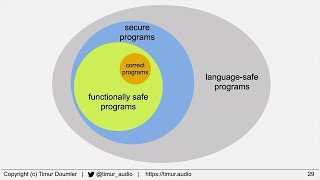
C++ and Safety - Exploring Memory Safety and Language Evolution
Explore C++ safety issues, their consequences, and potential solutions. Examine memory safety, language evolution, and comparisons with other programming languages. Discuss tools and proposals for improving C++ safety.
New Algorithms in C++23 - Lecture 1
Explore new C++23 Ranges library algorithms and their types, from C++98 to C++23. Gain insights into advanced programming techniques and language features for efficient coding.
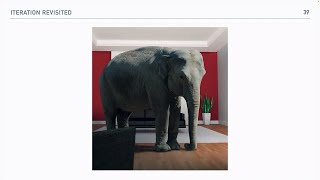
A Safer Iteration Model for C++ - Flux Library Introduction
Explore a safer iteration model for C++, introducing Flux library. Learn about reducing undefined behavior, performance implications, and quality-of-life improvements in C++20 Ranges.