
Execution of Uninvoked C++ Code to Obfuscate Logs Without an External Script
Explore innovative C++ techniques for log obfuscation without external scripts, leveraging uninvoked code execution and language features to enhance security and protect sensitive information.

Large Scale Automated Refactoring Across Translation Unit Boundaries in C++
Explore automated refactoring techniques for large-scale C++ projects, focusing on cross-translation unit changes. Learn about AST-based code rewriting, metadata generation, and edit analysis using Clang and Google Flume.

C++ Coroutine Intuition
Explore C++20 coroutines for improved code design. Gain intuition on stackless asyncrony, generators, and senders/receivers through examples, leading to cleaner and safer implementations.
Interactive Tooling Support for the Migration to Strong Types in C++
Explore interactive tooling for migrating to strong types in C++, enhancing type safety and code quality while maintaining compilability and developer control throughout the process.
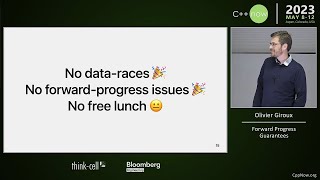
Forward Progress Guarantees in C++
Explore forward progress guarantees in C++, their importance for synchronization, and areas where the C++ specification needs clarity. Gain insights into concurrent programming and parallel algorithms.
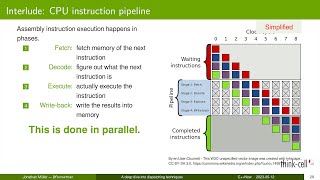
A Deep Dive Into Dispatching Techniques in C++
Explore advanced dispatching techniques in C++, from switch statements to jump tables. Learn optimization strategies through performance analysis, benchmarks, and assembly code examination.
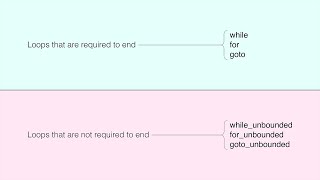
Why Loops End in C++
Explore the principles behind loop termination in C++, learning to express and communicate reasons for loop endings formally within source code for improved program reliability.

Coding for Safety, Security, and Sustainability in C++ - Panel Discussion
Expert panel explores C++'s future, addressing safety, security, and sustainability challenges. Discusses language evolution, competition, and community needs for improved software development.
Pipeflow - C++ Task-Parallel Pipeline Scheduling Framework
Explore Pipeflow, a C++ task-parallel pipeline framework for efficient scheduling. Learn design, implementation, and real-world applications to enhance your parallel programming skills.
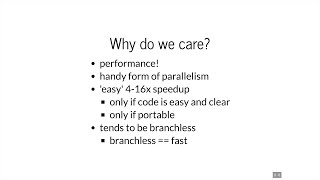
SIMD Libraries in C++
Explore SIMD libraries in C++, including std::simd for C++26. Learn about application-level libraries, developer libraries, and design trade-offs for exploiting SIMD in modern C++ development.

C++ Compile-Time Sparse Matrices for Linear Algebra and Tracking Applications
Explore compile-time sparse matrices in C++ for efficient linear algebra and tracking applications, optimizing memory usage and performance through advanced type system techniques.
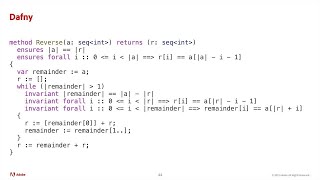
All the Safeties - Safety in C++
Comprehensive exploration of safety in C++, covering memory safety, correctness, and security. Proposes a taxonomy of computer science terminology and discusses practical applications for writing better code.
Requirements for C++ Successor Languages
Exploring challenges and considerations for transitioning large-scale C++ codebases to successor languages, emphasizing practical adoption strategies and ecosystem changes.
Calendrical C++ - std::chrono, History, Mathematics and the Computus
Explore std::chrono, calendar history, and Easter calculation algorithms in C++. Gain insights into real-world time complexities and learn to create appropriate abstractions for calendrical challenges.
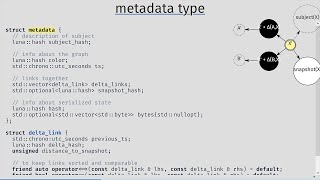
A Graph Based Update System in C++ - Lightning Updates
Explore modern C++ techniques for efficient data updates using graph-based systems and generic programming, presented by Hana Dusíková at CppNow 2023.

The Evolution of C++ - A Typescript for C++
Explore C++'s evolution, cppfront compiler updates, and the importance of compatibility in language development. Gain insights on simplicity, safety, and efficiency in programming language design.
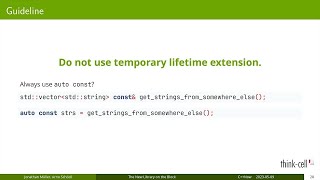
The New C++ Library on the Block - A Strong Library Foundation for Your Next Project
Powerful C++ library enhancing standard features with improved ranges, algorithms, and error handling. Offers elegant solutions for common programming patterns and seamless integration with existing codebases.
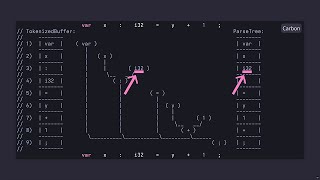
Modernizing Compiler Design for Carbon Toolchain
Explore modern compiler design for Carbon, focusing on data-oriented approaches and innovative techniques to achieve unprecedented compile times for C++-like languages.

Nobody Can Program Correctly - A Practical and Interactive Guide to Debugging C++ Code
Practical guide to debugging C++ code, covering the entire process from crash to fix. Learn to reproduce, locate, understand, and prevent bugs using real-world examples and effective tools.

Implementing Fast Calendar Algorithms - Speeding Date
Optimizing calendar algorithms for modern CPUs: strength reduction, data dependency breaking, and historical insights. Faster implementations for leap year checks and last day of month calculations.
Composition on Tiny Embedded Systems in C++
Explore composable firmware for embedded systems through a live demo, covering hardware access, interrupts, logging, and safe arithmetic while building an RGB lighting controller.