Taskflow - A Heterogeneous Task Graph Programming System with Control Flow
Explore heterogeneous task graph programming with control flow using Taskflow, a C++ system for efficient parallel and GPU-accelerated computing with high productivity.
Customization Methods - Connecting User and Library Code
Explore customization points in C++ libraries, including CTS, ADL, Concepts, CTOs, and tag_invoke. Learn benefits, drawbacks, and future developments for connecting generic and user-specific code.
What Makes Good C++ Programmers - A Continuous Search for C++ Teaching Recipes
Explore effective C++ teaching strategies, challenges, and practical tips from 20+ years of experience. Discuss modern course design, exercises, and ISO C++ Study Group 20's educational initiatives.
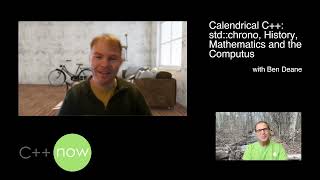
Calendrical C++ - std::chrono, History, Mathematics and the Computus
Explore std::chrono, calendrical mathematics, and historical computations in C++. Gain insights into time-related programming challenges and their solutions through an engaging interview with expert Ben Deane.
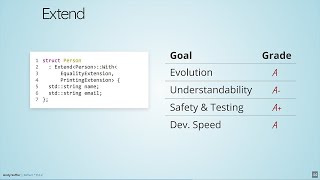
Reflect -this! - Design and Implementation of a Pragmatic Mixin Library with Static Reflection
Explore the design and implementation of a static reflection-based mixin library for C++, covering technical details, design choices, and future possibilities to enhance developer productivity.
The Challenges of Implementing the C Standard Library in C++
Explore the innovative approach of implementing C standard library in C++, focusing on modern practices, performance optimization, and overcoming challenges without assembly language.
Future of C++ Programming with AI Bots at Hand
Explore the impact of AI on C++ development, examining challenges, opportunities, and future implications. Learn from AI-generated code mistakes and prepare for the evolving landscape of software creation.
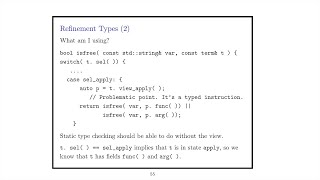
Trees for Logic and Parsing in C++
Explore efficient implementation of recursive tree-types in C++ for logic and parsing, with insights on construction, inspection, and replacement of subtrees.

Under the Hood - Assembly, System Calls, and Hardware in C++
Explore assembly, system calls, and hardware in C++. Dive deep into low-level computer operations, covering x86-64/Linux, Arm, and other systems. Gain insights into the underlying mechanics of C++ programming.
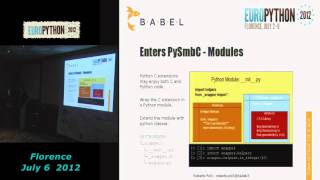
Pysmbc Python C Mods Are Easy
Learn to create Python C modules effortlessly with Pysmbc. Discover techniques for seamless integration and enhanced performance in your Python projects.
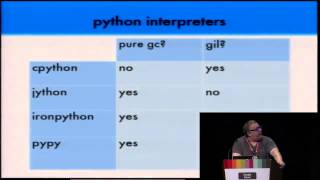
Python's Infamous GIL
Explore Python's Global Interpreter Lock: its history, benefits, drawbacks, and potential removal. Gain insights into multithreading challenges and GIL's impact on Python performance.
Writing Unit Tests for C Code in Python
Learn to write Python unit tests for C code using CFFI and pycparser. Explore creating mock functions, handling dependencies, and overcoming challenges in mixing Python and C for efficient testing.
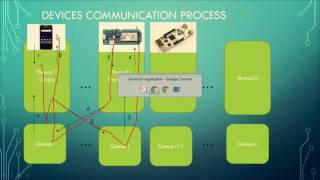
Server for IoT Devices and Mobile Devices Using Wifi Network
Explore IoT server architecture using Python, MySQL, and Kivy for mobile apps. Learn about device registration, messaging, security, and database management in IoT environments.
How CPython Parser Works, and How to Make It Work Better
Explore CPython's parsing process, its impact on performance, and potential optimizations. Learn about syntax trees, memory footprint reduction, and opportunities for improving Python's overall efficiency.
Scientific Computing Using Cython - Best of Both Worlds!
Explore Cython for scientific computing, combining Python-like syntax with C speed. Learn to build native extensions, use static typing, and integrate with C code for optimal performance.
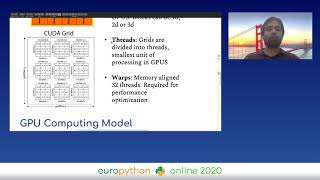
Writing Extensions and Bindings for GPU Made Easy
Learn to optimize deep learning computations by writing custom C and CUDA extensions for GPU, with a focus on image search across billions of items and seamless integration with Python codebases.
Complete CI - CD for C# and SQL
Practical demonstration on automating CI/CD for C# applications and SQL databases, covering source control, build processes, and deployment strategies for different environments.
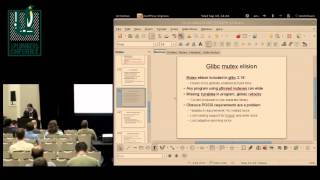
Current Status of Lock Elision in Linux
Explore Intel TSX implementation for lock elision in Linux, covering kernel, glibc, and other components to address lock scaling challenges in multi-CPU systems.
Traffic Footprint Characterization of Workloads Using BPF
Explore eBPF-based network traffic analysis for containerized workloads, enabling improved scheduling and resource allocation in clusters to enhance performance of diverse applications.
Eliminating Implicit Function Declarations
Explore strategies for eliminating implicit function declarations in C programming, addressing challenges and potential solutions for improved code quality and security.
Linux Kernel Control-Flow Integrity Support
Explore Linux kernel control-flow integrity with experts, discussing implementation challenges, performance impacts, and future directions for enhancing system security.