
Photon Vectorized Execution Engine - Technical Deep Dive
Explore Photon's vectorized execution engine, learning about expression evaluation, compute kernels, runtime adaptivity, and vectorized operations for enhanced data processing efficiency.
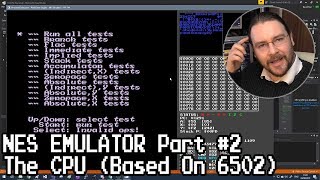
NES Emulator - CPU 6502 Implementation - Part 2
Build a 6502 CPU emulator in C++, focusing on challenging instructions like ADC and SBC. Includes implementation of addressing modes, arithmetic operations, and a lightweight program analyzer.
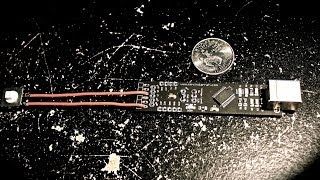
How to Use USB FTDI D2XX Drivers for Computer I/O Applications
Learn to interface computer applications with USB FTDI D2XX drivers, covering setup, programming, I/O states, and various modes for enhanced hardware communication and control.

LED Track DIY Escape Room Puzzle Tutorial - Building an Interactive Light Puzzle
Learn to create an interactive LED track puzzle for escape rooms, featuring customizable particle animations and switch-controlled paths. Gain hands-on experience with Arduino programming and hardware integration.

Arduino-Based Valves Escape Room Puzzle Tutorial
Learn to create an Arduino-based "valves" puzzle for escape rooms, including component explanations, wiring diagrams, and code implementation for an interactive and engaging player experience.
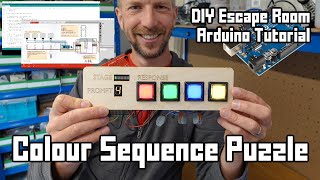
Arduino-Based Escape Room Puzzle: Creating a Colour Sequence Memory Game
Learn to create an Arduino-based escape room puzzle inspired by "Keep Talking and Nobody Explodes." Build a memory game with color-changing LEDs, buttons, and displays, perfect for challenging players' coordination and cooperation.
Storage Classes - C Programming
Explore C programming storage classes: automatic, static, extern, and register. Learn their lifetimes, scopes, and practical applications for efficient memory management.
Read & Write Operations on Files - C Programming
Learn essential file operations in C programming: reading data with fgetc() and writing data with fputc(). Master these fundamental techniques for effective file handling.

String Handling Functions - C Programming
Learn essential string manipulation functions in C, including length, copy, concatenation, comparison, reversal, and case conversion techniques.

Bitwise Operators - C Programming
Explore bitwise operators in C: AND, OR, XOR, NOT, right shift, and left shift. Master low-level manipulation for efficient programming.
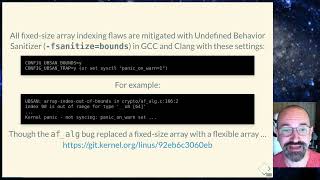
Meaningful Bounds Checking in the Linux Kernel - Addressing Buffer Overflows
Exploring buffer overflow vulnerabilities in the Linux kernel and innovative solutions for enhanced security through improved bounds checking and compiler optimizations.
Leveraging the OS CPU Scheduler to Write Real-Time Multithreaded Applications
Learn to leverage Linux's kernel scheduler for writing soft real-time multithreaded applications in C, covering scheduling policies, thread-level control, and RTOS capabilities.
Mitigating Use-after-frees in the Linux Kernel
Explore techniques for mitigating use-after-free vulnerabilities in the Linux kernel, covering performance trade-offs, pointer checks, and RCU implementation strategies.
LibIIO - A Library for Interfacing with Linux IIO Devices
Explore LibIIO, a powerful library for interfacing with Linux IIO devices. Learn its features, applications, and how it simplifies device communication in embedded systems.

Faster Ray Tracing with Multithreading - Ray Tracing Series
Explore multithreading techniques to optimize ray tracing performance. Learn how to implement parallel processing for faster rendering and improved efficiency in C++ ray tracing algorithms.

Path Tracing - Introduction to Ray Tracing Series
Explore path tracing in ray tracing, including accumulation techniques and sample gathering. Learn to create photo-realistic digital imagery with optimized C++ implementation and GPU acceleration.

Materials and Physically Based Rendering - Ray Tracing Series
Explore materials and physically based rendering in ray tracing. Learn about material systems, accumulation, and optimization techniques for efficient rendering in C++.
Write Your Own Operating System - Keyboard Input Implementation
Implement keyboard input functionality in a custom operating system, enabling real-time keystroke reception and processing.
Persistent Memory Extensions to C++ Standard Libraries
Explore persistent memory extensions for C++ libraries, covering design decisions, implementation challenges, and interactions with existing standards. Learn about NVM technology and its impact on software development.
Pthread Condvars: POSIX Compliance and the Priority Inheritance Gap
Explore challenges and potential solutions for implementing Priority Inheritance in pthread condvars while maintaining POSIX compliance. Gain insights from kernel, system library, and real-time application developers.
Introduction to Plugin Architecture in C# - ASP.NET Core Web App
Learn to implement dynamic endpoint addition and updating at runtime in ASP.NET Core using plugin architecture, enhancing your C# web application's flexibility and extensibility.