Vectors in Game Engine Development - Sparky Engine - Episode 4
Learn to create vector classes for game engine development, including vec2, vec3, and vec4 implementations, and their integration with OpenGL in this comprehensive tutorial.

Understanding Pointers in C++ Programming
Learn to effectively use pointers in C++, understanding their role in memory management and efficient programming. Gain practical skills for handling complex data structures and optimizing code performance.
An Overview of the Checked C Project
Extending C with bounds checking to prevent low-level programming errors. Explores language design, implementation in clang compiler, and plans for real-world code modification to improve security and reliability.
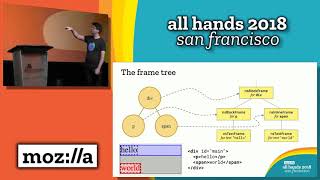
An Overview of Gecko Layout Engine - Mozilla All-Hands 2018
Explore Gecko engine's layout process, covering styling, frames, reflow, and more. Gain insights into Mozilla's web rendering technology and its inner workings.
Unreal Engine 5 for Unity Developers
Learn to transition from Unity to Unreal Engine 5, exploring key concepts like Actors, Components, Blueprints, and C++ programming for game development.
The Second Oldest Bug in Ruby - Fixing Large Argument Handling
Explore the history and resolution of a long-standing Ruby bug involving large argument lists, delving into stacks, heaps, and method dispatch improvements from Ruby 1.9 to 3.3.
Pointers vs References in C++ - Why References Are Preferred
Explore the differences between pointers and references in C++, focusing on why references are often preferred for beginner to intermediate programmers in modern C++ development.
Progress on Bounds Checking in C and the Linux Kernel
Explore advancements in C bounds checking for Linux, focusing on flex array members, dynamic object size, and new struct member attributes to prevent buffer overflow vulnerabilities.

Decision Control Statements - C Programming
Learn essential decision control statements in C programming, including if, if-else, else-if ladder, and switch, to create dynamic and responsive programs.
Logical, Assignment and Conditional Operators - C Programming
Explore logical, assignment, and conditional operators in C programming, enhancing your ability to create efficient and expressive code.
PRINTF & SCANF FUNCTIONS IN C PROGRAMMING
Learn to use printf and scanf functions for input/output operations in C programming, enhancing your ability to create interactive and dynamic programs.
Towers of Hanoi Problem - C Programming
Explore the classic Towers of Hanoi problem and its recursive solution in C programming, learning algorithmic thinking and problem-solving techniques.
ARMSTRONG NUMBER - C PROGRAMMING
Learn to code Armstrong numbers for any digit count in C, enhancing problem-solving skills and algorithmic thinking.
Palindrome - Numeric & String - C Programming
Learn to implement numeric and string palindrome checks in C, mastering reverse operations and comparison techniques for efficient algorithm design.
Introduction to Files - C Programming
Learn essential file operations in C programming, including creating, opening, reading, writing, and closing files. Master techniques for efficient file handling and data management.
Introduction to Pointers & Pointer Arithmetic - C Programming
Learn about pointer variables, indirection operators, and address operators in C programming, with practical examples of pointer arithmetic and memory manipulation.
Finding Frequency of Vowels, Consonants, Digits, Spaces, Words - C Programming
Learn to analyze text input by counting vowels, consonants, digits, spaces, and words using C programming techniques.
Call by Value & Call by Reference - Parameter Passing Techniques - C Programming
Explore parameter passing techniques in C programming: call by value and call by reference. Learn their differences and how they affect memory allocation and function behavior.
Strings or Character Arrays - C Programming
Learn about string implementation, input/output functions, and character arrays in C programming, covering scanf(), getchar(), gets(), printf(), putchar(), and puts().
Categories of Function Definitions - C Programming
Explore four categories of function definitions in C programming, covering variations with and without arguments and return values.
Functions - C Programming
Explore modular programming with functions in C, covering predefined and user-defined types, declaration, calling, and definition for efficient problem-solving.