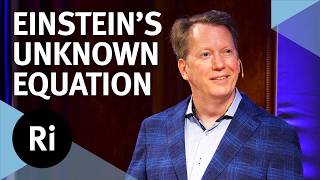
The Secrets of Einstein's Unknown Equation - Spacetime Curvature and General Relativity
Explore Einstein's lesser-known equation on spacetime curvature, its significance in general relativity, and its applications in understanding gravity, black holes, and the universe's structure.
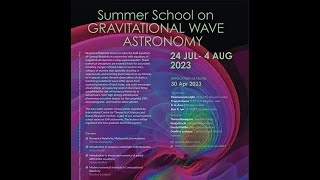
Modern Numerical Methods in Computational Relativity - Lecture 4
Explore advanced numerical techniques in computational relativity, focusing on solving Einstein's field equations for gravitational-wave astronomy and astrophysical phenomena modeling.
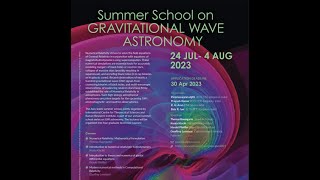
Introduction to Numerical Relativistic Hydrodynamics - Lecture 4
Explore advanced concepts in numerical relativistic hydrodynamics, focusing on computational techniques for modeling high-energy astrophysical phenomena and gravitational wave sources.
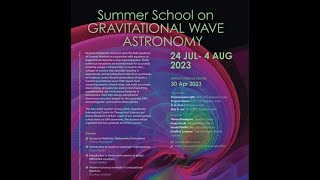
Introduction to Numerical Relativistic Hydrodynamics - Lecture 3
Explore advanced concepts in numerical relativistic hydrodynamics, focusing on computational techniques for modeling high-energy astrophysical phenomena and gravitational wave sources.
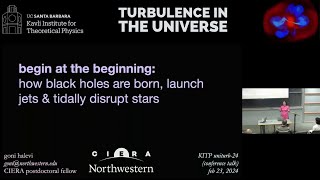
Begin at the Beginning - How Black Holes Are Born, Launch Jets and Tidally Disrupt Stars
Explore the birth, jet formation, and star disruption processes of black holes in this astrophysics talk. Gain insights into turbulence across various cosmic environments and its impact on astronomical understanding.
Beyond Einstein - Gravitational Geysers: Exploring White Holes
Explore white holes, time-reversed cousins of black holes, with physicist Carlo Rovelli and Brian Greene. Delve into their speculative nature, potential connection to dark matter, and implications for our understanding of the universe.
Beyond Einstein - Gravitational Echoes: Light Waves and Black Holes
Explore gravitational echoes and exotic physics near black holes with experts Erin Kara and Shep Doeleman. Discover how light waves echo off black holes, advancing our understanding of fundamental physical laws beyond Einstein's vision.
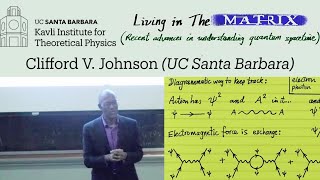
Living in the Matrix - Recent Advances in Understanding Quantum Spacetime
Explore recent advances in quantum gravity, including "random matrix" models for spacetime emergence, and their implications for understanding black holes and the universe's origins.
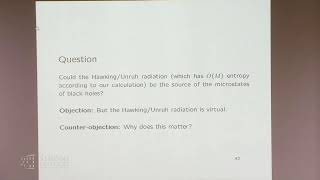
On Scrambling Times of Quantum Systems, Including Black Holes
Explore quantum system scrambling times, including black holes, with insights from Peter Shor of MIT. Delve into near-term quantum computing challenges and advancements.
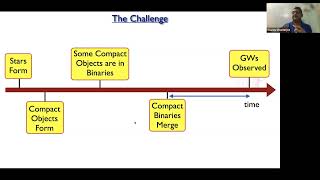
Gaia's Black Holes - Why They Are Special
Explore the unique characteristics of black holes discovered by the Gaia mission in this insightful seminar, uncovering their significance in astrophysics.
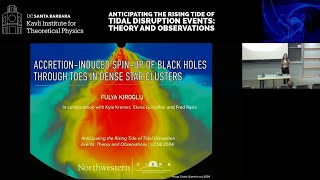
Accretion-Induced Spin-Up of Black Holes Through TDEs in Dense Star Clusters
Explore how tidal disruption events in dense star clusters affect black hole spin, with insights on galactic nuclei and supermassive black hole properties.
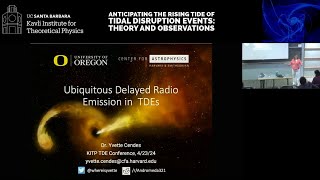
Ubiquitous Delayed Radio Emission in Tidal Disruption Events
Explore delayed radio emission in tidal disruption events, providing insights into galactic nuclei and supermassive black holes. Learn about recent advances and outstanding questions in this field.
Hour Timescale X-ray Variability Following a Tidal Disruption Event in a 100,000 Solar Mass Black Hole
Explores X-ray variability in tidal disruption events involving intermediate-mass black holes, offering insights into accretion physics and black hole demographics across cosmic time.
Discovering Tidal Disruption Events in Radio Surveys
Explore radio detection of tidal disruption events, offering insights into galactic nuclei and supermassive black holes. Learn about recent advances and challenges in this exciting field of astronomy.
Radio Emission from Tidal Disruption Events - Unveiling Prompt Outflows During Stellar Disruption
Explore radio emissions from tidal disruption events, unveiling prompt outflows during stellar disruption by supermassive black holes. Gain insights into galactic nuclei and black hole properties.
Origins of Late-Time Radio Emission in Tidal Disruption Events
Explore the origins of late-time radio emissions in tidal disruption events, providing insights into galactic nuclei and supermassive black holes through luminous accretion flares.
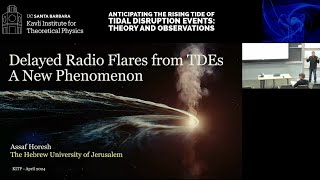
Delayed Radio Flares - A New Phenomenon in Tidal Disruption Events
Explore delayed radio flares in tidal disruption events, a new phenomenon providing insights into galactic nuclei and supermassive black holes. Learn about recent advances and outstanding questions in the field.
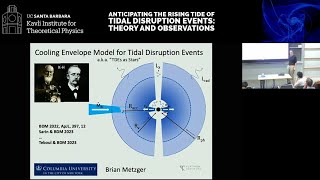
Cooling Envelope Model for Tidal Disruption Events
Explore the cooling envelope model for tidal disruption events with Brian Metzger, examining how stars are destroyed by supermassive black holes and the resulting luminous accretion flares.
Current Status of TDE Observations: The Promise of Population Studies
Explore the current state of tidal disruption event observations and their potential for population studies, focusing on recent advances and future prospects in understanding galactic nuclei and supermassive black holes.
Why Do Tidal Disruption Events Shine in Optical and Radio More Than X-ray
Explore why tidal disruption events emit more optical and radio waves than X-rays, offering insights into supermassive black holes and galactic nuclei through luminous accretion flares.
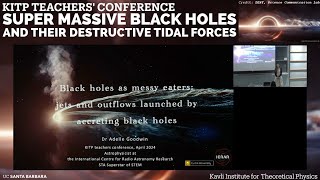
Black Holes as Messy Eaters: Radio Observations of Jets and Outflows Launched by Accreting Black Holes
Explore radio observations of jets and outflows from accreting black holes, revealing their messy eating habits and impact on surrounding environments.