
A Decade After Stuxnet's Printer Vulnerability - Printing is Still the Stairway to Heaven
Explore the enduring security risks in Windows Print Spooler service, a decade after Stuxnet's infamous exploit, and learn about current vulnerabilities in printing systems.
When TLS Hacks You
Explore how TLS features can be exploited for attacks, focusing on Server-Side Request Forgery. Learn about a novel, cross-platform method to leverage TLS for targeting internal services.
Heroku Abuse Operations - Hunting Wolves in Sheep's Clothing
Explore techniques for detecting and responding to malicious activity disguised as legitimate use in cloud platforms. Learn to identify and mitigate abuse scenarios that bypass traditional security measures.

FASTCash and INJX_Pure - How Threat Actors Use Public Standards for Financial Fraud
Explore how cybercriminals exploit public standards to conduct ATM fraud through INJX_Pure and Lazarus FASTCash malware, showcasing their programming skills and understanding of financial transactions.
Decade of the RATs – Custom Chinese Linux Rootkits for Everyone
Uncovers a decade-long, state-sponsored cyber espionage campaign targeting Linux servers, revealing custom malware and rootkits used in strategic attacks on government and industry infrastructure.

Whispers Among the Stars - A Practical Look at Perpetrating Satellite Eavesdropping Attacks
Experimental exploration of satellite broadband vulnerabilities using affordable equipment. Demonstrates eavesdropping techniques across land, air, and sea communications with minimal detection risk.
EtherOops - Exploring Practical Methods to Exploit Ethernet Packet-in-Packet Attacks
Explore practical methods to exploit Ethernet packet-in-packet attacks, bypassing firewalls and NAT solutions. Learn how attackers can establish man-in-the-middle positions to eavesdrop on corporate communications.

Beyond Root - Custom Firmware for Embedded Mobile Chipsets
Explore reverse engineering techniques to bypass protections and expand functionality of embedded mobile chipsets, going beyond traditional rooting methods for complete device control.

Houston, We Have a Problem - Analyzing the Security of Low Earth Orbit Satellites
Explore the first public security analysis of Low Earth Orbit satellites, uncovering vulnerabilities and potential exploits in these crucial space-based systems.

Guardians of the AI Era - Navigating the Cybersecurity Landscape of Tomorrow
Explore the future of cybersecurity in the AI era, examining challenges and opportunities for professionals. Learn to adapt and innovate in a rapidly evolving technological landscape.

A Manufacturer's Post-Shipment Approach to Fend-Off IoT Malware in Home Appliances
Explore a manufacturer's strategy to protect home appliances from IoT malware post-shipment, addressing rapid attack cycles and complex malware capabilities based on 5 years of IoT threat intelligence.
What Does an LLM-Powered Threat Intelligence Program Look Like?
Explore the impact of large language models on cyber threat intelligence programs, focusing on expanded capabilities and potential return on investment for organizations.
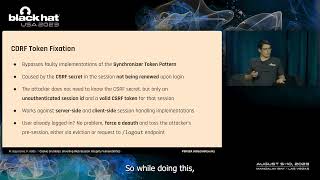
Cookie Crumbles - Unveiling Web Session Integrity Vulnerabilities
Explore web session integrity vulnerabilities, focusing on cookie security mechanisms and their real-world implications. Learn about bypassing protections and potential attacks on web applications.
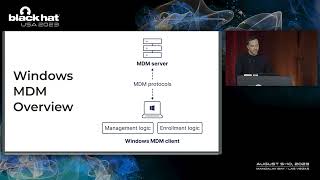
Windows Agentless C2 - Abusing the MDM Client Stack
Uncover vulnerabilities in Windows MDM client stack for agentless Command and Control. Explore MDM infrastructure, enrollment, and management protocols for potential abuse in device management.
How I Learned to Stop Worrying and Build a Modern Detection & Response Program
Discover a framework for building effective, modern detection and response programs. Learn key capabilities and strategies to enhance your cybersecurity approach.

Security Through Transparency - Scaling Your Customer Trust Program
Discover how transparency can scale your Customer Trust Program, enhancing security assurance and sales cycles with limited resources through public wikis, document bundling, and Q&A databases.

AutoSpill - Zero Effort Credential Stealing from Mobile Password Managers
Unveiling a novel attack on Android password managers, exploiting autofill vulnerabilities to steal credentials without user interaction. Discusses impact, root causes, and proposes countermeasures.
REDIScovering HeadCrab - A Technical Analysis of a Novel Malware and the Mind Behind It
Uncover the secrets of HeadCrab, an advanced malware utilizing Redis Modules. Explore its sophisticated techniques, worldwide infiltration, and the mind of its creator in this technical analysis.
Reviving JIT Vulnerabilities - Unleashing the Power of Maglev Compiler Bugs on Chrome Browser
Explore Maglev JIT Compiler vulnerabilities in Chrome, comparing with Turbofan, improving fuzzing techniques, and demonstrating exploitation for render RCE through newly discovered high-risk bugs.
Orchestrate This! Kubernetes Rootkit
Explore container-focused rootkits in Kubernetes, their anatomy, potential consequences, and strategies for mitigating risks and securing clusters against such attacks.

Nation-State Moneymule's Hunting Season - APT Attacks Targeting Financial Institutions
Unveiling recent APT campaigns targeting financial institutions, including banks, ATM companies, and Bitcoin exchanges, with insights on malware, vulnerabilities, and attack vectors.