Over the Edge - Silently Owning Windows 10's Secure Browser
Exploiting Windows 10's memory deduplication feature to silently compromise Microsoft Edge, bypassing security measures and gaining arbitrary memory access through JavaScript-based attacks.

Pay No Attention to That Hacker Behind the Curtain - A Look Inside the Black Hat Network
Insider look at the notorious Black Hat network, revealing infrastructure, traffic patterns, and security challenges faced by one of the most hostile networks on the planet.

Using Undocumented CPU Behavior to See Into Kernel Mode and Break KASLR in the Process
Explore undocumented CPU behavior to breach kernel security, map memory, and bypass KASLR. Learn techniques for kernel introspection and physical-to-virtual address conversion without special privileges.

Gathering Threat Intelligence on Telephony Scams to Detect Fraud
Explore techniques for gathering threat intelligence on telephony scams, including robocalling and voice phishing. Learn to detect and fingerprint bad actors using audio features and data analysis.

Defense at Hyperscale - Technologies and Policies for a Defensible Cyberspace
Explore strategies for achieving defensible cyberspace through innovative technologies, operational improvements, and policies that prioritize defense over offense in the digital realm.

Hacking the Wireless World with Software Defined Radio 2.0
Explore diverse wireless systems using software-defined radio. Learn to analyze, reverse engineer, and exploit RF signals for applications ranging from space probes to aircraft tracking and RFID systems.

Slime - Automated Anti-Sandboxing Disarmament System
Automated system to disarm malware with anti-sandbox techniques, focusing on host-fingerprinting and general anti-sandboxing. Analyzes exit reasons and suggests suitable environments for dynamic analysis of evasive malware.
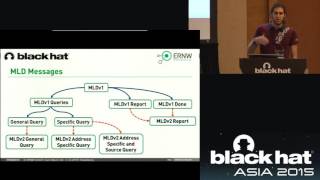
MLD Considered Harmful - Breaking Another IPv6 Subprotocol
Explores security vulnerabilities in IPv6's Multicast Listener Discovery protocol, demonstrating potential exploits and proposing mitigation techniques for safer IPv6 network implementation.

The Nightmare Behind the Cross Platform Mobile Apps Dream
Explore security vulnerabilities in popular cross-platform mobile development frameworks and their implications for app developers and users.
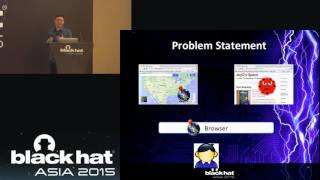
I Know Where You've Been - Geo-Inference Attacks Via The Browser Cache
Explore geo-inference attacks via browser cache, revealing how websites can sniff users' locations. Learn about vulnerabilities in popular sites, impact on various browsers, and potential defenses against these privacy threats.

Relaying EMV Contactless Transactions Using Off-The-Shelf Android Devices
Unveils vulnerabilities in EMV Contactless payments, demonstrating relay attacks using common Android devices. Explores implications for transaction security and public acceptance of contactless payments.

Bypassing Malware Detection Mechanisms in Online Banking
Explore vulnerabilities in online banking malware detection systems, revealing implementation errors and potential improvements for enhanced security.
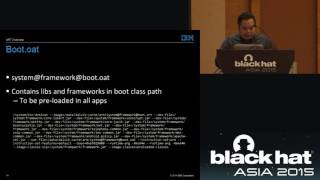
Hiding Behind Android Runtime - ART
Explore techniques for creating user-mode rootkits in Android using ART mechanisms, including file formats, persistence methods, and limitations, with a live demonstration.

Browsers Gone Wild
Unveiling creative browser vulnerabilities and attacks, including confidentiality breaches, login detection, and exploiting HTML5 features, with live demonstrations challenging Same Origin Policy understanding.

Security Content Metadata Model with an Efficient Search Methodology for Real Time Monitoring
Efficient metadata model for security content, enabling fast searches and real-time monitoring. Integrates SCAP components, supports NLP queries, and aids in vulnerability resolution and malware analysis.

Exploiting Social Navigation
Discover techniques to compromise social navigation systems through fake GPS reports and bot drivers, exploring privacy risks and traffic manipulation in applications like Waze.

DABiD - The Powerful Interactive Android Debugger for Android Malware Analysis
Explore DABiD, an interactive Android binary debugger for malware analysis. Learn to detect runtime changes, monitor dynamic classes, and modify instructions for effective debugging of complex Android malware.
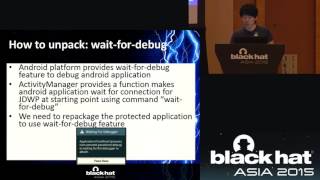
We Can Still Crack You - General Unpacking Method for Android Packer - No Root
Discover a novel method for unpacking protected Android applications without root access. Learn to bypass anti-analysis techniques and reveal hidden code in packed apps.
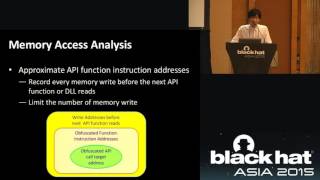
API Deobfuscator - Identifying Runtime-Obfuscated API Calls Via Memory Access Analysis
Unveils a resilient API deobfuscation technique using memory access analysis, overcoming limitations of pattern-based approaches to identify runtime-obfuscated API calls in malware and obfuscated code.

Resurrecting the Read Logs Permission on Samsung Devices
Exploit allowing non-privileged apps to access sensitive log data on Samsung devices, bypassing Android's READ_LOGS permission restrictions. Reveals private information from notifications and system logs.

Forging the USB Armory
Explore the development of an open-source USB-sized computer for security applications, featuring advanced SoC technology, secure boot, and ARM TrustZone implementation.