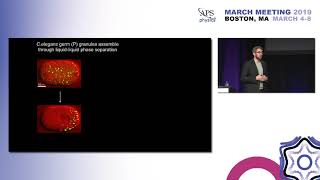
Intracellular Liquid Condensates - New Approaches to Understand and Control Biomolecular Phase Transitions in Living Cells
Exploring intracellular phase transitions and their role in organizing cellular contents, with focus on liquid-liquid phase separation and new approaches for spatiotemporal control.

The Science of Scent
Explore the molecular basis of scent and perfumery with biophysicist Luca Turin. Discover how vibrations of molecules create distinct odors and learn about the artistry behind crafting sublime fragrances.
On the Degrees of Freedom Worth Having - Psychedelics and Free Will
Explore the intersection of psychedelics, free will, and consciousness. Discover how serotonergic pathways may influence volitional capacities and adaptive flexibility in human cognition and behavior.
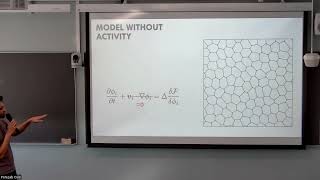
Active Reorganisation in Tissues
Explore collective cell motion in tissues, examining topology-preserving and breaking components, and their implications for wound healing, embryogenesis, and cancer metastasis.

The Beautiful, Mysterious Science of How You Hear
Explore the fascinating mechanics of hearing as biophysicist Jim Hudspeth reveals the power of hair cells and the unique spectrum of sounds your ears emit in quiet environments.

The Hodgkin-Huxley Model - Understanding Neural Electrical Signals
Dive into the Nobel Prize-winning Hodgkin-Huxley model to understand how neurons generate electrical signals, exploring membrane voltage, ion channels, and the biophysical principles of neural computation.
Small-Molecule Binding to Intrinsically Disordered Proteins - Characterization and Implications for Drug Design
Explore integrative methods for characterizing disordered proteins, focusing on amyloid-β and its interaction with small molecules to prevent toxic aggregation in Alzheimer's disease.
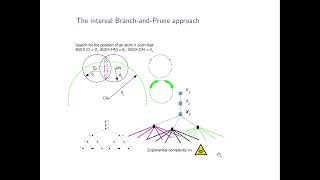
Exploration of Conformations for an Intrinsically Disordered Protein
Explore conformations of intrinsically disordered proteins, delving into their unique structural characteristics and functional implications in biological systems.
Modulating Lipid Packing and Solute Permeability of Model Protocells
Explore lipid packing and solute permeability in model protocells, gaining insights into early cell membrane formation and potential implications for astrobiology research.
Cell Motility in Confluent Tissues Induced by Substrate Disorder
Explore cell motility in confluent tissues and the impact of substrate disorder on tissue mechanics, rigidity, and cell dynamics using the Self-Propelled Voronoi model.
Insights into 4D Genome from Leveraging Hi-C Technology with Elastic Network Models
Explore chromatin dynamics using Gaussian Network Model and Hi-C data. Gain insights into gene co-expression, transcriptional regulation, and cell differentiation through 4D genome analysis.
The Nucleosome as the Hydrogen Atom of Epigenetics
Explore nucleosome structural transitions and their energy scales, drawing parallels with hydrogen atom energy levels. Examine pH effects on nucleosome stability and biological implications.
Microtubules as Maxwell's Demons: Transport-Based Phase-Separation of a Binary System
Explore how microtubules and molecular motors self-organize into polarity-sorted domains, creating ordered structures in living cells through selective transport mechanisms.
Cell Shape Variability and Its Implications in Epithelial Monolayers
Explore cell shape variability in epithelial monolayers, its universal distribution, origins, and implications for tissue dynamics and biological functions.
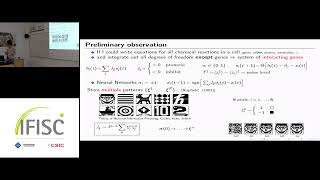
Gene-Regulatory Networks Viewed Through Statistical Mechanical Glasses
Explore statistical mechanics principles applied to gene-regulatory networks, examining their complex interactions and regulatory mechanisms through a physics-based analytical framework.
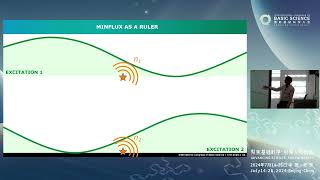
Accessing the Nanoscale with MINFLUX Light Microscopy
Explore MINFLUX, a groundbreaking light microscopy technique achieving nanometer-scale precision in superresolution imaging and single-molecule tracking, revolutionizing cellular observations.
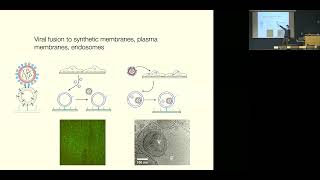
Physical Constraints on the Evolution of Viral Entry
Explore physical constraints on viral entry evolution with Dr. Peter Kasson. Gain insights into membrane dynamics, fusion mechanisms, and pandemic prediction through experimental and computational approaches.
Learning How to Build Molecules That Fold Like Proteins
Explore protein-like molecule folding with Prof. Michael Shirts, uncovering insights into building and understanding complex molecular structures.
Force Spectroscopy Sheds Light on the Structure and Dynamics of Nucleosomes
Explore force spectroscopy's insights into nucleosome structure and dynamics, revealing chromatin's complex behavior at the molecular level.
Physics of Surface Segregation: From Industrial Formulations to Chromatin Organization
Explore surface segregation physics in polymers and its applications to biophysical processes like chromatin organization and cellular behavior.
Sister Chromatid Cohesion is Asymmetric
Explore asymmetric sister chromatid cohesion in this workshop talk, integrating mathematics, physics, and computation for biological and medical advances.